
Latest
Imoke: Phantom $16bn allegation delayed Nigeria’s power reforms

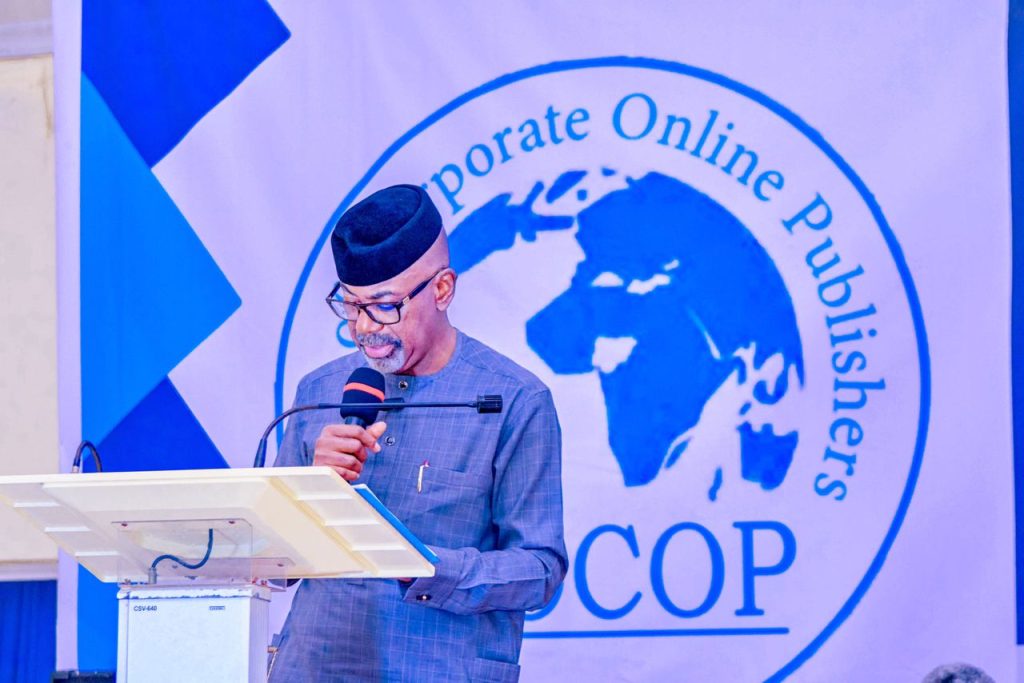
At the 8th Annual Conference of the Guild of Corporate Online Publishers (GOCOP) in Lokoja, former Minister of Power and Cross River State Governor, Senator Liyel Imoke, provided critical insights into Nigeria’s power sector challenges, particularly debunking allegations of a phantom $16 billion expenditure under the Obasanjo administration.
Imoke, who chaired the Power Sector Technical Board during that period, clarified that actual spending on power projects was between $2 and $3 billion, dispelling long-held claims of misappropriation.
Imoke attributed delays in power sector reforms to a prolonged investigation into the alleged $16 billion expenditure, which slowed key projects and inflated contract costs.
He lamented that this allegation, widely used as a political weapon, undermined progress in the power sector, as many Independent Power Plant (IPP) projects remain unfinished today.
Highlighting Nigeria’s broader challenges, Imoke linked insecurity, power deficits, and the slow transition to a digital economy as intertwined issues hindering national development.
READ ALSO: I left when Liyel Imoke turned PDP into personal property – Ndoma Egba
He noted that persistent insurgency, communal violence, and separatist tensions have contributed to insecurity across the country. Despite some progress, including the degradation of Boko Haram and reduced militancy in the Niger Delta, Imoke warned that unresolved issues such as farmer-herder conflicts continue to fuel violence.
Regarding Nigeria’s power sector, Imoke shared sobering statistics, noting that while the country’s installed capacity stands at 13,000 megawatts, only 4,000 megawatts are distributed on average.
He contrasted this with higher per capita electricity consumption in countries like South Africa and Ghana, underscoring the weak industrial base in Nigeria.
On the digital economy, Imoke stressed the importance of Nigeria not missing out on the fourth industrial revolution. The growth of e-commerce platforms like Jumia has been a positive sign, but he urged deliberate government policies to accelerate the country’s digital transformation.
In conclusion, Imoke called for a multifaceted approach to tackling Nigeria’s challenges, including decentralized security measures, transparent procurement processes, and a focus on education, skill development, and rural development.
He emphasized that Nigeria’s potential as a global leader can only be unlocked by addressing its security, power, and digital economy challenges simultaneously.


-

 Latest4 days ago
Full List: Meet the 2026 Nobel Prize winners across six categories
-

 Football4 days ago
Premier League Matchweek 7: Five Fixtures That Could Shape the Weekend
-

 Latest4 days ago
Umahi defends Lagos-Calabar highway route changes amid public outcry
-

 Business3 days ago
Dangote Refinery IPO: 70% Subscription claim meets fourfold demand assertion as investors seek clarity
-
Business3 days ago
Dangote Refinery IPO Extension: Was the 70% subscription report overhyped?
-

 Latest2 days ago
UCTH faces morgue crisis as 50 unclaimed corpses await mass burial
-

 Featured4 days ago
El-Rufai, ADC governorship candidate’s court appearance puts Kaduna opposition politics in focus
-
 Latest5 days ago
Makinde’s Chief of Staff, Segun Ogunwuyi, resigns