
Business
LCCI faults allocation of 60% forex to manufacturers


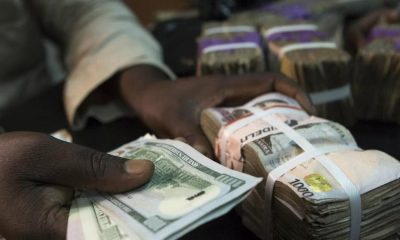
The Lagos Chamber of Commerce and Industry has faulted the allocation of 60 per cent foreign exchange to the manufacturing sector, describing it as one of the policy inconsistencies of the government making it difficult to regain the confidence of investors.
The chamber stated this in a statement on Sunday, which was signed by its Director-General, Mr. Muda Yusuf.
It said, “Another policy development that could pose a risk to the stability and transparency of the foreign exchange market is the recent policy on sectoral allocation of foreign exchange. The CBN circular did not indicate any HS Code to properly define what would qualify as raw materials and machinery.
“The first concern will be that of definition. The result of this will be discretionary interpretation by the banks as what qualifies as raw materials and machinery. The second major concern is the potential crowding out of other sectors in the forex market. Sectors outside the manufacturing account for over 85 per cent of the country’s GDP and jobs in the economy. They all have varying import contents in their operations.”
ALSO SEE: We must develop non-oil sector through enabling environment — LCCI boss
He added, “Therefore, if a minimum of 60 per cent of all forex allocation goes to manufacturing for raw materials and machinery; what happens to other sectors? Currently, petroleum products imports are priority and could take another 25 per cent of foreign exchange. This implies that the rest of the sectors would settle for the balance of 15 per cent. This is clearly not a sustainable framework.”
It stated that the major challenge facing the Nigerian economy at this time was the inability to regain the confidence of investors, both local and foreign.
“Regrettably, the instability and inconsistency in the foreign exchange management policy have been complicating matters.
“The economy has a major structural defect of being heavily import-dependent. This cannot be fixed in the short term. Therefore, the shocks arising from the collapse of oil price and the corresponding depreciation in the naira exchange rate were inevitable. But the policy responses could make a whole lot of difference in the profundity of the impact of these shocks on the economy and the citizens.”







-
 Latest1 week ago
Israel marks 3 years since October 7 Hamas attack amid Gaza strikes, election debate
-

 Energy7 days ago
Fuel Battle: Dangote, marketers and government clash over petrol imports
-

 Latest2 days ago
Full List: Meet the 2026 Nobel Prize winners across six categories
-

 Football1 week ago
Nigeria’s World Cup exit under spotlight as FIFA’s DR Congo files emerge
-

 Latest1 week ago
US Court set to rule on release of FBI, DEA records on Tinubu
-
 Business1 week ago
Nigerian investors at a crossroads as fixed-income yields slide
-

 Latest1 week ago
Oyo APC crisis deepens as Oluyole reconciliation meeting ends in brawl
-
 Featured6 days ago
103 Million Voters: What does INEC’s new register say about Nigeria’s population?