
Business
Naira could depreciate “to N440” by year end” – Analysts

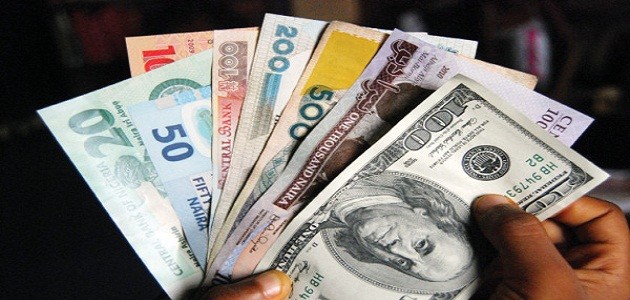
Financial experts have predicted that the Naira could fall to as low as N480 by year-end and over N500 next year, citing Nigeria’s weakening FX positions, the fall in oil prices, and the massive drop in government revenues.
According to Moshood Bode Abolade, Investment Officer at Africa50 Infrastructure Investments, Nigeria’s oil giant, Nigeria National Petroleum Corporation (NNPC), is unlikely to contribute much to FG’s revenue, meaning lower oil earnings anticipated.
“The COVID-19 outbreak—magnified by the sharp fall in international oil prices and reduced global demand for oil products—is severely impacting economic activity in Nigeria. These shocks have created large external and financing needs for 2020.
“Additional declines in oil prices and more protracted containment measures would seriously affect the real and financial sectors and strain the country’s financing.”
The country’s foreign reserve has continued its bearish trend, dropping by $5.09 billion from $38.53 billion in early January to $33.44 billion.
Philip Anegbe, Team Lead, Cardinal Stone Research, explained that the probability of significant foreign investment outflows due to weak oil prices and higher risks suggests that Nigeria would need more than the $3.4 billion RFI facility to strengthen the case for its currency in the near-to-medium term.
“The low oil prices/weak demand will not affect Nigerian producers equally; the IOCs and some indigenous players have a long term off-take contract which obligates buying counterparties to purchase agreed volumes on the one hand. On the other hand, NNPC leads the contingent of producers that do not use long terms contracts, therefore, leaving them to demand risk.
“It is important to note that NNPC’s production is tied to that of IOCs and large indigenous players (who have crude off-take contracts) in line with economic interest under the joint ventures. This means that while NNPC’s co-ventures are producing and selling, it might be forced to incur storage costs as it struggles to find buyers in the spot market.
“NNPC’s situation calls for cost discipline if it is still to contribute to government revenues and it has, in fact, started to closely scrutinize JV budgets; a practice that was not a priority until the effects of COVID-19 and the price war hit.”
However, with these colossal challenges, Nigeria’s stakeholders must support the diversification of Nigeria













-

 Latest1 week ago
Pastor Chris Oyakhilome announces mother’s passing at 88 [VIDEO]
-

 Football6 days ago
How David Beckham made $51.1m from 2026 World Cup, surpassing winners’ prize
-

 Latest2 days ago
US Immigration fees rise from October 16 as USCIS announces new charges
-

 Comments and Issues6 days ago
Fani-Kayode on Atiku: Separating claims from the record
-

 Latest1 week ago
How adulterated palm oil, coloured pepper are putting consumers at risk
-

 Crime1 week ago
Deaths in NSCDC Custody: Can Nigeria guarantee the safety of detainees?
-
 Health5 days ago
COVID-19 Hospital care under scrutiny as US Senate hears patient, family testimonies
-

 Business5 days ago
OpenAI shelves GPT-6.1 astra release over safety concerns