
Business
Naira crisis ‘ll get worse, not better if…. Moghalu warns


A former Deputy Governor of the Central Bank of Nigeria (CBN), Kingsley Moghalu has said that if Nigeria doesn’t diversify its economy but continues to rely on crude oil as a mono-product economy, the Naira crisis may get worse, and not better.
Recall that since the suspension of forex sales to Bureau De Change (BDC) operators by the CBN, the value of the Naira has been on a constant fall against the Dollar, Euro and pound sterling due to forex scarcity.
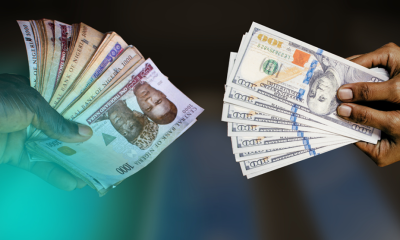
At the weekend the exchange rate between the Naira and the U.S Dollar hit N570/$, against the pound sterling it stood at N770/£1, and traded at N655/€1 at the parallel market.
However, reacting to the dwindling fortune of the Naira, Moghalu, an economist, said the most important determinant of the value of the Naira is whether or not the Nigerian economy is productive and competitive in international trade.
READ ALSO: Why Naira value is dropping against Dollar, Pound sterling, others
“Since we obviously don’t have such an economy, our main FX earner is crude oil, which gives us 90 percent of our FX. Unfortunately, we don’t control the price of crude. Its pricing is volatile and unstable as a result of various international political and economic factors.
“This means that because we are essentially a one-product country, a one-trick pony, we are exposed to instability in our main income source. When the price of oil drops, and as the world innovates toward alternative energy sources, the amount of external reserves we have to back up the international value of our legal tender (our reserves) frequently comes under pressure. It’s those reserves, our main defense in a soccer analogy that determines the value of the Naira.
According to Moghalu, achieving a diversified, complex economy, especially in a resource dependent economy, requires a high level of knowledge, political will and consistency in economic policy and takes decades to achieve.
“There are other facts as well that affect the value of the Naira. These include the basic factors of supply and demand. Others are inflation, high government indebtedness, and speculation which also affect the naira value, as there are currency traders around the world for whom the weakness of a currency is their very good fortune.
“Our inflation rate at 17 percent is way higher than those “reserve-currency” countries, again we are exposed to possible currency attacks. If reserves are weak, and demand for dollars massively outstrips supply, currency devaluation is inevitable, and currency traders who mount speculative attacks profit from this devaluation.
“Such traders will borrow the Naira from Nigerian banks; convert it to, say, dollars, and then buy short-interest paying Nigerian bonds. If, as the speculators anticipate, the central bank devalues the naira, the traders sell the bonds in the foreign currency, convert them into naira, and repay the original Naira loan. The steeper the devaluation, the higher the speculators profit.
Moghalu advised the CBN to let the Naira find its level in the market and stop subsidizing the currency. “When this happens, the laws of demand and supply will work in favour of the Naira, alongside this, maintaining different exchange rates for different kinds of transactions must end.


-
 Featured5 days ago
Inside INEC’s race to prepare for Nigeria’s 2027 elections
-
 Featured5 days ago
2027: APC unveils nationwide campaign timetable, Tinubu to rally in 12 states
-

 Latest1 week ago
UCTH faces morgue crisis as 50 unclaimed corpses await mass burial
-

 Business7 days ago
President Tinubu and the Low Transport Fares Fiasco
-

 Business1 week ago
BREAKING: Nigeria’s Inflation Rate Drops to 14.63% in September
-

 Latest7 days ago
Global excitement builds as Healing Streams Live Services returns October 23
-

 Business6 days ago
Court dismisses ₦170m Trade Fair contract claim, says Zenith Bank was not a party
-
 Business3 days ago
Naira faces exchange rate gap as Dollar hits N1,380 on parallel market