
Business
Naira depreciates at parallel market as liquidity squeeze persists

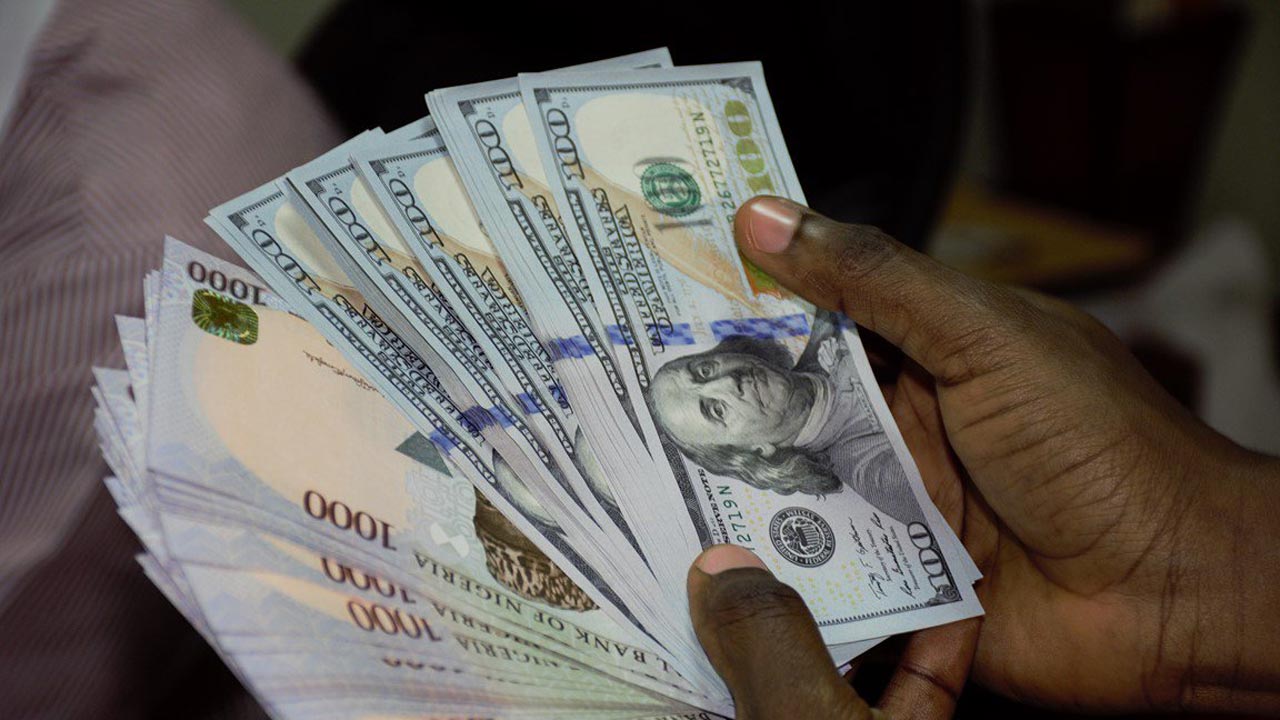
The Naira depreciated against the dollar, closing at N482/$1 at the parallel market on Monday, December 7, 2020, as liquidity squeeze persists despite increased demand pressure.
This represents a N7 drop when compared to the N475/$1 that it exchanged for on Friday, December 4.
The local currency had strengthened by about 7.8% within one week in September at the black market, as the CBN introduced some measures targeted at exporters and importers.
This is to boost the supply of dollars in the foreign exchange market and reduce the high demand for forex by traders
However, the gains appear to have been completely erased with the recent crash of the exchange rate.
ABCON President, Aminu Gwadebe, had blamed the crash of the naira on illegal activities that include hoarding, speculation, illegal cash evacuations through the nation’s borders, use of the dollar for gratification and so on.
The CBN has sold over $1 billion to BDCs since they resumed forex sales on Monday, September 7, 2020.
This was expected to inject more liquidity into the retail end of the foreign exchange market and discourage hoarding and speculation.
However, the exchange rate against the dollar has remained volatile after the initial gains made, following the CBN’s resumption of sales of dollars to the BDCs.
Despite the CBN intervention, the huge demand backlog by manufacturers and foreign investors still puts pressure and creates a volatile situation in the foreign exchange market.
The Naira still remained stable against the dollar at the Investors and Exporters (I&E) window on Monday, closing at N395/$1. This was the same rate that it exchanged for on Thursday, December 4.
The opening indicative rate was N392.13 to a dollar on Monday. This represents a 25 kobo gain when compared to the N392.38 that was recorded on Friday.
The N404.11 to a dollar was the highest rate during intra-day trading before, it still closed at N395 to a dollar. It also sold for as low as N384/$1 during intra-day trading.
The CBN is still struggling to clear the backlog of foreign exchange demand, especially by foreign investors wishing to repatriate their funds.
The sharp drop in dollar supply after the previous trading day’s increase reinforces the volatility of the foreign exchange market. The supply of dollars has been on a decline for months due to low oil prices and the absence of foreign capital inflow into the country.
Some members of MPC of the CBN have expressed serious concerns over the increasing demand pressure in the country’s foreign exchange market. This is an obligation of manufacturers to their foreign suppliers that continues to increase in the face of dollar shortages.


-

 Latest4 days ago
Full List: Meet the 2026 Nobel Prize winners across six categories
-

 Football4 days ago
Premier League Matchweek 7: Five Fixtures That Could Shape the Weekend
-

 Latest3 days ago
Umahi defends Lagos-Calabar highway route changes amid public outcry
-

 Business3 days ago
Dangote Refinery IPO Extension: Was the 70% subscription report overhyped?
-
Business3 days ago
Dangote Refinery IPO: 70% Subscription claim meets fourfold demand assertion as investors seek clarity
-

 Featured3 days ago
El-Rufai, ADC governorship candidate’s court appearance puts Kaduna opposition politics in focus
-

 Latest1 day ago
UCTH faces morgue crisis as 50 unclaimed corpses await mass burial
-

 Latest4 days ago
Makinde’s Chief of Staff, Segun Ogunwuyi, resigns