
Business
Naira depreciates by over 21% in nine months

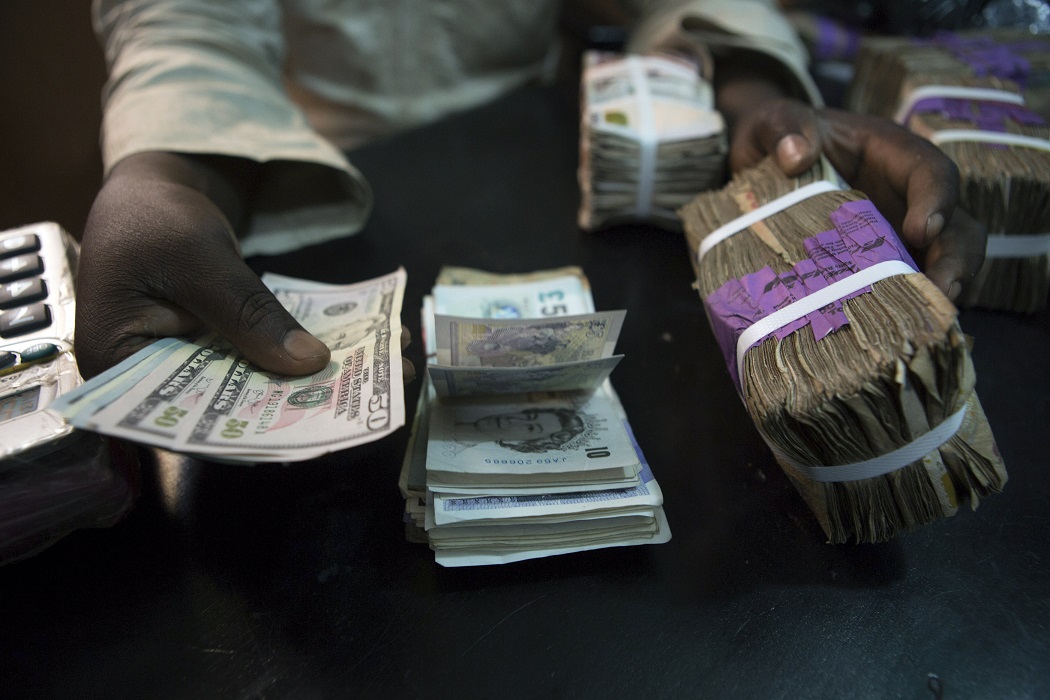
Nigeria’s local currency, the Naira, has depreciated by over 21 per cent in nine months, beginning from December 31, 2021 when it traded for N565/$1 to N722/$1 on Tuesday morning at the parallel market.
The exchange at the unofficial market has been on a freefall so far in the year, with FX scarcity being the major cause of the currency depreciation. The economy continues to suffer from a decline in forex inflow, which has seen the exchange rate hit a record low from global headwinds.
The exchange rate closed at N436/$1 at the Investors and Exporters window on Monday, bringing the exchange rate differentials to a record N286/$1. The amount of FX trading at the official window also dipped by 26.4% on Monday to $78.1 million from $106.1 million recorded in the previous trading session.
All eyes are now set on the Monetary Policy Committee (MPC) briefing later today, to see the direction of the apex bank concerning interest rate movement and policy directions having increased the benchmark interest rate by 250 basis points in the last four months.
A major concern of the monetary policy committee will be the rate at which the local currency is falling at the black market, despite efforts to manage the volatility at the official window.
READ ALSO: Naira appreciates at official market
Experts had predicted that the CBN may be compelled to hold the interest rate due to the nature of Nigeria’s inflationary pressure and its multiple hikes in May and July 2022. Dr. Muda Yusuf, the CEO of the Centre for the Promotion of Private Enterprise (CPPE), maintained that the rates would be held constant.
He said “we cannot have a tightening policy in an economy grappling with fragile growth and high unemployment. But the credit conditions are already very tight. Cash Reserve Requirement CRR is at 27.5 percent, one of the highest globally.
Effective CRR for some banks is about 50% or even more. The liquidity Ratio is 30%, MPR is 14%. These restraining thresholds are already on the high side. Financial intermediation is already being considerably impeded. “
Also, Ezekiel Gomos, an economist at Jos Business School maintained that the CBN could hold the monetary parameters constant, considering that the nature of Nigeria’s inflation cannot be easily tamed by monetary policies.


-
 Latest6 days ago
Israel marks 3 years since October 7 Hamas attack amid Gaza strikes, election debate
-

 Energy6 days ago
Fuel Battle: Dangote, marketers and government clash over petrol imports
-

 Energy7 days ago
Petrol, diesel prices rise 86% in 2026 as costs hit fresh highs
-

 Energy1 week ago
Has Iran lost control of the Strait of Hormuz? Oil flows rebound as war disruptions persist
-

 Football7 days ago
Nigeria’s World Cup exit under spotlight as FIFA’s DR Congo files emerge
-

 Latest6 days ago
US Court set to rule on release of FBI, DEA records on Tinubu
-

 Business6 days ago
Nigerian investors at a crossroads as fixed-income yields slide
-

 Business1 week ago
LoveWorld Trade and Investment Forum to Convene Business Leaders in Accra