
Business
Naira exchanges for N740/$1 at official market, highest level in weeks

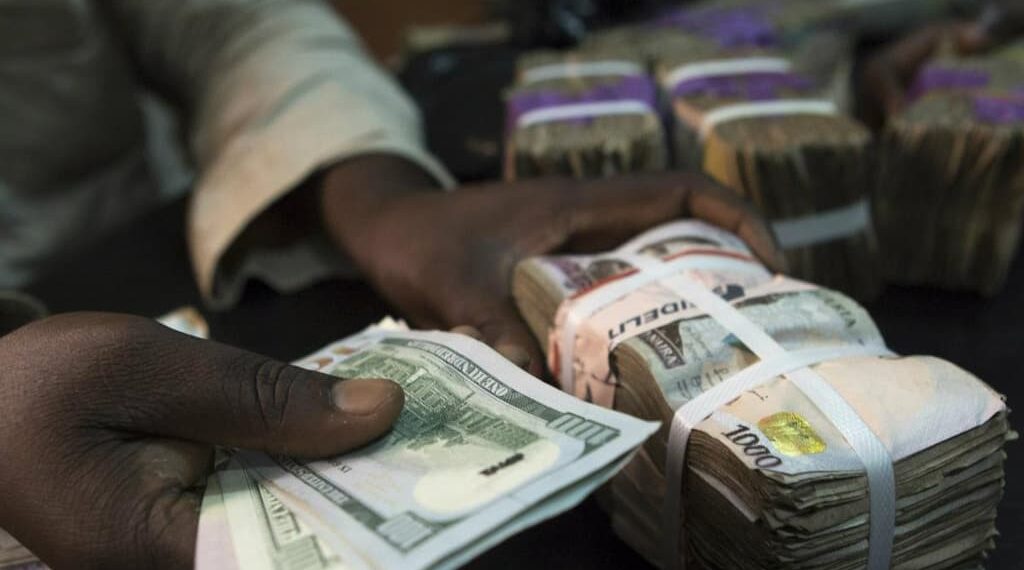
In a surprising turn of events, the Nigerian Exchange Rate on the Investors and Exporters (I&E) window closed at N740/$1, marking the highest level against the dollar since June 15th, when it concluded at N702/$1.
This substantial gain comes as a welcome relief for most forex buyers, as it represents a significant jump from the N791.2/$1 rate recorded just a day earlier and a major improvement from several days of weakness on the official window.
The market has witnessed an intra-rate high of N800/$1 and an intra-day low of N730/$1 during this period. Meanwhile, the NAFEX rate averaged N787.1/$1.
The past month has been characterized by exchange rate fluctuations, with values fluctuating between N770/$1 and N803/$1.
READ ALSO: Naira exchanges for N791/$1, N1110.2/£1 at official market
Adding to the improvements in data, the forex turnover for the day hit $153.2 million, a substantial increase from the $55 million recorded on the previous day.
Notably, this stands as the second-highest forex turnover since July 18, when it closed at $156.2 million, coinciding with an exchange rate of N742.9/$1.
Amidst the fluctuating official rates, the parallel market exchange rate painted a different picture, settling at N867/$1.
This stark difference between the official and parallel market rates has now exceeded N100/$1, raising concerns among analysts and policymakers alike.
The disparity points to potential challenges in controlling the exchange rate in a unified system.
The exchange rate has been on a rollercoaster ride ever since the exchange rate unification was initiated on the 14th of June 2023 with supply shortages driving volatility.
READ ALSO: Naira hits N792/$1 at official market, drops further against Pound Sterling
This volatility has kept investors on their toes, trying to make sense of the rapidly changing landscape.
Meanwhile, the acting central bank governor, Fola Shonubi confirmed supply challenges were the reason behind the exchange rate volatility.
The acting governor acknowledged the prevailing volatility, which he says stems from pent-up demand that outpaces current supply.
“And also the reality that there is pent-up demand which current supply may not be sufficient for,” Shonubi said.














-
 Latest6 days ago
Israel marks 3 years since October 7 Hamas attack amid Gaza strikes, election debate
-

 Energy6 days ago
Fuel Battle: Dangote, marketers and government clash over petrol imports
-

 Energy7 days ago
Petrol, diesel prices rise 86% in 2026 as costs hit fresh highs
-

 Football7 days ago
Nigeria’s World Cup exit under spotlight as FIFA’s DR Congo files emerge
-

 Energy1 week ago
Has Iran lost control of the Strait of Hormuz? Oil flows rebound as war disruptions persist
-

 Latest7 days ago
US Court set to rule on release of FBI, DEA records on Tinubu
-

 Latest16 hours ago
Full List: Meet the 2026 Nobel Prize winners across six categories
-

 Business7 days ago
Nigerian investors at a crossroads as fixed-income yields slide