
Business
NDIC Academy leads Africa in capacity building


- gets accreditation from CIBN
By Chioma Obinagwam
The Nigeria Deposit Insurance Corporation (NDIC) is set to lead the African Sub-Region in enhancing capacity building and bridging skills gaps in the banking industry in general and the Deposit Insurance Scheme (DIS) in particular.
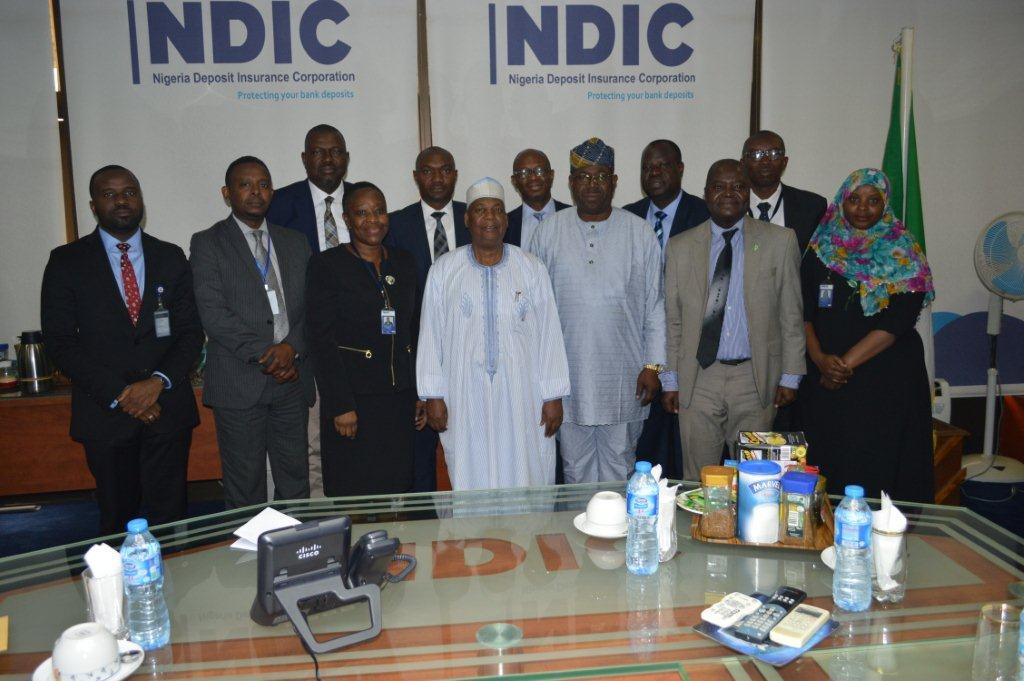
The NDIC’s Managing Director(MD) and Chief Executive Officer (CEO), Umaru Ibrahim made this remark during the accreditation ceremony of the NDIC Academy as a training service provider for its staff and the banking industry by the Council of the Chartered Institute of Bankers of Nigeria (CIBN) at the Bankers House, Lagos.
Ibrahim said with the NDIC Academy’s new status, it is positioned to fulfill the Corporation’s goal of serving as a center of academic excellence for capacity building on the Deposit Insurance Scheme (DIS) for countries in the Sub-Saharan Africa.
ALSO SEE: No sick bank in Nigeria – NDIC
He added that the Corporation prides itself on establishing high standards of professionalism and competency among its staff through the Corporation’s NDIC Academy and other human capital development initiatives, including the Chartered Banker/MBA program of University of Bangor, Scotland in partnership with the CIBN.
The NDIC CEO emphasized the importance of continuous high level training in order to achieve the Corporation’s core mandates of deposit guarantee, bank supervision, bank distress resolution and bank liquidation.
The ultimate goal, he said, would be to enhance depositor protection and public confidence in the banking system.
In his earlier address, the President and Chairman, Council of CIBN, Segun Ajibola commended the Corporation for its consistent efforts toward meeting high standards for the benefit of the banking industry and larger economy.
Ajibola described the NDIC’s readiness to subject itself to the rigours of the accreditation process as a testimony of its Management’s commitment towards capacity development in order to equip its workforce with critical skills to enhance their performance and productivity.
He said that there would be periodic monitoring to ensure that standards were maintained, adding that the accreditation would last for three years after which the Corporation would require recertification.






-

 Featured6 days ago
Inside INEC’s race to prepare for Nigeria’s 2027 elections
-

 Latest7 days ago
Global excitement builds as Healing Streams Live Services returns October 23
-

 Featured6 days ago
2027: APC unveils nationwide campaign timetable, Tinubu to rally in 12 states
-

 Business7 days ago
President Tinubu and the Low Transport Fares Fiasco
-

 Business1 week ago
BREAKING: Nigeria’s Inflation Rate Drops to 14.63% in September
-

 Business3 days ago
Naira faces exchange rate gap as Dollar hits N1,380 on parallel market
-

 Business6 days ago
Court dismisses ₦170m Trade Fair contract claim, says Zenith Bank was not a party
-

 Latest6 days ago
Breaking: NNPCL raises petrol price to ₦1,405 per litre amid discount controversy