
Latest
Nigeria among Africa’s top debtor nations as Afreximbank warns of rising borrowing costs


Nigeria, alongside nine other African countries, accounts for 69 per cent of the continent’s total external debt stock, according to a new report by the African Export-Import Bank (Afreximbank).
The report, titled “African Debt Outlook: A Ray of Optimism,” underscores Nigeria’s significant debt burden, ranking it among the top three most indebted nations, with 8 percent of Africa’s total external debt.
The report identifies South Africa as the largest debtor, accounting for 14 percent of Africa’s external debt, followed by Egypt at 13 per cent. Nigeria ranks third with 8 per cent, while Morocco and Mozambique each hold 6 per cent.
Other countries with significant debt levels include Angola (5 per cent), Kenya (4 per cent), Ghana (4 per cent), Côte d’Ivoire (3 per cent), and Senegal (3 per cent).
Afreximbank attributes these high debt levels to external borrowing, underdeveloped financial markets, foreign exchange volatility, and the need for infrastructure financing.
“In the first half of 2024, ten African nations constituted 69 percent of the continent’s total external debt stock, up from 67 percent in 2023,” the report stated.
Nigeria’s external debt burden highlights its reliance on international borrowing to finance budget deficits and infrastructure development. The country has consistently turned to Eurobond markets, concessional loans from multilateral institutions, and other external financing sources to bridge revenue shortfalls.
In December 2024, Nigeria issued a $2.2 billion Eurobond to manage its debt obligations, reaffirming its role as a key player in international capital markets. However, the report raises concerns about the increasing role of private creditors in Africa’s debt structure as institutions like the World Bank and IMF scale back lending.
READ ALSO: Project Nigeria: Beyond Alleged USAID Funding of Boko Haram Terrorists
With private creditors offering high-yield instruments, many African nations—including Nigeria—are relying more on Eurobonds, which provide immediate capital but carry higher interest rates and shorter repayment periods compared to concessional loans.
Afreximbank classifies Nigeria’s debt risk as “moderate”, similar to South Africa and Morocco. However, it warns that rising external borrowing costs could pose significant challenges, especially as global financial conditions tighten.
Africa’s average cost of borrowing surged to 8.2 per cent in 2024, up from a stable 5.4–6.3 per cent range between 2008 and 2019.
The report also highlights that in 2024, the ratio of interest payments to government revenue in Africa peaked at 27.5 per cent, up from previous levels of 6.8–19 per cent. This growing debt service burden is putting fiscal pressure on government budgets and limiting financial flexibility.
Despite growing concerns over Africa’s rising debt, Afreximbank projects a gradual decline in the continent’s debt-to-GDP ratio, from 69.9 per cent in 2024 to 61.7 per cent by 2028.
The report also notes that some African nations—Ethiopia, Sudan, and Zambia—have benefited from debt restructuring under the G20 Common Framework and the Paris Club. Nigeria could explore similar debt relief options if needed.
A key external factor shaping Africa’s debt outlook is monetary easing by major global central banks. The U.S. Federal Reserve and other financial institutions have begun cutting interest rates, a move expected to lower borrowing costs for African nations, including Nigeria.
While the Afreximbank report presents an optimistic medium-term outlook, it also warns that weak domestic revenue mobilization remains a major challenge for Nigeria.
The country’s heavy dependence on oil revenues exposes it to external shocks, while fiscal deficits continue to drive borrowing needs.


-

 Featured2 days ago
BREAKING NEWS: Shouts of joy rock the world as Pastor Chris opens final Healing Streams edition for 2026
-
 Business6 days ago
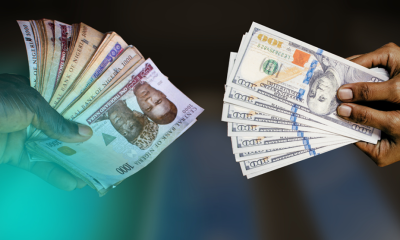
Naira faces exchange rate gap as Dollar hits N1,380 on parallel market
-

 Football3 days ago
Man United shortlist Emery, Nagelsmann as potential replacements for Carrick
-

 Business2 days ago
Hoodlums raid JED Benue office, abduct 10 staff over power dispute
-

 Football3 days ago
Aston Villa ready to freeze out Garnacho to avoid £43m Chelsea transfer
-

 Business3 days ago
EV adoption: Roxettes seeks cheaper financing, local manufacturing incentives
-

 Business1 week ago
NCC launches Internet Governance Working Group to tackle AI risks, boost online safety
-

 Latest2 days ago
Akpabio tasks Tompolo-backed movement with spreading Tinubu’s renewed hope message