
Energy
Oil benchmark increment not needful – Experts

Some financial experts have faulted the increase in the oil benchmark of the 2018 appropriation bill from 45 dollars to 51 dollars by the Senate.
The financial experts said that the increment was not needful, while reacting to the appropriation bill passed by the National Assembly.
Mr Okechukwu Unegbu, the former President, Chartered Institute of Bankers of Nigeria (CIBN), said increasing the benchmark because of the rally in the global oil market was not needful.
Unegbu said the surplus could be saved for the rainy day or used for infrastructure development to achieve the desired growth.
“Why can’t we save the surplus and prepare for the rainy day? We can’t just be consuming and consuming,” he said.
Unegbu said the surplus should be used to finance critical infrastructure since the country was faced with acute infrastructure deficit.
Unegbu, also, the Managing Director, Maxifund Investments and Securities Plc., kicked against the small allocation to the health and education sectors, which were critical to economic development.
He said the allocation of N57.15 billion and N15.7 billion to health and education respectively was disheartening.
He explained that more funds were allocated to non-priority sectors that would not aid development in the proposed budget.
“If you give more money to education, a very educated person can take care of him and can provide for him good house,” Unegbu said.
Unegbu, who said health and education were critical for economic development, called on the executive to address the problem before signing the bill into law.
Prof. Sheriffdeen Tella, Professor of Economics, Olabisi Onabanjo University Ago-Iwoye, Ogun, said the passage of the budget was very late and had created problems in the economy.
Tella said the budget, though late, was expected to wake up the economy from slumber, as the private and public sectors, including the external sector would become more active.
Tella said the capital market reacted positively to the announcement of the passage of the budget, noting that the market activities would be further boosted when the budget was accented to by the President.
“Although it will take some time for the implication to be fully felt in both the money and capital markets, the very short term reactions starts now and the capital market normally reacts very fast if it is an active one,” he said.
The Senate and the House of Representatives on May 16 passed the 2018 budget, raising it by N500 billion.
Both Houses approved the budget that rose from N8.6 trillion to N9.1 trillion, six months after it was presented by the executive.
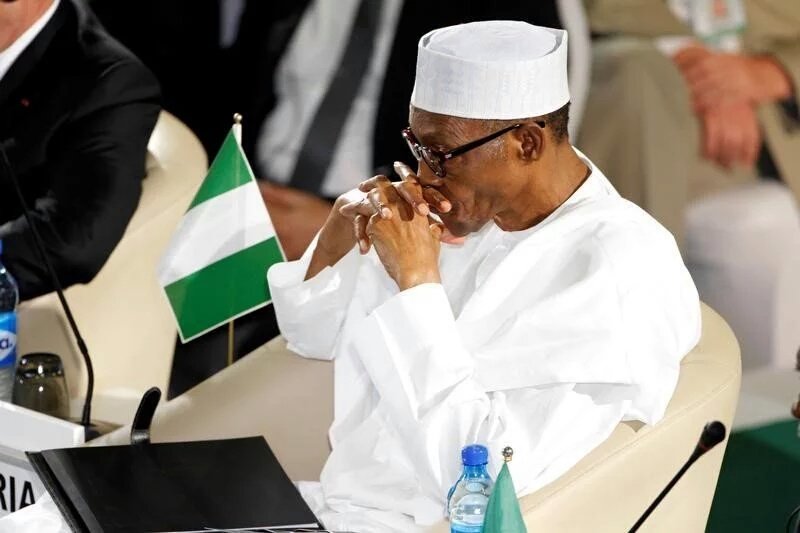
President Muhammadu Buhari presented the budget to a joint session of the National Assembly on Nov. 7, 2017.
Both houses of the National Assembly received the budget report of their appropriation committees.
At the Senate, the chairman of the senate committee on appropriation, Mr Danjuma Goje, said the increase of N500 billion was done in consultation with the executive.
He said the increment was informed by a decision to increase oil benchmark from the proposed 45 dollars to 51 dollars.
The exchange rate of N305 to a dollar and production of 2.3 million barrels of oil per day was adopted as proposed by the executive.



-

 Latest6 days ago
Full List: Meet the 2026 Nobel Prize winners across six categories
-

 Football6 days ago
Premier League Matchweek 7: Five Fixtures That Could Shape the Weekend
-
 Business4 days ago
Dangote Refinery IPO: 70% Subscription claim meets fourfold demand assertion as investors seek clarity
-

 Latest5 days ago
Umahi defends Lagos-Calabar highway route changes amid public outcry
-
Business5 days ago
Dangote Refinery IPO Extension: Was the 70% subscription report overhyped?
-

 Latest3 days ago
UCTH faces morgue crisis as 50 unclaimed corpses await mass burial
-
 Featured5 days ago
El-Rufai, ADC governorship candidate’s court appearance puts Kaduna opposition politics in focus
-

 Business3 days ago
BREAKING: Nigeria’s Inflation Rate Drops to 14.63% in September