
Business
Oil price sinks on rising crude, gasoline inventory

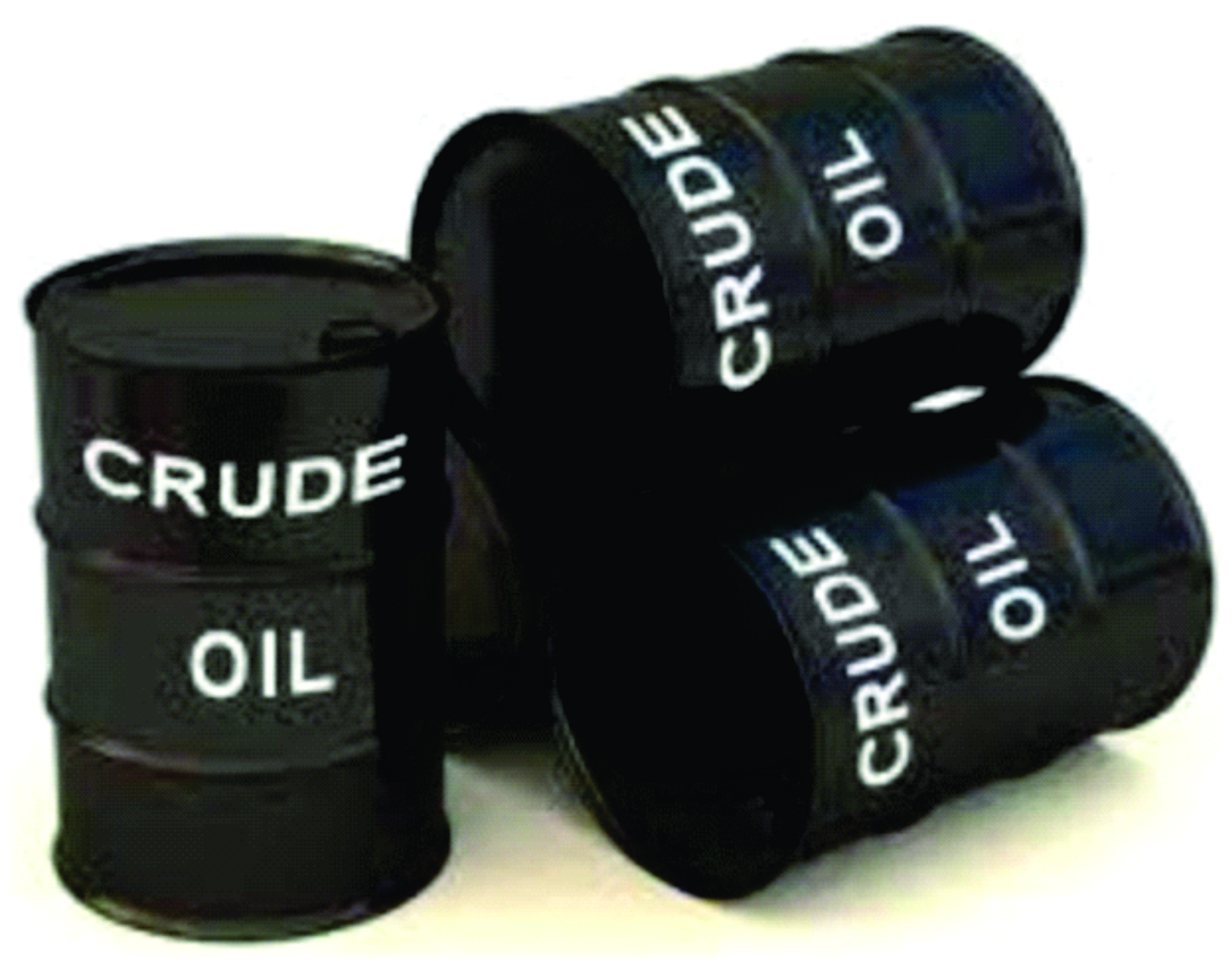
CRUDE prices trended lower on Thursday after the Energy Information Administration (EIA) reported a weekly build in crude oil inventories at 6.8 million barrels.
Brent crude traded at $61.35 a barrel while West Texas Intermediate (WTI) traded at $52.62 a barrel.
WTI had fallen to a session low of $50.66 after the report, the lowest level since Jan. 15. WTI was down $2.19, or 4.1 per cent, at $51.29 a barrel.
Brent futures had also sank as low as $59.45, also its lowest since mid-January. Brent was last down $1.78, or 2.9 per cent, at $60.19 a barrel.
A day earlier, the American Petroleum Institute (API) estimated inventories had gone up by 3.545 million barrels last week, with gasoline inventories also swelling. The report contributed to an already present downward drag on prices.
At 483.3 million barrels, the EIA said, crude oil inventories were some five per cent above the seasonal average.
In gasoline, the authority reported a build of 3.2 million barrels for the week to May 31. This compares with a decline of 600,000 barrels a week earlier. Gasoline production averaged 10 million bpd last week, compared with 10.1 million bpd a week before.
In distillate fuels, the EIA also reported an inventory build, of 4.6 million barrels for last week, which compares with a minor draw of 200,000 barrels a week earlier. Refineries churned out 5.4 million bpd of distillates last week, up from 5.1 million bpd a week earlier.
ALSO READ:Oil sinks as US pressures OPEC to lower crude prices
The EIA figures for crude oil will hardly provide any relief for prices as trade war-related concern about the global economy deepens. Earlier this week, Deutsche Bank said in a note to clients the tariff push by Washington has so far cost the U.S. financial market some $5 trillion in lost stock appreciation opportunities. According to the bank, the average annual stock growth rate since 2009 has been 12.5 per cent but in the past 12 months, this has slumped to less than one per cent mainly on the back of the U.S.-China trade war.
In addition to this concern, Rosneft’s Igor Sechin yesterday spoke out openly against an extension to the production cuts into the second half of the year and said Rosneft would seek compensation from the Kremlin if it decides to stay in the deal.













-

 Featured1 week ago
Inside INEC’s race to prepare for Nigeria’s 2027 elections
-

 Featured1 week ago
2027: APC unveils nationwide campaign timetable, Tinubu to rally in 12 states
-

 Business5 days ago
Naira faces exchange rate gap as Dollar hits N1,380 on parallel market
-
 Business1 week ago
Court dismisses ₦170m Trade Fair contract claim, says Zenith Bank was not a party
-

 Latest1 week ago
Breaking: NNPCL raises petrol price to ₦1,405 per litre amid discount controversy
-

 Football2 days ago
Man United shortlist Emery, Nagelsmann as potential replacements for Carrick
-

 Featured1 week ago
From kitchen to Supreme Court: Nigerian’s fight over alleged support for terrorists
-

 Business7 days ago
NCC launches Internet Governance Working Group to tackle AI risks, boost online safety