
Latest
Osinbajo seeks debt relief for African countries in swap deal

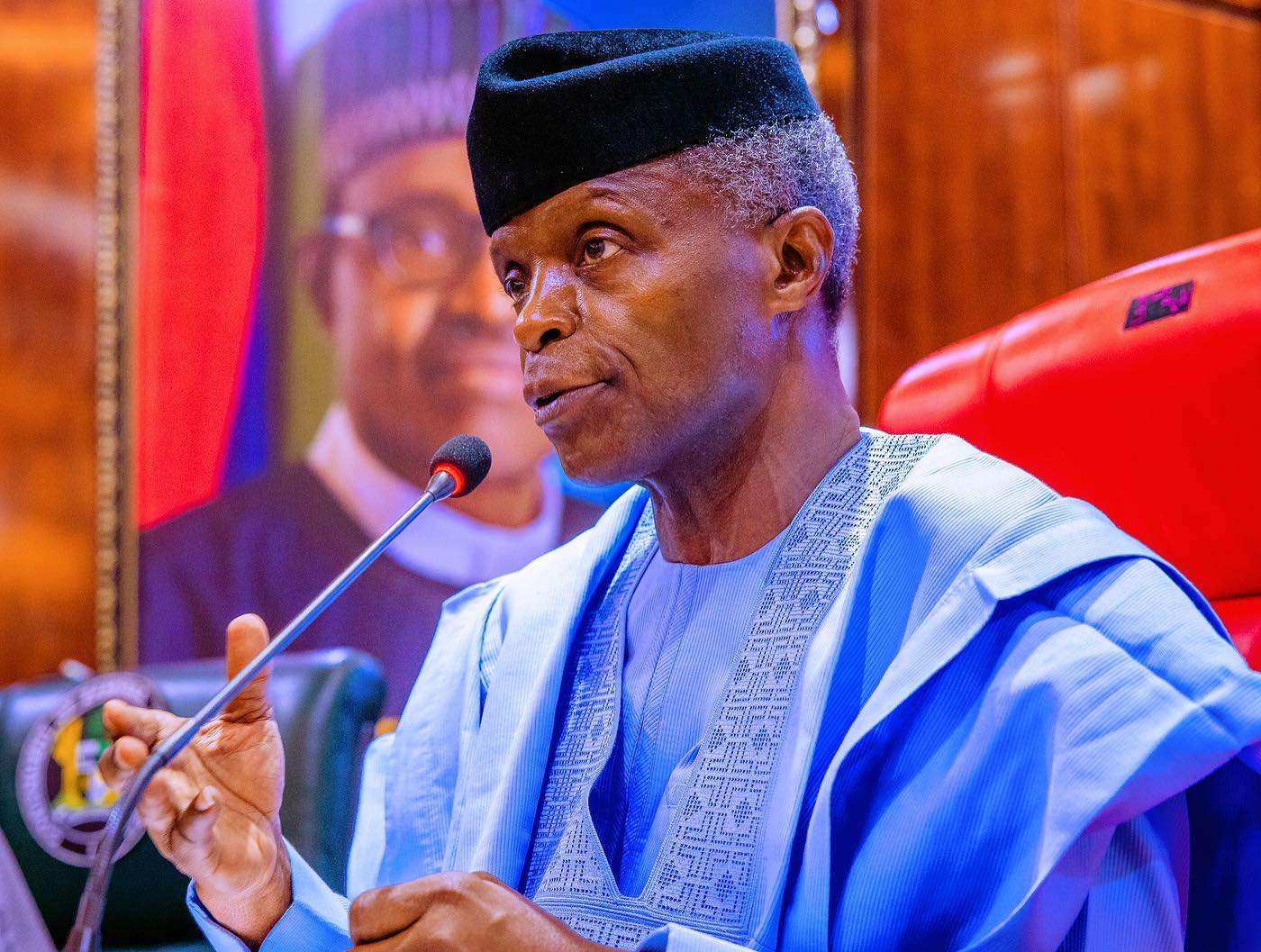
Vice-President Yemi Osinbajo has asked developed countries to “forgive” some of the debts owed to them by African nations as a way to advance climate projects in the continent.
Osinbanjo said this on Thursday during a lecture on a just and equitable energy transition for Africa at the Center for Global Development in Washington D.C., according to a statement by Laolu Akande, his spokesperson.
Referring to the concept as a debt-for-climate (DFC) swap deal, he said it is one in which the debts of African countries will be forgiven while they commit to use the same for climate projects.
He added that the deal will significantly advance the course of global net zero emissions targets, facilitate energy access and the development of African countries.
“Debt-for-climate swap is a type of debt swap where bilateral or multilateral debt is forgiven by creditors in exchange for a commitment by the debtor to use the outstanding debt service payments for national climate action programs,” Osinbajo was quoted as saying.
READ ALSO: Why Amaechi, Osinbajo, other APC presidential losers boycotted strategy meeting for Tinubu
“Typically, the creditor country or institution agrees to forgive part of a debt, if the debtor country would pay the avoided debt service payment in a local currency into an escrow or any other transparent fund and the funds must then be used for agreed climate projects in the debtor country.
“This would increase the fiscal space for climate-related investments and reduce the debt burden for participating developing countries. For the creditor, the swap can be made to count as a component of their nationally determined contributions (NDC).”
Osinbajo said for the deal to be efficient, “there are significant policy actions necessary to make this acceptable and sustainable.”
He also proposed a greater participation of African countries in the global carbon market while exploring financing options for energy transition.
According to him, there is a need to take a comprehensive approach in working jointly towards common goals, including the market and environmental opportunities presented by the financing of clean energy assets in growing energy markets.
Osinbajo further encouraged developed countries to support “Africa to develop into a global supplier of carbon credits, ranging from biodiversity to energy-based credits,” which would be a leap forward in aligning carbon pricing and related policy around achieving a just transition.
“In addition to conventional capital flows both from public and private sources, it is also essential that Africa can participate more fully in the global carbon finance market,” he said.
“Currently, direct carbon pricing systems through carbon taxes have largely been concentrated in high and middle-income countries.
“However, carbon markets can play a significant role in catalysing sustainable energy deployment by directing private capital into climate action, improving global energy security, providing diversified incentive structures, especially in developing countries, and providing an impetus for clean energy markets when the price economics looks less compelling – as is the case today.”


-

 Featured4 days ago
BREAKING NEWS: Shouts of joy rock the world as Pastor Chris opens final Healing Streams edition for 2026
-

 Football4 days ago
Man United shortlist Emery, Nagelsmann as potential replacements for Carrick
-

 Business4 days ago
Hoodlums raid JED Benue office, abduct 10 staff over power dispute
-

 Football4 days ago
Aston Villa ready to freeze out Garnacho to avoid £43m Chelsea transfer
-
 Business1 week ago
Naira faces exchange rate gap as Dollar hits N1,380 on parallel market
-

 Latest4 days ago
Akpabio tasks Tompolo-backed movement with spreading Tinubu’s renewed hope message
-

 Business4 days ago
EV adoption: Roxettes seeks cheaper financing, local manufacturing incentives
-

 Business3 days ago
How Ethiopian Airlines is challenging Africa’s aviation narrative through self-reliance