
News
Oxford to investigate its role in colonialism, loot of artifacts in Africa

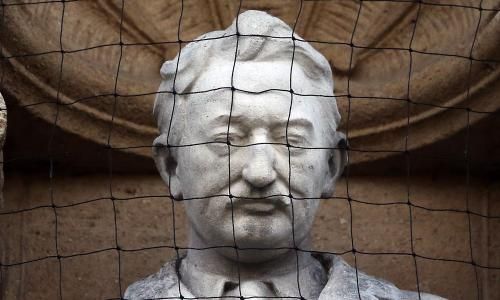
St John’s College is starting a new programme that will examine its contribution to creating and maintaining Britain’s colonial empire.
According to the Guardian, the Oxford college is pioneering an effort to crowdsource and “decolonialise” its own imperialist past.
It has already announced a new academic post whose appointee will work on a research project named St John’s and the Colonial Past, alongside Prof William Whyte, the college’s vice-president and professor of social and architectural history at Oxford.
The post would be unique within Oxbridge as an effort to investigate its own history, including the education of both apologists and critics of the empire, and hopes it will “set the standard for future work in other institutions”.
The decolonization effort followed the recent controversy over the Rhodes Must Fall campaign which began in South Africa and spread to Oxford, due to the financial links between Oriel College and its imperialist benefactor and alumnus Cecil Rhodes. The campaign is calling for the removal of a statue of Rhodes at the college.
“The drive to ‘decolonise the university’ or, at any rate, to think through the implications of institutional involvement in the imperial projects of the past – is now a global business,” the college said in announcing the post. “As yet, however, no college in Oxford or Cambridge has seriously undertaken research into its involvement in colonialism.
“This project will explore connections between the college and colonialism, uncovering benefactions to St John’s and the alumni who served in the empire. It will also investigate the monuments, objects, pictures, buildings that evoke the colonial past.”
The appointment is for a full-time two-year position as a research assistant, with applicants expected to have a doctorate or similar postgraduate qualification.
The job specification says expertise in crowdsourcing is “highly desirable” to feed into reports and workshops on the college’s past, including those alumni who benefited from its colonial links.
“Although, unlike the universities of the US, we believe that the colleges of Oxford did not own enslaved people, several undoubtedly benefitted from the largesse of those who did,” the application states.
“Many of the objects displayed in university museums and some of those owned by the colleges had their origins essentially as loot, stolen from their indigenous owners.
“Oxford in general helped to educate and train colonial administrators; missionaries; apologists for and critics of empire; and significant leaders and creators of newly independent states.”
The researcher is expected to investigate the connections between the college and colonialism, including donations to St John’s from the alumni who served in the empire. One result is to be a report on St John’s colonial past, followed by a series of workshops to discuss the findings and plan the college’s responses.
The post is to be funded by the college, the wealthiest of Oxford’s colleges which boast 500m euros in assets.
Culled from the Guardian


-
 Latest7 days ago
Full List: Meet the 2026 Nobel Prize winners across six categories
-

 Football6 days ago
Premier League Matchweek 7: Five Fixtures That Could Shape the Weekend
-

 Business5 days ago
Dangote Refinery IPO: 70% Subscription claim meets fourfold demand assertion as investors seek clarity
-

 Latest6 days ago
Umahi defends Lagos-Calabar highway route changes amid public outcry
-
Business6 days ago
Dangote Refinery IPO Extension: Was the 70% subscription report overhyped?
-

 Latest4 days ago
UCTH faces morgue crisis as 50 unclaimed corpses await mass burial
-

 Business4 days ago
BREAKING: Nigeria’s Inflation Rate Drops to 14.63% in September
-

 Featured6 days ago
El-Rufai, ADC governorship candidate’s court appearance puts Kaduna opposition politics in focus