
Business
President Buhari approves N656.11bn fresh bailout for 36 states

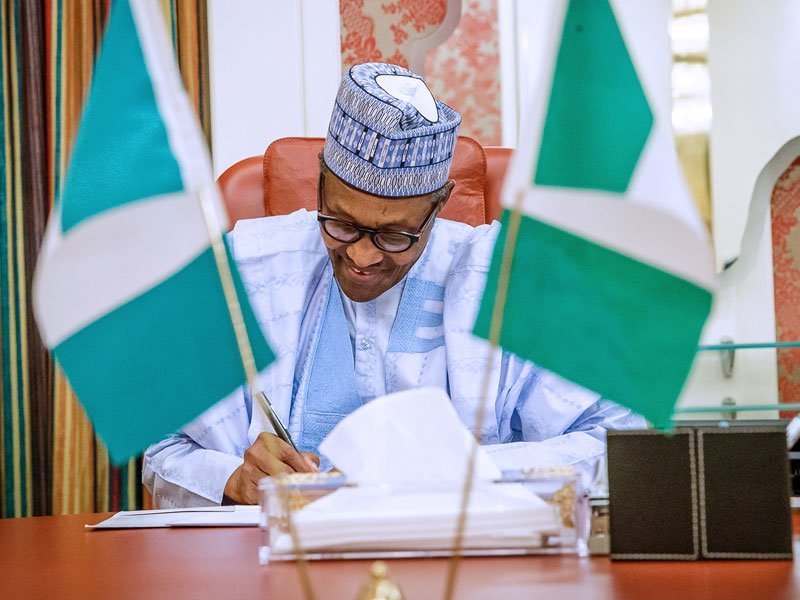
President Buhari has approved a fresh N656.112 billion Bridge Financing Facility to the 36 States. This was disclosed at the National Economic Council (NEC) meeting presided over by Vice President Yemi Osinbajo on Thursday, November 18.
A statement released by Laolu Akande, spokesperson of the Vice President, said each state would receive N18.225 billion with a 30-year tenor, and a 2-year moratorium at an interest rate of 9%.
According to the presidency, this step was taken in a bid to help state governments meet financial obligations, especially the previous budget support facility due for repayment.
The Honourable Minister of Finance Budget and National Planning, Dr Zainab Ahmed, informed the Council that the Bridge Facility is now being processed by the Central Bank of Nigeria (CBN).
The approved Bridge facility of N656.112 billion will be disbursed in six tranches over a period of six months to the States.
It would be recalled that on 15th of July, 2021, the Council had received updates on the Budget Support Facility to States. At that meeting, the Finance Minister had informed the Council that the deductions from State Governments would commence soon as repayment for the previous bailout from the CBN.











-
 Featured5 days ago
Inside INEC’s race to prepare for Nigeria’s 2027 elections
-
 Featured5 days ago
2027: APC unveils nationwide campaign timetable, Tinubu to rally in 12 states
-

 Latest1 week ago
UCTH faces morgue crisis as 50 unclaimed corpses await mass burial
-

 Business6 days ago
President Tinubu and the Low Transport Fares Fiasco
-

 Business1 week ago
BREAKING: Nigeria’s Inflation Rate Drops to 14.63% in September
-
 Business5 days ago
Court dismisses ₦170m Trade Fair contract claim, says Zenith Bank was not a party
-
 Business3 days ago
Naira faces exchange rate gap as Dollar hits N1,380 on parallel market
-
 Latest6 days ago
Global excitement builds as Healing Streams Live Services returns October 23