
Agribusiness
Rising temperatures put Africa’s rice production at risk

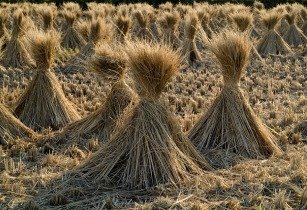
A new modelling study published today warns that the dry-season irrigated rice in West Africa’s Sahel region has reached the critical threshold of 37 degrees Celsius – the tipping point.
Further temperature rise could devastate rice yields in this region due to decreasing photosynthesis at high temperatures straw 230112 640. The study shows that rice yields in West Africa’s Sahel region in the dry season would decrease by about 45 per cent.
This is an ominous sign as yield reductions will directly translate into severe food shortages in a highly vulnerable region. Rice has fast become the preferred food of the Sahelian countries – critical for food security and political stability of the region. Rice consumption has been increasing dramatically, mainly because of changes in eating habits and rapid population growth.
According to the Intergovernmental Panel on Climate Change (IPCC), the Sahel will experience increasingly higher average temperatures as well as changes in rainfall patterns over the course of the 21st century. These changes threaten food security and the livelihoods of the region’s predominantly rural population.
“Our model shows that without adaptation, irrigated rice yields in West Africa’s Sahel region in the dry season would decrease by about 45 per cent, but with adaptation, they would decrease significantly less – by about 15 per cent,” explained the lead author Dr Pepijn van Oort, Crop Modeler at Africa Rice Centre (AfricaRice).
Dr. van Oort clarified that it is important to keep in mind that this is a West Africa average, and that there are big differences within West Africa. “Things are better in the cooler coastal regions and a lot worse in the hotter inland sites,” he added.
“Also, more investigation is needed to understand clearly photosynthesis processes at extreme temperatures, as there has been almost no research conducted on rice at such high temperatures,” Dr van Oort cautioned. “In addition, we need to explore further adaptation options, such as shifting sowing dates more into the cold dry season.”
Although rice thrives well in hot and warm climates, high temperatures of more than 35 degrees Celsius can damage plant processes and lead to lower yields. Rice is also vulnerable to cold temperatures, which can slow growth.






-

 Latest1 week ago
US Immigration fees rise from October 16 as USCIS announces new charges
-
 Latest2 days ago
Israel marks 3 years since October 7 Hamas attack amid Gaza strikes, election debate
-

 Business7 days ago
Nigeria’s $55bn reserves raise fresh questions over naira value
-

 Health6 days ago
Florida sues Pfizer over deceptive COVID-19 vaccine marketing
-

 Crime6 days ago
From camp to captivity: How kidnappers now target NYSC Corps members on highways
-

 Featured7 days ago
2027: Can Nigeria’s opposition still unite behind a single presidential candidate?
-

 Crime6 days ago
Fulani Militia leader linked to Christian killings arrested in Plateau
-

 Business1 week ago
PalmPay upgrades security centre as digital fraud risks evolve in Nigeria