
Featured
Terrorism shifting from North-East region to Middle-Belt, says report

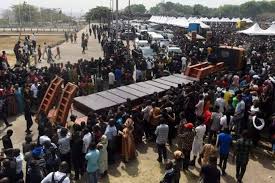
A 2019 report by the Global Terrorism Index, GTI, says terrorism is shifting from Nigeria’s North-East region to the country’s Middle-Belt following increased violence between Fulani herdsmen and farmers.
According to the report, attacks from herders resulted in the death of more Nigerians in 2018 than the number of deaths caused by the dreaded Islamic extremist group, Boko Haram in the country.
The report stated that terror-related incidents in Nigeria increased by 37 per cent, from 411 in 2017 to 562 in 2018 and also deaths from terrorism in the country rose to 2,040 in 2018, a 33 per cent increase.
“The increase was due to a substantial escalation of violence by ‘Fulani’ extremists, whilst Boko Haram recorded a decline in deaths from terrorism,” the report said.
“Violence between Nigerian herders and farmers intensified in early 2018 with approximately 300,000 people fleeing their homes. The most recent escalation in violence follows increased militia attacks and implementation of new anti-grazing legislation.
“In 2018, Fulani extremists were responsible for the majority of terror-related deaths in Nigeria at 1,158 fatalities. Terror-related deaths and incidents attributed to Fulani extremists increased by 261 and 308 per cent respectively from the prior year. Of 297 attacks by Fulani extremists, over 200 were armed assaults. Over 84 per cent of these armed assaults targeted civilians.
“However, also active and not recorded as terrorist activity are pastoralist militias who target the Fulani, increasing the likelihood of reprisals,” the report said.
The report which also ranked Nigeria, for the fifth consecutive time, since 2015, as the third country with the worst impact from terrorism, globally, attributed the decline in Boko Haram attacks to a multinational task force fighting the terrorist group.
Afghanistan, meanwhile, has overtaken Iraq to become number one on the list, while the latter moved down to the second position.
Syria, Pakistan, Somalia and India are ranked fourth, fifth, sixth, and seventh respectively in the GTI report, while Yemen, Philippines, and Democratic Republic of the Congo are eighth, ninth, and 10th.
The GTI, which is in its seventh edition, is produced annually by the Institute for Economics & Peace, an independent, non-partisan, non-profit think tank with offices in Sydney, New York, and Mexico City.


-

 Latest6 days ago
US Immigration fees rise from October 16 as USCIS announces new charges
-
 Latest17 hours ago
Israel marks 3 years since October 7 Hamas attack amid Gaza strikes, election debate
-

 Business5 days ago
Nigeria’s $55bn reserves raise fresh questions over naira value
-

 Health5 days ago
Florida sues Pfizer over deceptive COVID-19 vaccine marketing
-

 Business7 days ago
Tuoyo Erikowa wins digital marketing personality of the Year at 2026 EDGE awards
-

 Crime5 days ago
From camp to captivity: How kidnappers now target NYSC Corps members on highways
-

 Featured5 days ago
2027: Can Nigeria’s opposition still unite behind a single presidential candidate?
-

 Crime5 days ago
Fulani Militia leader linked to Christian killings arrested in Plateau