
Agribusiness
Why countries play politics with Nigeria’s exports

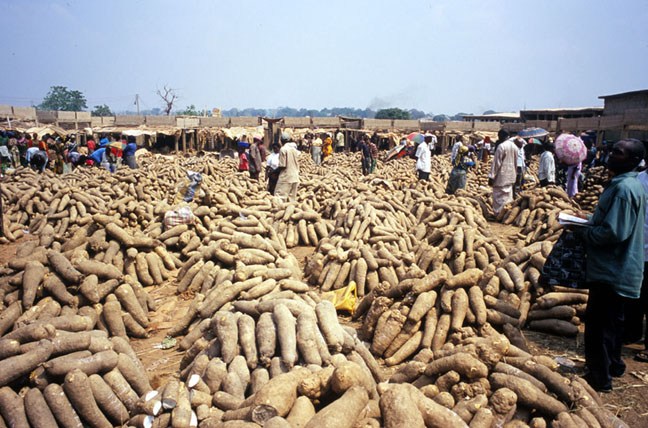
The federal government has attributed trade politics amongst nations as one of the reasons why some of the country’s exports were facing challenges in their destination countries.
According to the Special Adviser to the President on Economic Matters, Office of the Vice President, some destination countries opposed Nigeria’s exports because Nigeria had taken a stand on imports from such countries.
He said that in today’s politics, it would be difficult for the present administration to harm its local industries for the benefit of a foreign nation.
The presidential aide said that the present administration would not allow the importation of certain goods in which Nigeria had a comparative advantage.
“For instance, yams said to be grown in a neighbouring country are accepted by most advanced and developing countries, whereas the yams are grown in Nigeria,’ he told journalists during an interactive sssion in Sunday in Abuja.
“It is all trade politics that will eventually balance out. So, it is better to be self-sufficient in food production than to rely on the importation of such food items,” he said.
He added that it was not advisable for Nigeria to deplete its foreign reserves for food importation as this could make the people to spill over the borders in search of food.
He explained that the federal government had not signed the African Continental Free Trade Area (AfCFTA) agreement in order to save Nigeria from being a dumping ground for foreign goods.
Mr Dipeolu said that the country needed to carry out due diligence on such agreement to ensure that the agreement would not negatively affect the local industries.
On the issue of power, he said the country’s power generation had reached 8,100 Mega Watts (MW), adding that the government was working on the transmission lines to end epileptic power supply in some parts of the country.
“The way to go is that the government is working on gas and other environmentally friendly means to provide adequate power to the people,” he said.
He told the journalists that the country’s economy was more than N100 trillion, adding that the government alone could not finance the economy, whose growth rate was on the rise.
He urged the private sector to come to the aid of the government to provide an enabling environment for the economy to thrive.


-

 Latest1 week ago
Full List: Meet the 2026 Nobel Prize winners across six categories
-

 Football1 week ago
Premier League Matchweek 7: Five Fixtures That Could Shape the Weekend
-
 Business6 days ago
Dangote Refinery IPO: 70% Subscription claim meets fourfold demand assertion as investors seek clarity
-

 Latest7 days ago
Umahi defends Lagos-Calabar highway route changes amid public outcry
-
Business6 days ago
Dangote Refinery IPO Extension: Was the 70% subscription report overhyped?
-

 Latest5 days ago
UCTH faces morgue crisis as 50 unclaimed corpses await mass burial
-
 Featured2 days ago
Inside INEC’s race to prepare for Nigeria’s 2027 elections
-
 Business4 days ago
BREAKING: Nigeria’s Inflation Rate Drops to 14.63% in September