
Energy
OPEC Presidency: Kachikwu to tackle Iran over supply

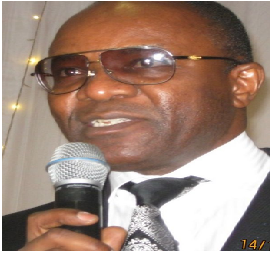
Nigeria’s minister of State for Petroleum, Dr. IbeKachikwu has said that in his capacity as the new OPEC President, he will try his best to delay Iran’s intended oversupply of crude oil in other to control the global price of crude.
“My first target as I meet with Ministers one-on-one is to try to delay Iran’s flooding of the market to the last quarter of next year. I will be talking with Iran’s oil minister on that so that we can stabilise the price,” Kachikwu told reporters in Lagos.
He said hopefully by the first or second of 2016, “we will begin to see how that statement can now embolden us to go and begin to address removing the 1.5mbpd production that is lying in the market internationally.”
“I think the key thing will be obviously crude oil price. There is a lot of sensitivity on that, $42 currently and with potential to go down if Iran throws their barrels into the field,” he said
Kachikwu who doubles as the Group Managing Director of the Nigerian National Petroleum Corporation was recently elevated to the Presidency of the Organisation of Petroleum Exporting Countries (OPEC) following his appointment as the Minister of State for Petroleum Resources in Nigeria.
He replaces Mrs. Diezani Alison-Madueke, Nigeria’s former Minister of Petroleum who was elected in November 2014 at the 166th ordinary meeting of the cartel.






-
 Latest6 days ago
Israel marks 3 years since October 7 Hamas attack amid Gaza strikes, election debate
-

 Energy6 days ago
Fuel Battle: Dangote, marketers and government clash over petrol imports
-

 Energy1 week ago
Petrol, diesel prices rise 86% in 2026 as costs hit fresh highs
-

 Football7 days ago
Nigeria’s World Cup exit under spotlight as FIFA’s DR Congo files emerge
-
 Energy1 week ago
Has Iran lost control of the Strait of Hormuz? Oil flows rebound as war disruptions persist
-
 Latest1 day ago
Full List: Meet the 2026 Nobel Prize winners across six categories
-
 Latest7 days ago
US Court set to rule on release of FBI, DEA records on Tinubu
-
 Business7 days ago
Nigerian investors at a crossroads as fixed-income yields slide