
Business
Naira appreciates marginally at official market amid economic pressures

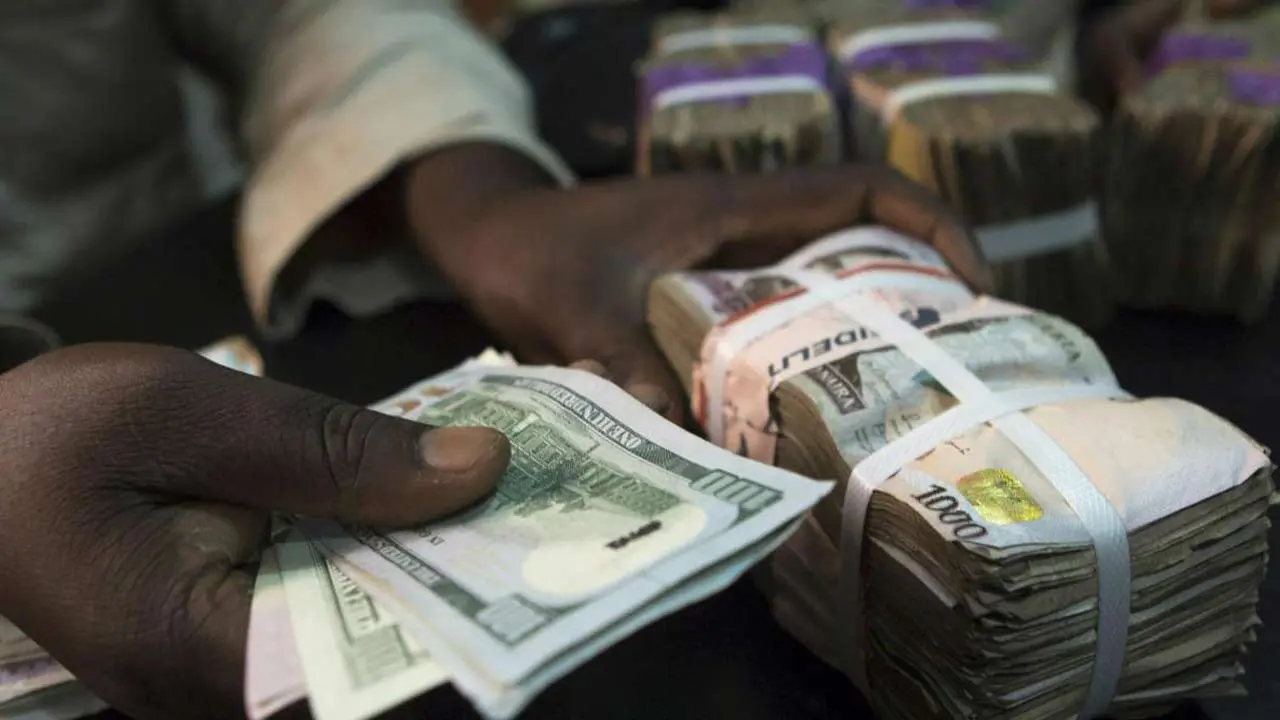
The Nigerian naira closed November with slight gains in both the official and parallel markets, reflecting marginal stability in the face of mounting economic challenges.
Data from FMDQ and Bureau de Change (BDC) operators indicate a nuanced exchange rate performance influenced by government policies, forex interventions, and global economic conditions.
In the official market, the naira appreciated by 0.17%, strengthening from an opening rate of ₦1,675.49/$1 on November 1 to close at ₦1,672.69/$1 by month-end. The currency hit its strongest rate of ₦1,644.86/$1 on November 28 and its weakest at ₦1,690.37/$1 on November 18.
The parallel market saw a 0.40% appreciation, improving from ₦1,750/$1 at the start of the month to ₦1,743/$1 by the end. The naira’s strongest rate was ₦1,725/$1 on November 12, while it touched ₦1,755/$1 on November 22 and 26.
READ ALSO: Naira strengthens in official market amid mixed signals in parallel market
The naira also recorded gains against other major currencies in the parallel market, appreciating 1.76% against the pound to close at ₦2,230/£1 and 1.88% against the euro at ₦1,830/€1.
In September, the Central Bank of Nigeria (CBN) injected $20,000 to eligible BDC operators at a rate of ₦1,580/$1, and periodic interventions are expected to continue.
Experts highlight that despite the modest appreciation, significant challenges persist: Rising Dollar Demand: Increased importation for the holiday season and inflationary pressures are likely to intensify forex demand.
Revenue Strain: Oil prices remaining below $80 per barrel constrain government revenue and forex supply.
Structural Reforms: The naira’s long-term stability is tied to addressing forex supply bottlenecks, inflation control, and diversification of the economy.
Economic analyst Dr. Tayo Adegbite suggests that the government’s directive for local purchase of refined fuel from the Dangote Refinery could ease dollar demand in the coming months.
“Local sourcing for fuel could significantly reduce import dependency, which has been a major strain on forex reserves. However, sustained stability requires robust fiscal and monetary coordination,” Adegbite noted.
Additionally, Nigeria’s foreign reserves grew by 1.10% in November, from $39.78 billion to $40.22 billion, bolstering the CBN’s ability to intervene in the forex market.
While November’s performance offers some optimism, analysts caution that inflation, forex constraints, and global economic conditions will shape the naira’s trajectory moving forward. The upcoming holiday season may exacerbate dollar demand, putting renewed pressure on the currency.


-

 Business3 days ago
OPay explains how Nigerians can access FG’s N50,000 monthly cash relief
-

 Sports1 week ago
Senegal opens Dakar 2026 Youth Olympic Games, Africa’s first Olympic event
-

 Latest1 week ago
FG Announces N50,000 cash support for vulnerable Nigerians under new relief programme
-

 Business1 week ago
NNPC’s N66-per-litre petrol discount set to end October 31
-

 Latest1 week ago
INEC recognises Pantami for Gombe, keeps Kano NDC candidate off final list
-

 Latest1 week ago
NDC Chieftain tells Atiku to drop presidential ambition over son’s support for Tinubu
-

 Crime1 week ago
Doris Ogala remanded as Court adjourns bail hearing to November 6
-

 Latest1 week ago
One dead, one injured in three road emergencies across Lagos – LASEMA