
Business
Dollar holds steady against other currencies

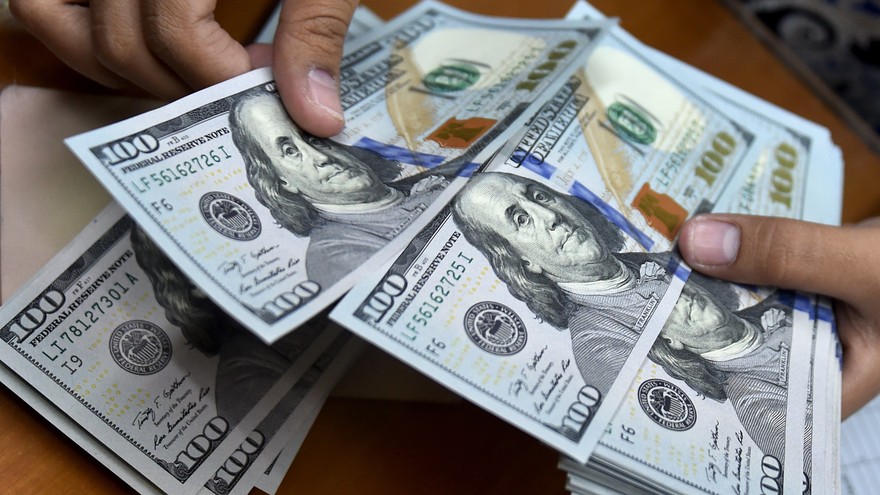
The United States of America dollar held steady on Tuesday, December 26, holiday-thinned trade, shrugging off upbeat Japanese economic data as market participants pondered about next year’s potential catalysts.
The dollar index, which tracks the greenback against a basket of six major rivals, edged down slightly to 93.278 .DXY.
Markets in Australia and Hong Kong remained closed after Monday’s Christmas holiday, and many financial centers in Europe will also be shut on Tuesday.
The euro inched down 0.1 percent to $1.1869 EUR=. The single currency gave up some ground last week after Catalan separatists won a regional election, deepening Spain’s political crisis in a sharp rebuke to Prime Minister Mariano Rajoy and European Union leaders who backed him.
Against the yen, the dollar was almost flat on the day at 113.30 JPY=.
“Yesterday and today, major markets are closed, so it’s difficult to see clear direction at the moment, and we need to think about what will happen in the beginning of next year,” said Masafumi Yamamoto, chief currency strategist for Mizuho Securities in Tokyo.
“I still believe that the passage of the U.S. tax bill and the avoidance of the government shutdown are positive for the dollar,” he said. “In a relative sense, the dollar has an advantage.”
Last week, the U.S. Congress approved a tax code overhaul that was expected to give at least a short-term lift to already solid economic growth. They also pushed through a measure to fund the federal government through Jan. 19, averting agency shutdowns.
The market had a muted reaction to data released early on Tuesday which showed that Japan’s core consumer prices rose for the 11th straight month, up 0.9 percent year-on-year, and household spending jumped in November.
While the inflation rate remains distant from the Bank of Japan’s 2 percent target, the rise offered some hope that a steady economic recovery will gradually drive up prices.
On Tuesday, Japanese Prime Minister Shinzo Abe urged companies to raise wages by 3 percent or more next year, keeping up pressure on firms to spend their huge cash pile on wages to broaden the benefits of his “Abenomics” stimulus policies.
Minutes of the BOJ’s October meeting, released on Tuesday, showed most members shared the view that the central bank should maintain its easy policy.
The BOJ kept monetary policy steady last week and its governor reassured markets the central bank will lag well behind overseas peers in ending its ultra-easy policies.









-

 Trending Stories1 week ago
Davido, Wizkid, Burna Boy or Asake: Who is having the biggest 2026 so far?
-

 Football1 week ago
Premier League releases 2026/27 festive fixtures, 7 matches set for Boxing Day
-

 Crime6 days ago
Anambra Police arrest mother over alleged child sexual exploitation
-

 Business5 days ago
Jetour Nigeria, dealers take dashing, other models to Abuja Experience
-

 Business6 days ago
Dangote Refinery IPO shifts spotlight to corporate governance, investor protection
-

 Business3 days ago
Dangote IPO rush crashes Bamboo login as investors flood platform
-

 Business2 days ago
Abuja gears up for Jetour T2’s rugged-luxury experience
-

 Business4 days ago
Nigeria Business Outlook: Dangote IPO, markets, inflation and naira in focus this week