
Business
Experts expect further interest rate hike as CBN’s MPC meet

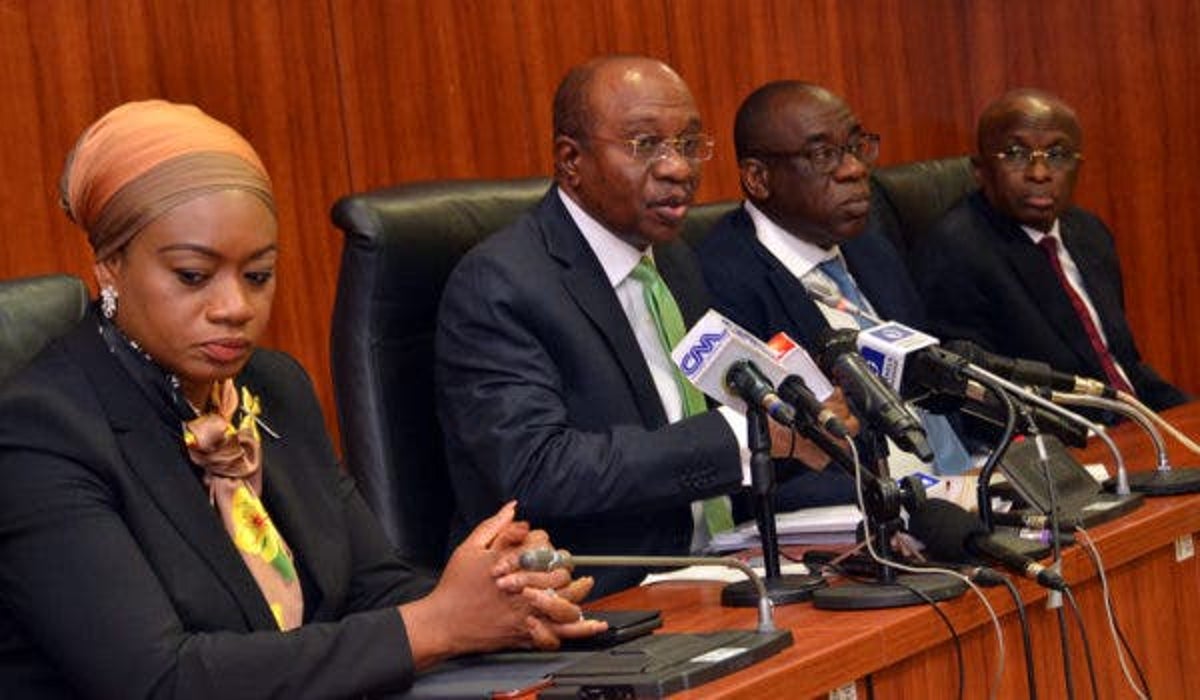
As the Central Bank of Nigeria (CBN) commences its two-day monetary policy committee (MPC) meeting today, Monday 20, some financial experts have projected that the apex bank would retain the current policy rates.
Analysts believe that the recent inflation numbers as well as other factors will likely encourage the Central Bank of Nigeria’s (CBN) Monetary Policy Committee to retain its unanimously hawkish position.
Recall that the CBN had in January raised the Monetary Policy Rate (MPR), which measures interest rates from 16.5 per cent to 17.5 percent to tame inflation.
The MPC raised the monetary policy rate by 100 basis points to 17.5 per cent and kept the asymmetric corridor at +100/-700 basis points around the MPR.
The MPC retained Cash Reserve Ratio (CRR) by 32.5 per cent while the liquidity ratio was kept at 30 per cent.
However, despite the hawkish stand, Nigeria’s headline inflation rate rose by 0.09 percentage points to 21.91 per cent in February 2023 from 21.82 per cent in January 2023.
READ ALSO: Expert lauds MPC for raising MPR to 17.5 %
This represents the second consecutive monthly rise in headline inflation rate this year since December 2022.
Analysts at Financial Derivatives Company (FDC) said as long as the CBN remains committed to tackling inflation, the high interest rate environment will persist.
“We believe that a moderate reversal in the headline numbers will skew the voting pattern of the committee members in favour of maintaining a tightening stance,” they said.
According to experts at Proshare, another 100-basis points rate hike would push the minimum lending rate to 18.5 per cent, citing the sharp decline in PMI numbers.
“The favorable decline in month-on-month inflation observed in February is yet to constitute a trend. Moreover, the re-monetization of the old N500 and N1000 would reflate effective demand and price growth in 30 -60 days.
READ ALSO: MPC members propose FX, domiciliary account reforms
“While we expect a slight reduction in commodity prices to moderate, as we approach the dry season harvest of cassava, maize, rice, and yam, monetary authorities must explore alternatives to interest rate hikes to increase capital importation.
Samuel Bamidele, an economist, noted that Nigerians should theoretically expect the deposit interest rate to rise.
“But it is not as straightforward in Nigeria, where the interest rate does not really have the weight of the impact,” he said.
He said that too much money in the system may have some impact on inflation but it might not be significant enough. There are structural issues that impact the rate of inflation outside of the monetary policy of the CBN, he noted.
The MPC is the highest policy making committee of the apex bank with the mandate to review economic and financial conditions in the economy, and determine appropriate stance of policy in the short to medium term.


-

 Latest5 days ago
Full List: Meet the 2026 Nobel Prize winners across six categories
-

 Football5 days ago
Premier League Matchweek 7: Five Fixtures That Could Shape the Weekend
-

 Latest4 days ago
Umahi defends Lagos-Calabar highway route changes amid public outcry
-

 Business3 days ago
Dangote Refinery IPO: 70% Subscription claim meets fourfold demand assertion as investors seek clarity
-
Business4 days ago
Dangote Refinery IPO Extension: Was the 70% subscription report overhyped?
-

 Latest2 days ago
UCTH faces morgue crisis as 50 unclaimed corpses await mass burial
-

 Featured4 days ago
El-Rufai, ADC governorship candidate’s court appearance puts Kaduna opposition politics in focus
-

 Business2 days ago
BREAKING: Nigeria’s Inflation Rate Drops to 14.63% in September