
Latest
Experts warn hybrid militant networks in Sahel could spill Into Nigeria

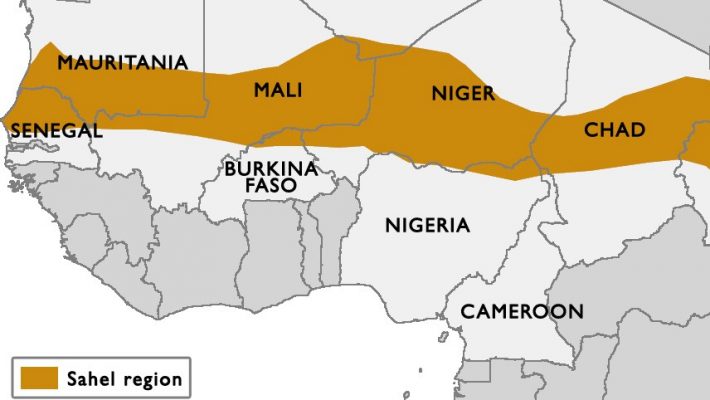
Security experts and regional analysts have raised fresh concerns over the rapidly evolving security crisis in the Sahel, warning that growing alliances between jihadist organizations, armed separatist factions, and transnational criminal networks are accelerating instability across West Africa and posing serious implications for Nigeria’s national security.
According to recent security assessments, including findings from the 2026 Global Terrorism Index and regional defence analyses, the conflict landscape in the Sahel has evolved beyond traditional insurgency into a sophisticated network of hybrid militant and criminal operations capable of undermining state authority across vast territories.
Analysts say the central Sahel — particularly Mali, Burkina Faso, and Niger — is witnessing increasing collaboration between extremist groups linked to al-Qaeda and Islamic State affiliates and local armed factions seeking territorial influence, access to smuggling routes, and economic control.
One of the developments drawing international concern was a series of coordinated attacks in northern and central Mali earlier this year, which reportedly exposed tactical cooperation between Jama’at Nusrat al-Islam wal-Muslimin and Tuareg rebel factions operating in the region.
Security observers say the alliances are increasingly pragmatic rather than ideological, driven by mutual interests in territorial expansion, access to illicit revenue streams, and resistance against weakened state institutions.
Experts argue that the withdrawal of several Western counterterrorism missions from the Sahel, coupled with political instability following military coups in Mali, Burkina Faso, and Niger, has created a widening security vacuum now being exploited by armed groups.
For Nigeria, analysts warn that the threat carries major strategic implications due to the country’s long and porous northern borders with Niger and the broader instability spreading across the Sahel corridor.
Security experts caution that the convergence of terrorism and organized crime in the Sahel could intensify arms trafficking, cross-border banditry, and extremist infiltration into Nigeria’s northern states, particularly in regions already struggling with insurgency, kidnapping, and rural violence.
There are also fears that criminal networks operating across Niger Republic may increasingly strengthen logistical links with armed groups active in Nigeria’s North-West and North-Central regions, where banditry and mass abductions have become persistent security challenges.
Analysts note that the growing overlap between terrorism and illicit economies — including fuel smuggling, illegal mining, and weapons trafficking — could further destabilize border communities and undermine regional security cooperation efforts involving Nigeria.
Some experts have also warned that extremist groups pushed out of parts of the Sahel may seek to establish new operational corridors through Nigeria’s vast forest belts and poorly governed rural territories, increasing pressure on already overstretched security agencies.
The strategic use of forests and border reserves across the Sahel and Gulf of Guinea regions, particularly the W-Arly-Pendjari (WAP) complex spanning Benin, Burkina Faso, and Niger, has further heightened concerns among West African governments over the southward movement of armed groups toward coastal states and commercial trade routes.
Humanitarian agencies continue to warn about worsening civilian conditions linked to the crisis, with thousands killed and displaced across the central Sahel in recent years, while food insecurity and economic disruption continue to deepen regional instability.
Security analysts argue that Nigeria, as West Africa’s largest economy and most populous country, could face increased pressure if the Sahel crisis continues to expand unchecked. They warn that beyond military threats, the instability could worsen migration pressures, disrupt regional trade, strain border security systems, and fuel recruitment opportunities for extremist and criminal groups.
Experts insist that military operations alone will not be enough to contain the growing threat. They say governments across the region, including Nigeria, must combine security responses with stronger governance, economic development, intelligence-sharing, and cross-border cooperation to prevent the crisis from evolving into a wider regional destabilization emergency.
Observers say the evolving convergence between terrorism, organized crime, and political instability now represents one of the most significant long-term security threats facing West Africa.


-

 Latest5 days ago
Full List: Meet the 2026 Nobel Prize winners across six categories
-

 Football5 days ago
Premier League Matchweek 7: Five Fixtures That Could Shape the Weekend
-
 Latest4 days ago
Umahi defends Lagos-Calabar highway route changes amid public outcry
-

 Business3 days ago
Dangote Refinery IPO: 70% Subscription claim meets fourfold demand assertion as investors seek clarity
-
Business4 days ago
Dangote Refinery IPO Extension: Was the 70% subscription report overhyped?
-

 Latest2 days ago
UCTH faces morgue crisis as 50 unclaimed corpses await mass burial
-

 Featured4 days ago
El-Rufai, ADC governorship candidate’s court appearance puts Kaduna opposition politics in focus
-
 Business2 days ago
BREAKING: Nigeria’s Inflation Rate Drops to 14.63% in September