
Business
Fitch reaffirms Ecobank Nigeria’s stable outlook

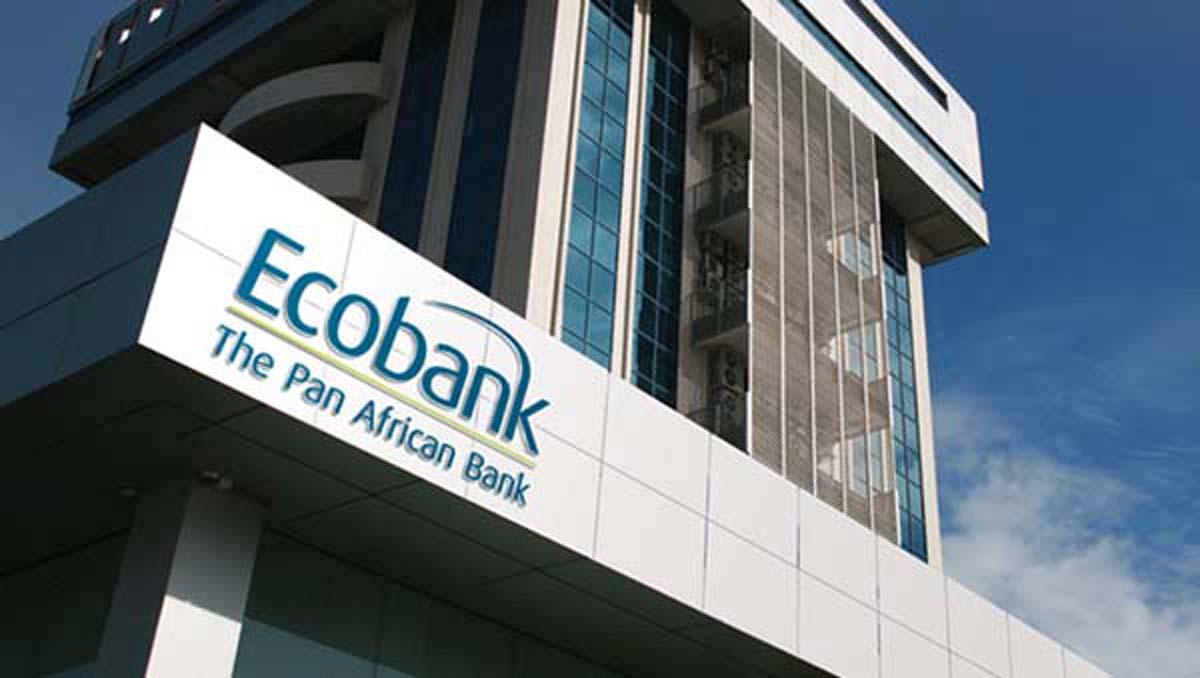
Fitch Ratings has affirmed Ecobank Nigeria Limited’s (ENG) Long-Term Issuer Default Rating (IDR) at ‘B-‘with a Stable Outlook.
Fitch also affirmed the Bank’s Viability Rating (VR) at ‘b-‘and National Long-Term Rating at ‘BBB (nga)’.
The rating agency released this rating last week, stating that the Bank’s IDRs are driven by its standalone creditworthiness, as expressed by its Viability Rating. Fitch had in January also rated Ecobank Nigeria Limited’s (ENG) Long-Term Issuer Default Rating (IDR) at ‘B-‘ with a Stable Outlook.
According to the report, though “ENG has a moderate market share of Nigeria’s banking sector assets (3.9% at end of 2021), its franchise gets an edge and benefits from being a subsidiary of Ecobank Transnational Incorporated (ETI; B-/Stable), a large pan-African banking group with operations spanning 33 countries across Sub-Saharan Africa (SSA)”.
READ ALSO: Ecobank Nigeria to host Webinar on investment opportunities
The report stated “rising global risks will weaken domestic operating conditions as any downside to operating conditions, “Inflation (17.7% in May 2022) is expected to remain stubbornly high, posing downside risks to real GDP growth forecasts of 3.1% and 3.3% in 2022 and 2023, respectively. However, downside risks are somewhat mitigated by strong oil prices, which should also underpin growth in non-oil sectors and banks’ asset quality”. It stated.
It reiterated that the Viability Rating of Ecobank Nigeria reflects its standalone creditworthiness despite the concentration of its operations within Nigeria’s challenging operating environment, high credit concentrations, asset-quality weaknesses, modest profitability, and weak capitalisation in the context of these risks. It also reflects a sizable franchise and a healthy funding and liquidity profile.
“Ecobank Nigeria ENG has a Shareholder Support Rating (SSR) of ‘ccc+’. Fitch sees a high propensity in ETI to provide support given ENG’s importance to the parent’s pan-African strategy as its largest subsidiary (22% of group assets at end of 2021) and its presence in SSA’s largest economy. Fitch observed that rising global risks will weaken domestic operating conditions. Inflation (17.7% in May 2022) is expected to remain stubbornly high, posing downside risks to real GDP growth forecasts of 3.1% and 3.3% in 2022 and 2023, respectively. However, downside risks are somewhat mitigated by strong oil prices, which should also underpin growth in non-oil sectors and banks’ asset quality”. It stated.


-

 Latest4 days ago
Full List: Meet the 2026 Nobel Prize winners across six categories
-
 Featured1 week ago
103 Million Voters: What does INEC’s new register say about Nigeria’s population?
-

 Football3 days ago
Premier League Matchweek 7: Five Fixtures That Could Shape the Weekend
-

 Latest3 days ago
Umahi defends Lagos-Calabar highway route changes amid public outcry
-
 Business3 days ago
Dangote Refinery IPO Extension: Was the 70% subscription report overhyped?
-
Business2 days ago
Dangote Refinery IPO: 70% Subscription claim meets fourfold demand assertion as investors seek clarity
-

 Featured3 days ago
El-Rufai, ADC governorship candidate’s court appearance puts Kaduna opposition politics in focus
-

 Latest1 week ago
Nigeria to Ghana: Inside police hunt for Anambra kidnap suspect