
Energy
Gas shortage cuts 2,148MW electricity from grid

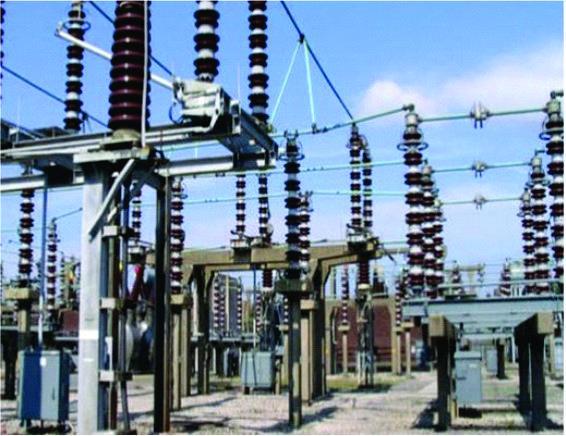
There are strong indications that Nigeria’s power stakeholders are yet to find a lasting solution to the intractable cases of breaches in gas supplies to power generating plants.
This week, it was announced that shortage in gas supply for power generation cut down electricity by 2,148 megawatts (MW) at the national grid last weeks.
Details from the daily operational report from the Federal Ministry of Power, Works and Housing this week showed that 10 Generation Companies (GenCos) were unable to get enough gas to produce that quantum of power which was their actual operational capacity.
The Minister of Power, Works and Housing, Mr. Babatunde Fashola, while briefing at the New Haven Transmission Substation in Enugu, said 1MW of electricity could energise about 200 homes.
By virtue of the statistics, it means that about 429,600 homes could have been energised with the 2,148MW lost to gas shortage last week Thursday when peak electricity generation started at 4,514MW and dropped to 3,467MW.
Besides, a breakdown of the shortage indicates that Geregu NIPP GenCo in Kogi State was worst hit as it lost 435MW. Its entire generation capacity was shut down due to the gas constraint. Olorunsogo NIPP in Ogun State lost 360MW and could not generate any power; while Afam VI GenCo in Rivers State lost 340MW to the shortage.
The other heavy losses occurred at Omotosho NIPP in Ondo State where 240MW was lost; another 230MW was not generated at Odukpani NIPP near Calabar.
Besides, there had been a revelation by the Nigerian Electricity Regulatory Commission (NERC) that Power Purchase Agreements (PPAs) and Gas Supply Agreements (GSAs) of electricity generation companies (Gencos) show that 20 Gencos do not have active PPAs, while another 18 do not have GSAs.
PPAs are contracts between two parties in which one party generates electricity and the other purchases the electricity. It represents agreements to purchase a certain amount of power for a certain price and for a certain amount of time, thus reducing variability of costs and profits. There are multiple uses for PPAs, including utilities, which use them to procure power from independent power producers, and large power users, who use them to obtain preferential and steady rates from utilities. On the other hand, a GSA is usually a binding mutual agreement to sell and purchase stated volumes of gas at agreed times and places and for an agreed price between gas producers or suppliers and Gencos. It was not clear if the short supply of gas stemmed from pipelines vandalism or sabotage had been regularly fingered in cases of that nature in the Niger Delta.










-

 Featured1 week ago
Inside INEC’s race to prepare for Nigeria’s 2027 elections
-

 Featured1 week ago
2027: APC unveils nationwide campaign timetable, Tinubu to rally in 12 states
-

 Business5 days ago
Naira faces exchange rate gap as Dollar hits N1,380 on parallel market
-
 Business1 week ago
Court dismisses ₦170m Trade Fair contract claim, says Zenith Bank was not a party
-
 Latest1 week ago
Breaking: NNPCL raises petrol price to ₦1,405 per litre amid discount controversy
-

 Football2 days ago
Man United shortlist Emery, Nagelsmann as potential replacements for Carrick
-

 Featured1 week ago
From kitchen to Supreme Court: Nigerian’s fight over alleged support for terrorists
-

 Business7 days ago
NCC launches Internet Governance Working Group to tackle AI risks, boost online safety