
Business
Global oil prices dip after rally as strong U.S. dollar, key economic data loom

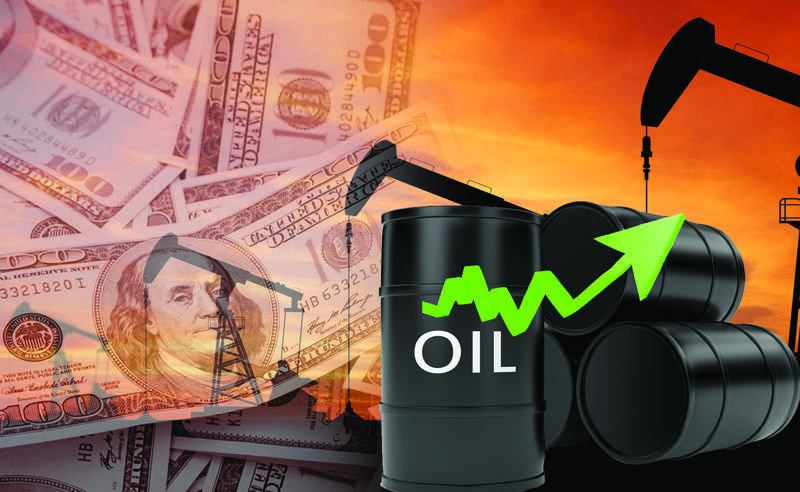
Global oil prices slid on Monday, snapping a five-session rally fueled by optimism over rising demand.
A robust U.S. dollar and investor caution ahead of crucial economic updates from the Federal Reserve and U.S. labor market weighed on the market, signaling a complex week ahead for energy traders.
Brent crude futures fell by 28 cents, or 0.4%, to $76.23 per barrel by 0800 GMT, retreating from Friday’s peak—the highest since October 14. Similarly, U.S. West Texas Intermediate (WTI) crude dipped 27 cents, or 0.4%, to $73.69 per barrel after reaching its highest point since October 11.
The five-day rally had been supported by colder weather in the Northern Hemisphere and fiscal stimulus measures in China aimed at revitalizing its slowing economy.
However, a strengthening U.S. dollar, which hovered near a two-year high, has dampened these gains by making oil—priced in dollars—more expensive for global buyers.
“The strength of the dollar remains a key concern for investors,” noted Priyanka Sachdeva, a senior market analyst at Phillip Nova. The dollar’s resilience is tied to market expectations that the Federal Reserve may maintain a hawkish stance on monetary policy.
READ ALSO: Global oil prices edge higher on first trading day of 2025 amid optimism, uncertainty
Investors are closely watching two major economic indicators this week: the minutes of the Fed’s most recent meeting, set for release on Wednesday, and the December payroll report, expected on Friday. Both reports are anticipated to provide insight into the Fed’s next moves and their potential impact on energy demand.
In a significant market development, Saudi Aramco announced its first price increase for Asian buyers in February after three consecutive months of reductions, signaling optimism in regional demand recovery. This comes amid ongoing uncertainty surrounding global supply dynamics.
Geopolitical tensions also remain a factor. Potentially stricter sanctions on Iranian and Russian oil exports could tighten supply chains. Analysts project that if new sanctions on Iran materialize, the nation’s crude output could fall by 300,000 barrels per day, dropping to 3.25 million barrels daily in the second quarter.
In the U.S., domestic oil production offers mixed signals. Baker Hughes reported a slight dip in the U.S. oil rig count last week, down by one to 482. However, concerns linger over potential policy shifts that could lead to expanded production, adding further complexity to the supply outlook.
On a global scale, analysts are forecasting a supply surplus for 2025, driven by anticipated growth in non-OPEC supplies, including from the U.S. Patrick De Haan, Head of Petroleum Analysis at GasBuddy, suggested that OPEC’s ability to control prices may be waning. “OPEC’s relevance likely has been reduced. They are continuously fighting lower prices,” De Haan remarked.
The coming days will be pivotal for the oil market as traders balance short-term signals—such as economic data and dollar movements—against longer-term concerns over supply dynamics and geopolitical risks. With global demand and non-OPEC supply both in flux, oil markets face heightened volatility and uncertainty moving into 2025.


-
 Latest6 days ago
Israel marks 3 years since October 7 Hamas attack amid Gaza strikes, election debate
-

 Energy6 days ago
Fuel Battle: Dangote, marketers and government clash over petrol imports
-
 Energy7 days ago
Petrol, diesel prices rise 86% in 2026 as costs hit fresh highs
-

 Energy1 week ago
Has Iran lost control of the Strait of Hormuz? Oil flows rebound as war disruptions persist
-

 Football7 days ago
Nigeria’s World Cup exit under spotlight as FIFA’s DR Congo files emerge
-

 Latest6 days ago
US Court set to rule on release of FBI, DEA records on Tinubu
-

 Business6 days ago
Nigerian investors at a crossroads as fixed-income yields slide
-

 Business1 week ago
LoveWorld Trade and Investment Forum to Convene Business Leaders in Accra