
News
How Transport Sector Could Forestall Nigeria’s Economic Recession

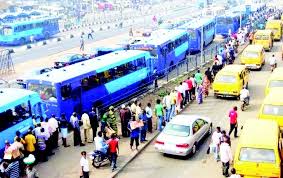
Despite the 6.1 percent contraction of Nigeria’s economy in the second quarter of the year 2020, there are indications that the transportation sector could prevent a fatal economic recession postulated by economic experts and the National Bureau of Statistics (NBS).
Transport experts have posited that expeditious actions to address infrastructure deficits across the various modes of transport, sufficient provision of palliatives and resolving the policy challenges via passage of crucial transport bills could prevent the impending recession.
Last week, NBS statistics indicated that three sub-sectors of transport featured in the nation’s top five declining sectors, as rail transport declined by -63.3 percent, aviation by -57.4 percent and road by -51.4 percent. The top five regressing sectors were led by the oil and gas sector with -67.8 percent growth, while insurance completed the list with -29.5 percent.
Although the decline was largely attributed to significantly lower levels of both domestic and international economic activity during the second quarter, which resulted from nationwide shutdown efforts aimed at containing the COVID-19 pandemic; some experts have argued that there were worrisome signs for the nation’s economy before the pandemic.
The Coordinator, Transport and Logistics Group, Nigeria Economic Summit Group (NESG), Dr. Ikenna Nwosu told MMS Plus that the negative growth across all transport sub-sectors wasn’t just a result of the COVID-19 pandemic and consequent lockdown.
His words: “Prior to the pandemic, there were other factors such as the closure of the land borders which meant that cargoes couldn’t move through the land borders. The situation at the seaports with regards to the congestion further complicated issues as cargoes at seaports could hardly come out without delays and additional charges.”
“People had to rely more on air cargo but that couldn’t handle the volume addressed by the seas. Naturally, the complete economic lockdown across all states affected movement of goods, people and services. So, transportation was affected across all sectors. Although courier services were allowed to continue, they were epileptic because passenger flights weren’t there to compliment them.
The rail also didn’t work during the pandemic; however, banditry along the rail routes made the government to suspend the rail prior to the pandemic particularly the Abuja- Kaduna rail. These factors haven’t been addressed and they show that the negative growth of the transport sector isn’t purely as a result of COVID-19 pandemic.
The government needs to do more to address these issues. As a nation, Nigeria has international commitments and this closure of the land borders affects the nation’s commitment at Economic Community of West African States (ECOWAS) and the recent African Continental Free Trade Area (AfCFTA). These treaties emphasize free movement of goods and services. Nigeria’s reluctance to sign AfCFTA made the nation lose the secretariat and the position of Executive Secretary.


-

 Featured6 days ago
Inside INEC’s race to prepare for Nigeria’s 2027 elections
-
 Latest7 days ago
Global excitement builds as Healing Streams Live Services returns October 23
-
 Featured6 days ago
2027: APC unveils nationwide campaign timetable, Tinubu to rally in 12 states
-

 Business7 days ago
President Tinubu and the Low Transport Fares Fiasco
-
 Business1 week ago
BREAKING: Nigeria’s Inflation Rate Drops to 14.63% in September
-
 Business3 days ago
Naira faces exchange rate gap as Dollar hits N1,380 on parallel market
-
 Business6 days ago
Court dismisses ₦170m Trade Fair contract claim, says Zenith Bank was not a party
-
 Latest6 days ago
Breaking: NNPCL raises petrol price to ₦1,405 per litre amid discount controversy