
Business
Investors jittery over Buhari’s economy policy

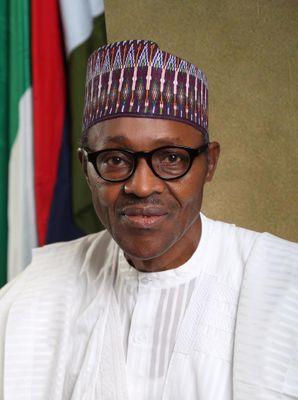
…as growth rate slow to 16-year low of 3.3%
By ODUNEWU SEGUN
HOPES are beginning to fizzle out for investors who had anticipated stocks to rise following the promise of President Muhammadu Buhari during this year’s presidential campaign that he would turn the economy around once elected after decades of mismanagement.
With his antecedents, investors had hoped for a better business environment, and was quite hopeful when in his first month, stocks soared. But many months after, investors are beginning to despire following stringent economy policies, especially the forex policy which has now become a source of concern for investors and manufacturers.
The Central Bank of Nigeria, with Buhari’s backing, has burned through $4.3 billion of reserves this year and choked off supply of foreign exchange to banks and their customers to defend the naira. The restrictions prompted JPMorgan Chase & Co. to remove Nigeria from its local-currency emerging-market bond indexes, tracked by more than $200 billion of funds, in September, triggering a selloff in the nations’ assets.
While the naira has been all but fixed at about 198 to 199 per dollar since March, forward prices suggest it will drop by almost one-fifth, to 243.5, in a year. The number-one issue is the exchange rate,” Andrew Howell, a Citigroup Inc. frontier markets strategist, said from Lagos. ”Access to foreign exchange is becoming a widespread problem.”
Economists argued that the Central Bank of Nigeria, with President Buhari’s backing, has burned through $4.3 billion of reserves this year and choked off supply of foreign exchange to banks and their customers to defend the naira, even as major oil exporters such as Russia and Colombia have let their currencies slide.
The restrictions prompted JPMorgan Chase & Co. to remove Nigeria from its local-currency emerging-market bond indexes, tracked by more than $200 billion of funds, in September, triggering a selloff in the nations’ assets. While the naira has been all but fixed at about 198 to 199 per dollar since March, forward prices suggest it will drop by almost one-fifth, to 243.5, in a year.
Nigerian Breweries Plc, the nation’s biggest brewer that’s controlled by Heineken NV, said it takes two weeks to obtain dollars to pay for its imports, twice as long as it required a few months ago. Nestle SA’s Nigerian unit has had to wait six weeks for dollars, according to Renaissance Capital Ltd. analysts.
“We have had an underweight position in Nigeria since before the election,” Johan Steyn, a fund manager at Prescient Investment Management in Cape Town, said by phone. “Until we see the depreciation of the naira toward a more sustainable level, we are hesitant to add to that position.”
Nigeria’s benchmark stock index has plunged 22 percent since reaching a year-high on April 2, the day after Buhari was declared the winner of the presidential race against incumbent Goodluck Jonathan. That’s the third-worst performance globally in the period, after the bourses in Ukraine and Egypt. The index advanced 12.5 percent in the two days after Jonathan conceded.
To be sure, Buhari inherited depleted government coffers and a bureaucracy that multiple probes have blamed for looting billions of dollars of oil revenue. The president has said he delayed appointing ministers because he needed time to vet suitable candidates.
According to economists, policy-making appears as uncertain and haphazard as ever. “After the initial euphoria, people have become disillusioned,” Ayodele Salami, who oversees about $500 million of African equities as chief investment officer of London-based Duet Asset Management Ltd., said by phone. “He would probably say that he’s being deliberative and cautious. But we expected more.” Duet’s Africa fund has cut its investments in the country to about 24 percent of the total from 38 percent in the last year.
The hiatus has compounded the pain caused by the slide in the price of crude, which accounts for two-thirds of government revenue and 90 percent of export earnings. Growth, which averaged 6.3 percent annually over the past decade, is set to slow to a 16-year low of 3.3 percent this year, according to the median estimate of 15 economists surveyed by Bloomberg.
Other issues compounding the woes of investors is the fact that the country has not yet finalized the 2016 budget which would have provided a blueprint to what should be expected. Vice President YemiOsinbajo says the government plans to spend its way out of a slowing economy and that an infrastructure fund will be created with public and private financing.
“You cannot deny there might be a fiscal element to the massive fine,” he said by phone from Paarl, near Cape Town. “It will make investors a little bit more wary of investing in Nigeria.”
Jan Dehn, head of research at Ashmore Group Plc, which oversees almost $60 billion of emerging market assets, remains unconvinced that President Buhari is up to the job. The fund manager sold all its Nigerian government debt in the past year.
“So far the Buhari administration has done all the wrong things,” Dehn said by phone from London. “Not only has he been incredibly slow in taking any action, when he finally has taken action on the economic front it’s been diametrically opposed to sensible policy. That is a major disappointment given expectations prior to his election.”








-
 Latest7 days ago
Israel marks 3 years since October 7 Hamas attack amid Gaza strikes, election debate
-

 Energy6 days ago
Fuel Battle: Dangote, marketers and government clash over petrol imports
-
 Energy1 week ago
Petrol, diesel prices rise 86% in 2026 as costs hit fresh highs
-

 Football1 week ago
Nigeria’s World Cup exit under spotlight as FIFA’s DR Congo files emerge
-
 Latest1 day ago
Full List: Meet the 2026 Nobel Prize winners across six categories
-

 Latest1 week ago
US Court set to rule on release of FBI, DEA records on Tinubu
-
 Business1 week ago
Nigerian investors at a crossroads as fixed-income yields slide
-
 Latest1 week ago
Oyo APC crisis deepens as Oluyole reconciliation meeting ends in brawl