
Business
Jack Dorsey unveils Bitchat, offline bluetooth messaging app

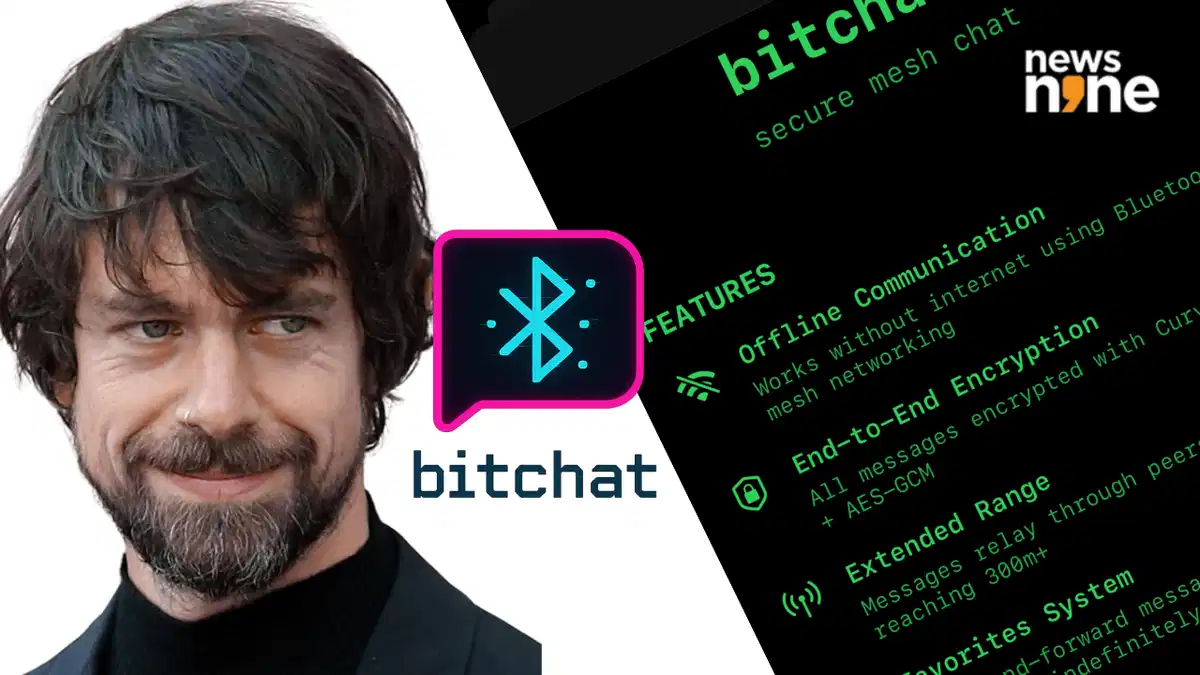
Twitter co-founder and former CEO Jack Dorsey has unveiled an ambitious new project, Bitchat, an experimental messaging app that allows encrypted communication between smartphones using Bluetooth mesh networks—entirely offline, with no servers, SIM cards, internet, or user accounts required.
The app, currently in beta via Apple’s TestFlight, represents Dorsey’s latest venture into decentralized, privacy-first communication tools, building on his prior support for platforms like Damus and Bluesky, both designed to resist surveillance and censorship.
Unlike traditional messaging platforms, Bitchat functions through peer-to-peer Bluetooth connections, forming temporary mesh networks between nearby mobile devices.
As users move, their phones dynamically connect and disconnect, allowing messages to hop from device to device—even across longer distances—using bridge devices that span multiple clusters.
“It’s a personal experiment in bluetooth mesh networks, relays and store and forward models, message encryption models, and a few other things,” Dorsey explained.
The system is entirely serverless. Messages are not stored in the cloud or on a central server—they exist only locally on devices and disappear by default, promoting ephemeral, metadata-free communication.
Users do not need to register, create accounts, or provide phone numbers, email addresses, or personal identifiers. This level of anonymity and decentralization makes the app potentially useful in internet-restricted, surveillance-heavy, or disaster-stricken environments.
READ ALSO: EFCC twitter account disappears amid cyberattack
Bitchat draws conceptual inspiration from pro-democracy protests in Hong Kong in 2019, where demonstrators used Bluetooth-based apps to circumvent government surveillance and internet blackouts.
By operating entirely without traditional infrastructure, Bitchat embodies Dorsey’s decentralization ethos—returning control to users and eliminating reliance on centralized platforms that may be susceptible to censorship, shutdowns, or data exploitation.
While still in testing, Dorsey has released an open-source white paper on GitHub, encouraging developers and cryptographers to audit or contribute to the Bitchat protocol. This transparency is in line with his long-standing belief in open, user-owned technology.
Bitchat comes amid growing concerns about state surveillance, Big Tech data collection, and the fragility of centralized networks in times of crisis. From war zones to protest movements, demand is increasing for tools that allow resilient, private communication.
With Bitchat, Dorsey appears to be betting that the future of messaging—especially in politically sensitive or disconnected regions—will be offline, decentralized, and user-controlled


-

 Latest6 days ago
Full List: Meet the 2026 Nobel Prize winners across six categories
-

 Football5 days ago
Premier League Matchweek 7: Five Fixtures That Could Shape the Weekend
-

 Latest5 days ago
Umahi defends Lagos-Calabar highway route changes amid public outcry
-

 Business4 days ago
Dangote Refinery IPO: 70% Subscription claim meets fourfold demand assertion as investors seek clarity
-
Business4 days ago
Dangote Refinery IPO Extension: Was the 70% subscription report overhyped?
-

 Latest3 days ago
UCTH faces morgue crisis as 50 unclaimed corpses await mass burial
-

 Featured5 days ago
El-Rufai, ADC governorship candidate’s court appearance puts Kaduna opposition politics in focus
-

 Business2 days ago
BREAKING: Nigeria’s Inflation Rate Drops to 14.63% in September