
Business
Nigeria partners EU on €59m Ocean programme to tackle illegal fishing

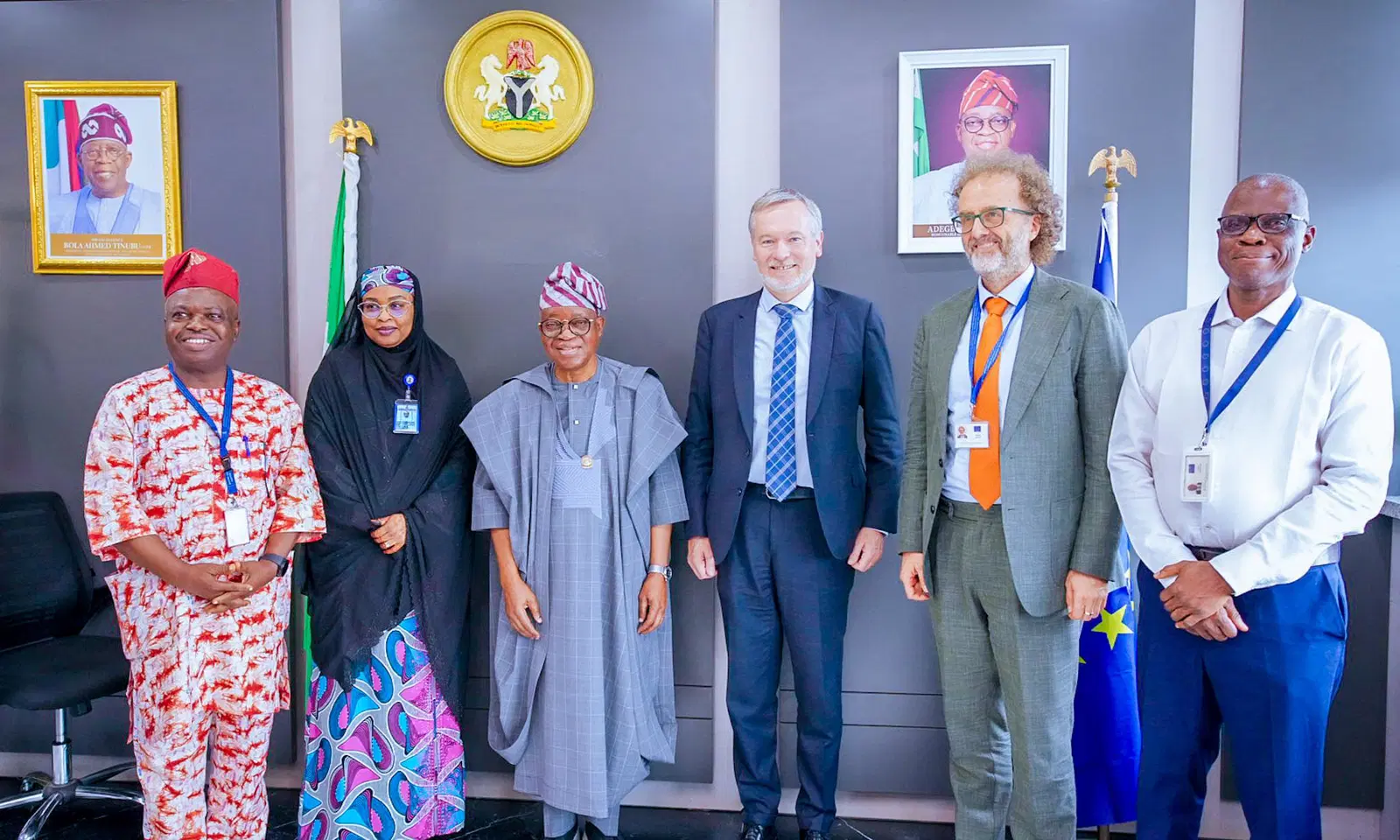
Nigeria is seeking to leverage the €59 million West Africa Sustainable Ocean Programme (WASOP), a European Union-backed initiative, to intensify efforts against illegal fishing activities in the Gulf of Guinea and strengthen the protection of its marine resources.
The Minister of Marine and Blue Economy, Adegboyega Oyetola, disclosed this during a meeting with the European Union Ambassador to Nigeria, Gautier Mignot, in Abuja.
Details of the meeting were contained in a statement issued on Sunday by the minister’s Special Adviser, Bolaji Akinola.
The move comes amid growing concerns over the economic and security implications of illegal, unreported and unregulated (IUU) fishing in Nigerian waters.
According to estimates by the Fisheries Cooperative Federation of Nigeria Limited, the country loses approximately $70 million annually due to obsolete fishing regulations, weak monitoring systems, inadequate enforcement and the activities of unlicensed foreign and local operators.
Speaking during the engagement, Oyetola described illegal fishing as a major threat not only to the nation’s economy but also to food security and national stability.
“Illegal, unreported and unregulated fishing is a direct threat to national security, food sovereignty and the survival of our coastal communities,” the minister said.
READ ALSO: NGX loses N581 billion as market slump extends to fourth straight session
He warned that the continued exploitation of Nigeria’s marine resources by illegal operators is accelerating the depletion of fish stocks, weakening local economies and jeopardising the livelihoods of thousands of people who depend on fishing and related activities for income and sustenance.
According to the minister, effectively addressing the challenge will require stronger regional collaboration, improved surveillance capabilities and stricter enforcement measures across West African coastal states.
He stressed that coordinated action among countries in the Gulf of Guinea is essential to dismantle criminal networks involved in illegal fishing and prevent offenders from exploiting gaps in maritime governance.
“This is necessary to permanently dismantle these illicit operations and safeguard our waters,” Oyetola added.
Beyond combating illegal fishing, the minister highlighted ongoing reforms being implemented under Nigeria’s National Policy on Marine and Blue Economy. He said the reforms are designed to unlock investment opportunities, encourage innovation and ensure the sustainable utilisation of marine resources.
Oyetola noted that Nigeria has recorded notable improvements in port operations, maritime logistics and security, while also investing in critical infrastructure aimed at enhancing the country’s competitiveness in regional and global trade.
The minister further called for deeper international cooperation in tackling maritime crimes, including environmental violations, smuggling and human trafficking. He also sought greater technical assistance from the European Union in areas such as maritime surveillance technology, fisheries monitoring systems and enforcement capacity building.
In his remarks, Mignot reaffirmed the European Union’s commitment to supporting Nigeria and other West African countries in strengthening maritime governance and promoting sustainable use of ocean resources.
He explained that the WASOP initiative was established to improve fisheries management, strengthen enforcement cooperation among coastal nations, enhance ocean governance and protect marine ecosystems throughout the region.
According to the ambassador, the programme will foster closer collaboration among countries bordering the Atlantic coast of West Africa while supporting the development of a more inclusive and sustainable blue economy.
The €59 million West Africa Sustainable Ocean Programme is one of the EU’s flagship interventions aimed at addressing maritime challenges in the region, particularly illegal fishing, environmental degradation and weak enforcement mechanisms that continue to threaten marine ecosystems and coastal livelihoods.
The latest development comes as investor interest in Nigeria’s fisheries and marine sector continues to grow, driven by government efforts to expand the blue economy and reduce dependence on imported fish products.


-
 Latest6 days ago
Israel marks 3 years since October 7 Hamas attack amid Gaza strikes, election debate
-
 Energy5 days ago
Fuel Battle: Dangote, marketers and government clash over petrol imports
-
 Energy7 days ago
Petrol, diesel prices rise 86% in 2026 as costs hit fresh highs
-
 Energy1 week ago
Has Iran lost control of the Strait of Hormuz? Oil flows rebound as war disruptions persist
-

 Football6 days ago
Nigeria’s World Cup exit under spotlight as FIFA’s DR Congo files emerge
-
 Latest6 days ago
US Court set to rule on release of FBI, DEA records on Tinubu
-
 Business6 days ago
Nigerian investors at a crossroads as fixed-income yields slide
-

 Business7 days ago
LoveWorld Trade and Investment Forum to Convene Business Leaders in Accra