
Latest
Nigeria second only to DR Congo in internal displacement, UNHCR report shows

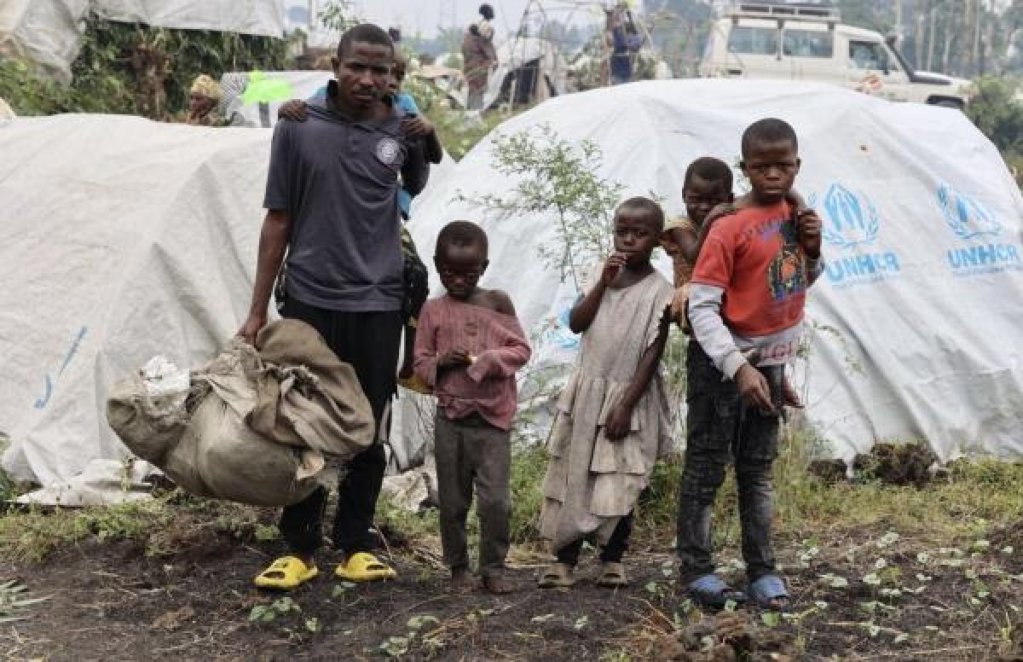
Nigeria remains one of the countries most severely affected by forced displacement in West and Central Africa, with 3.7 million people internally displaced as of April 2025, according to a new report released by the African regional office of the United Nations High Commissioner for Refugees (UNHCR).
The figure places Nigeria among the countries bearing the heaviest burden of displacement in a region where an estimated 20 million people have been uprooted by armed conflict, insecurity, climate-related disasters and worsening food crises.
The findings were contained in the UNHCR Africa West and Central Africa Regional Trends Report 2026, which revealed that while the overall number of displaced people across the region fell slightly from 20.7 million in April 2025 to 20 million in April 2026, the reduction does not reflect a significant improvement in the underlying drivers of displacement.
According to the report, conflict and insecurity continue to force millions of people from their homes, while extreme weather events and food shortages are increasingly compounding humanitarian challenges.
UNHCR noted that the modest 4 percent decline in the region’s displacement figures was largely due to returns by some displaced persons to areas where security conditions had improved rather than any broad reduction in conflict-related pressures.
“While this decline is mainly due to returns to countries where conditions have become more stable, it does not signal a broader reduction in displacement pressures across the region,” the report stated.
The agency warned that armed conflicts, insurgencies and communal violence remain the primary causes of forced migration across West and Central Africa.
“Conflict and insecurity remained the primary drivers of displacement, increasingly compounded by extreme weather events and rising food insecurity,” the report added.
READ ALSO: Bandits abduct traditional ruler in Ondo as attacks on monarchs intensify across Nigeria
The report further revealed that nearly 99,800 new refugees and asylum seekers were registered across the region between January and April 2026 alone, underscoring the continuing pace of displacement despite ongoing repatriation efforts in some countries.
Of the 20 million displaced people recorded across West and Central Africa, approximately 14.2 million, representing 71 percent, remain displaced within their own countries as internally displaced persons (IDPs).
The report identified the Democratic Republic of the Congo as having the highest number of internally displaced persons, with nearly 5.8 million people forced from their homes.
Nigeria ranked second with 3.7 million internally displaced persons, highlighting the persistent impact of insurgency, banditry, communal conflicts and other security challenges affecting several parts of the country.
Burkina Faso followed with nearly 2.1 million displaced persons, while Cameroon recorded about one million internally displaced people.
Humanitarian experts say Nigeria’s displacement crisis remains concentrated in the North-East, where insurgency-related violence has persisted for more than a decade, as well as in parts of the North-West and North-Central regions affected by banditry and communal clashes.
According to UNHCR, the number of refugees and asylum seekers across West and Central Africa rose to 3.9 million as of April 2026, representing a 23 percent increase compared to the same period in 2025 and an 18 percent increase from December 2024.
The report noted that more than half of all refugees and asylum seekers in the region have remained displaced for at least five consecutive years, highlighting the protracted nature of many humanitarian crises.
Among host countries, Chad remains the largest destination for refugees and asylum seekers, sheltering approximately 1.5 million people, equivalent to about 40 percent of the regional refugee population.
READ ALSO: Breaking: Several pupils missing after suspected terrorists raid school in Borno
Other major host countries include the Democratic Republic of the Congo with around 606,000 refugees, Niger with 447,000 and Cameroon with about 432,000.
Despite a decline in overall displacement numbers compared to the 23 million recorded at the end of 2024, humanitarian agencies caution that the reduction should not be interpreted as evidence of lasting stability.
Analysts note that insecurity, climate shocks, economic hardship and food shortages continue to create conditions that force people to flee their homes, while host communities and asylum systems across the region face mounting pressure from increasing population movements.
The latest report comes amid continued efforts by UNHCR and its partners to mobilise funding for humanitarian operations across West and Central Africa.


-

 Football1 week ago
Premier League Matchweek 7: Five Fixtures That Could Shape the Weekend
-

 Business6 days ago
Dangote Refinery IPO: 70% Subscription claim meets fourfold demand assertion as investors seek clarity
-

 Latest1 week ago
Umahi defends Lagos-Calabar highway route changes amid public outcry
-
Business1 week ago
Dangote Refinery IPO Extension: Was the 70% subscription report overhyped?
-

 Featured3 days ago
Inside INEC’s race to prepare for Nigeria’s 2027 elections
-

 Latest5 days ago
UCTH faces morgue crisis as 50 unclaimed corpses await mass burial
-
 Business5 days ago
BREAKING: Nigeria’s Inflation Rate Drops to 14.63% in September
-

 Featured1 week ago
El-Rufai, ADC governorship candidate’s court appearance puts Kaduna opposition politics in focus