
Business
Nigeria’s external reserves hit record high

The Central Bank of Nigeria, says Nigeria’s foreign reserves has risen to $45bn as at June, 2019 from the $23bn recorded in 2016.
The CBN Governor, Mr. Godwin Emefiele, who disclosed this while reeling out the policy road map for his five years second term in Abuja on Monday, said the apex bank would put all necessary measure to ensure the steady growth of the country’s external reserves after the recession.
“I am delighted to note that our external reserves have risen from 23 billion dollars in October 2016 to over 45 billion dollars by June. Inflation has also dropped from 18.72 per cent in January 2017 to 11.40 per cent in May.
“Our CBN purchasing manufacturers index has risen for 26 consecutive months since March 2017, indicating continuous growth in the manufacturing sector.
“As a result of measures implemented by the CBN which improved access to raw materials and finance for manufacturing firms GDP growth has risen for seven consecutive quarters following the recession.
“And, our exchange rate has appreciated from over N525/$1 in February 2017 at the Bureau De Change window to N360/$1. With improved inflow of foreign exchange, the exchange rate has remained stable around N360/$1 for the past 27 months,” he said.
According to him, with concerted efforts by the monetary and fiscal authorities the bank implemented a series of measures which led to the recovery of the economy from the recession by the 1st Quarter of 2017.
Speaking on recovery efforts, Emefiele said part of the measures deployed to support the recovery included tightening of the monetary policy rate in order to rein in inflation.
He said the bank also created an Investors and Exporters Window which allowed exporters and investors to inflow and sell their foreign exchange at the prevailing market rate.
“In order to reduce our reliance on the importation of items which could be produced in Nigeria, we restricted access to foreign exchange on 43 items. We also deployed our intervention funds to support growth and productivity in the agricultural and manufacturing sectors.
“These measures helped to support the attainment of our monetary policy objectives such as a reduction in the inflation rate, stability in our exchange rate and improved accretion to our external reserves,” he added.





-

 Featured7 days ago
Inside INEC’s race to prepare for Nigeria’s 2027 elections
-
 Featured7 days ago
2027: APC unveils nationwide campaign timetable, Tinubu to rally in 12 states
-
 Business4 days ago
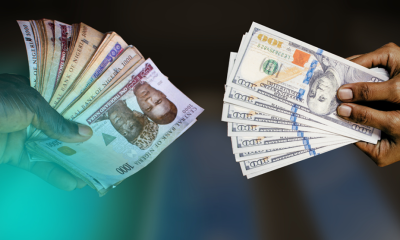
Naira faces exchange rate gap as Dollar hits N1,380 on parallel market
-

 Business7 days ago
Court dismisses ₦170m Trade Fair contract claim, says Zenith Bank was not a party
-

 Latest7 days ago
Breaking: NNPCL raises petrol price to ₦1,405 per litre amid discount controversy
-

 Featured1 week ago
From kitchen to Supreme Court: Nigerian’s fight over alleged support for terrorists
-

 Football1 week ago
Maresca reveals Guardiola’s reaction to Man City’s 4-2 defeat to PSG
-

 Business6 days ago
NCC launches Internet Governance Working Group to tackle AI risks, boost online safety