
Business
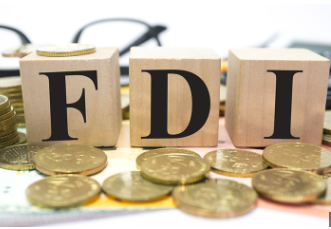
Nigeria’s falling FDI may be blessing in disguise


As protectionism grows with the coming to power of U.S President Donald Trump and the backlash of Brexit, Nigeria’s Foreign Direct Investment witnessed more decline in the first quarter of 2017.
A report by the Nigeria Bureau of Statistics on capital importation has revealed that FDI was the smallest component of capital importation in the first quarter of 2017.
It accounted for $211.38 million, or 23.27% of the $908.27 million brought in total capital inflow in the first quarter.
The FDI has generally been contracting since 2013.
But Other Investment turned out the largest component of imported capital in the period, which was $383.28 million, or 42.20% of the total. It still dipped by 58.3 % compared to $920.03 million recorded in the same period in 2015.
The second largest driver was Portfolio Investment, accounting for $313.61 million, or 34.53% of the total, and a growth of 10.34% to 2015 first quarter and 15.71% relative to the same quarter of 2016.
Analysts at Proshare said the increase might be related to the halt the CBN managed to enforce against the sliding naira, which therefore encourages investments in shares and other short-term securities.
Of all the sectors, servicing brought in more capital even though the major drivers, telecoms, banking, oil and gas experienced decline in the quarter.
As for the FDI, Nigeria’s situation is not entirely bad. The nation remains the largest FDI destination in Africa–$502 million compared to Angola’s 4108 million, South Africa’s $78 million, and Egypt’s $40.7 million.
And globally, a lot more countries, especially in developing Asia, are affected by the general decline.
Global FDI fell 13% to an estimated $1.52 trillion in 2016, according to the United Nations Conference on Trade and Development. And the International Economic Development Council said the total inflow was not equally shared across regions.
“FDI inflows to Europe, developing Asia, and Latin America fell drastically due to political issues, slowing economic growth, and/or falling commodity prices,” the council said as it prepares for a September webinar on The Changing Face of Foreign Direct Investment, Forecast for 2020.
While organisations like the EDC worry about technology, political ideologies, and other factors disrupting FDI growth and its positive impact of technology transfer, stimulation of economy, and tax revenue, others are concerned about the flip side.
A study by the International Monetary Fund has established that FDI can spur capital flight, domestic borrowings bigger that the capital inflows, and competitive intelligence, based on takeovers, which domestic businesses may not have.
Most importantly, the study confirms that FDI grows in unstable economies, because of their ineffective institutions. Pirtfoilio and other investments, however, thrive where the institutions are strong.
And analysts agree Nigeria has not firmed up its institutions enough.
So whatever growth in capital inflows it experiences in other investments could be a sign of good things to come.










-

 Featured5 days ago
Inside INEC’s race to prepare for Nigeria’s 2027 elections
-

 Featured5 days ago
2027: APC unveils nationwide campaign timetable, Tinubu to rally in 12 states
-

 Latest7 days ago
UCTH faces morgue crisis as 50 unclaimed corpses await mass burial
-

 Business7 days ago
BREAKING: Nigeria’s Inflation Rate Drops to 14.63% in September
-

 Business6 days ago
President Tinubu and the Low Transport Fares Fiasco
-
 Business5 days ago
Court dismisses ₦170m Trade Fair contract claim, says Zenith Bank was not a party
-
 Business2 days ago
Naira faces exchange rate gap as Dollar hits N1,380 on parallel market
-

 Latest5 days ago
Breaking: NNPCL raises petrol price to ₦1,405 per litre amid discount controversy