
Business
NSE: Downward trend may persist

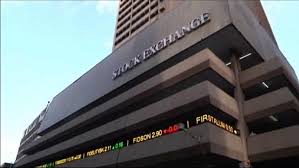
- investors advised to take position
By Chioma Obinagwam
The downward trend witnessed on the Nigerian Stock Exchange(NSE) in four consecutive weeks may continue despite an upbeat in the country’s macroeconomic indicators analysts at Afrinvest had said.
Afrinvest (West Africa) Limited is a wealth advisory firm involved in investment banking, securities trading, asset management and investment research with a focus on West Africa.
However, the analysts are of the opinion that the decline in most stock prices present an opportunity for discerning investors to key into stocks that are fundamentally viable.
“Despite the bearish run and weak sentiments in the market, we believe this presents an entry opportunity into fundamentally sound stocks,” they said.
“We expect market performance this week to be largely driven by bargain hunting in previous decliners,” the analysts added.
Month to date, the NSE All-Share index, a series of numbers which shows the changing average value of the share prices of all companies on the NSE, and which is used as a measure of how well a market is performing, shed 4.71 per cent to close at 39,323.62 basis points(bps).
Although the decline has triggered some sort of panick in some quarters, analysts have advised that the panick is not necessary since the market is going through ‘market correction’ which is not unconnected to profit taking.
A stock market correction is when the market falls 10 per cent from its 52-week high. It’s a natural part of the market cycle and can occur in any asset class whereas Profit taking is the act of selling stock to take advantage of a sharp rise in the stock price.
The later could have grave consequences on the market because it would mean too much stock scrambling for fewer buyers hence translating to a decline in the value of stocks just like what is currently playing out on NSE.
A pullback, however, allows the market to consolidate before going toward higher highs, hence wise investors welcome it.
Analysts also believe that the recent rebound in the economy hinged on the increase in global oil prices(Nigeria’s major export and source of revenue), which is currently at $77.89 as well as the drop in inflation rate(12.48 per cent) would also impact the purchasing power and saving culture of investors.
Continue Reading


-

 Latest1 week ago
Global excitement builds as Healing Streams Live Services returns October 23
-

 Featured7 days ago
Inside INEC’s race to prepare for Nigeria’s 2027 elections
-

 Business1 week ago
President Tinubu and the Low Transport Fares Fiasco
-

 Featured7 days ago
2027: APC unveils nationwide campaign timetable, Tinubu to rally in 12 states
-

 Business4 days ago
Naira faces exchange rate gap as Dollar hits N1,380 on parallel market
-
 Business7 days ago
Court dismisses ₦170m Trade Fair contract claim, says Zenith Bank was not a party
-

 Latest7 days ago
Breaking: NNPCL raises petrol price to ₦1,405 per litre amid discount controversy
-

 Business1 week ago
Rite Foods targets beverage market growth with LIDA Malt