
Latest
Obasanjo opens up on how NNPC rejected $750m Dangote offer to manage refineries

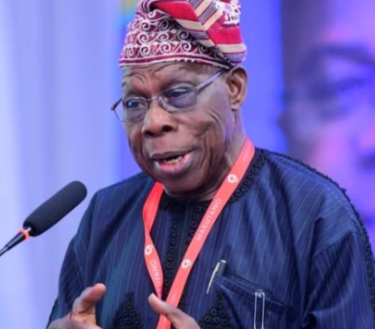
Former President Olusegun Obasanjo has disclosed how the Nigerian National Petroleum Corporation (NNPC) rejected a $750 million offer from billionaire businessman Aliko Dangote to manage the Port Harcourt and Kaduna refineries in 2007.
Obasanjo revealed this in an exclusive interview with Channels Television, highlighting the persistent mismanagement of Nigeria’s refineries.
During the interview, Obasanjo shared insights into the challenges that plagued Nigeria’s refineries during his tenure. He recounted his efforts to revitalize the nation’s refineries—Port Harcourt, Warri, and Kaduna—through partnerships with private firms.
“When I was president, I wanted to do something about the three refineries we have: Port Harcourt, Warri, and Kaduna,” Obasanjo said. “I asked Shell to come and manage the refineries for us, but they declined. Then Aliko Dangote assembled a team and offered $750 million for a Public-Private Partnership (PPP) to run the refineries.”
However, this initiative was thwarted as Obasanjo’s successor refunded Dangote’s investment, citing NNPC’s claim that it could manage the refineries independently.
Obasanjo lamented this decision, stating, “I went to my successor and told him what transpired. He said NNPC claimed they wanted the refineries and could run them. I then said, ‘But you know they cannot run it.”
READ ALSO: Obasanjo raises alarm over Nigeria’s escalating debt, warns of impact on future generation
The former president expressed frustration over the continued mismanagement of the refineries, revealing that over $2 billion has been spent since 2007 without achieving operational efficiency.
“If a company like Shell tells me they cannot do it, I would believe them. Yet, here we are, with more than $2 billion squandered and the refineries still non-functional,” Obasanjo lamented.
In December 2024, the Nigerian National Petroleum Company Limited (NNPCL) announced that the 125,000-barrel-per-day Warri Refining & Petrochemical Company (WRPC) in Delta State is now operational.
An NNPCL spokesperson stated, “This plant is running. We have not completed 100 percent, but we are steaming the other parts as we progress. Many people doubt this achievement, but it is a source of national pride.”
President Bola Tinubu lauded the reopening of the WRPC, describing it as a significant milestone in 2024. “This marks a turning point in our efforts to restore Nigeria’s refining capacity and reduce dependence on fuel imports,” he said.
Obasanjo served as Nigeria’s democratically elected president from May 1999 to May 2007. During his administration, he focused on reforming critical sectors, including attempts to deregulate the downstream oil sector. Prior to this, he was Nigeria’s military head of state from February 1976 to October 1979.
Energy analysts believe the rejection of Dangote’s offer exemplifies the challenges facing Nigeria’s oil sector.
Dr. Akin Tade, an oil and gas expert, remarked, “The decision to reject private sector participation has had long-term consequences, including financial losses and operational inefficiencies.”
As Nigeria seeks to revitalize its oil sector, experts emphasize the need for greater collaboration between the government and private investors to ensure sustainable solutions for the country’s energy challenges.


-
 Latest6 days ago
Israel marks 3 years since October 7 Hamas attack amid Gaza strikes, election debate
-

 Energy6 days ago
Fuel Battle: Dangote, marketers and government clash over petrol imports
-

 Energy1 week ago
Petrol, diesel prices rise 86% in 2026 as costs hit fresh highs
-

 Football7 days ago
Nigeria’s World Cup exit under spotlight as FIFA’s DR Congo files emerge
-
 Energy1 week ago
Has Iran lost control of the Strait of Hormuz? Oil flows rebound as war disruptions persist
-

 Latest24 hours ago
Full List: Meet the 2026 Nobel Prize winners across six categories
-
 Latest7 days ago
US Court set to rule on release of FBI, DEA records on Tinubu
-
 Business7 days ago
Nigerian investors at a crossroads as fixed-income yields slide