
Energy
Oil spills: Killing Niger Deltans softly


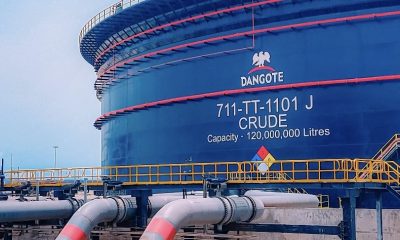
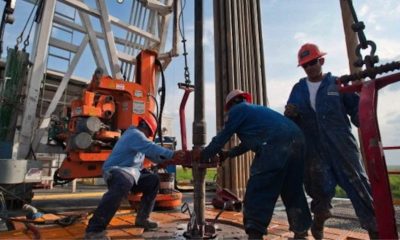
Nigeria is home to Africa’s largest petroleum industry, with crude oil making up a signification portion of the country’s exports. But many residents in the Niger Delta where the bulk of the oil comes from are daily been exposed to injurious chemicals arising from oil spills.
Persistent oil spills have not just contaminated water resources, residents are also exposed to harmful chemicals found in crude oil through direct skin contact or the consumption of polluted vegetables.
A new study by the University of Sankt Gallen in Switzerland has revealed that the chemicals can also be dangerous for unborn children in the Delta region if their mothers live too close to an oil spill before the pregnancy begins.
“Oil spills that occur within 10 kilometers of the mother prior to child conception strongly increase the risk of mortality during the first months of life”, the study’s author Roland Hodler explained.
According to the report, “The Effect of Oil Spills on Infant Mortality: Evidence from Nigeria”, oil spills which occur within this 10-kilometer radius increase the neonatal mortality rate by 38 deaths per 100,000 live-births.
Also, researchers from the Nigerian Oil Spill Monitor, explained that oil spills also increase infant mortality after the first months of life and continue to have negative effects on the health of surviving children.
From the statistics released by the Nigerian Oil Spill Monitor, over 5,296 oil spills were recorded between January 2005 and July 2014, with up to 75 percent of the spills caused by sabotage or theft.
ALSO SEE: Youths attack soldiers in Plateau destroy checkpoint, vehicles
Niger Delta resident Annkio Briggs still remembers the days when she could simply draw water from her family’s well without having to worry about it being contaminated.
“Nowadays the water is polluted. I cannot drink it anymore, although it is a natural source meant for me and my people”, the 65-year old said. He has since resorted to buying bottled water.
Another resident, Kie Oboe said black spots recently covered the entire city and beyond. “This is a very serious issue because it is affecting our health and the environment.”
In 2015, Anglo-Dutch oil giant Shell agreed to pay 61 million euros in compensation to 15,600 fishermen and farmers after a Shell-owned pipeline burst twice in 2008 and destroyed thousands of hectares of mangroves, effectively bringing the region’s once prosperous fishing industry to a halt.
The out-of-court settlement was the culmination of a three year legal battle in Britain. The company also agreed to begin the clean-up of two major spills, however, local civil society campaigners claim that progress so far has been too slow.












-

 Featured5 days ago
Inside INEC’s race to prepare for Nigeria’s 2027 elections
-

 Featured5 days ago
2027: APC unveils nationwide campaign timetable, Tinubu to rally in 12 states
-

 Latest1 week ago
UCTH faces morgue crisis as 50 unclaimed corpses await mass burial
-

 Business6 days ago
President Tinubu and the Low Transport Fares Fiasco
-

 Business1 week ago
BREAKING: Nigeria’s Inflation Rate Drops to 14.63% in September
-
 Business5 days ago
Court dismisses ₦170m Trade Fair contract claim, says Zenith Bank was not a party
-

 Business3 days ago
Naira faces exchange rate gap as Dollar hits N1,380 on parallel market
-

 Latest6 days ago
Global excitement builds as Healing Streams Live Services returns October 23