
Crime
Top ISWAP commanders, dozens of fighters surrender as military intensifies offensive in North-East

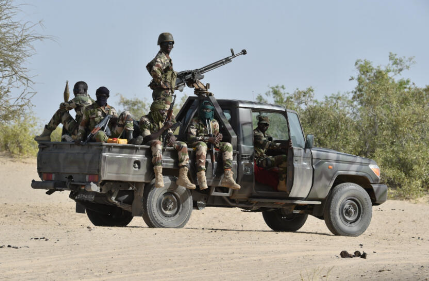
Several senior commanders of the Islamic State West Africa Province (ISWAP) and dozens of their fighters have surrendered to troops of Operation Hadin Kai in Borno State following sustained military operations across the North-East.
Military authorities said the insurgents, accompanied by members of their families, laid down their arms after weeks of intensified air and ground offensives targeting terrorist strongholds in the Lake Chad Basin, Sambisa Forest and surrounding border communities.
The wave of surrenders comes after the reported killing of senior ISWAP leader Abu-Bilal al-Minuki and several of his lieutenants during a joint air and ground operation in the Metele area of Borno State. Security officials believe the operation significantly disrupted the group’s command structure and operational capacity.
According to military sources, the deployment of advanced Intelligence, Surveillance and Reconnaissance (ISR) assets, including long-range drones, has also hampered the movement of insurgents by exposing their logistics routes and restricting their ability to move fighters, weapons and supplies across the region.
The latest development has sparked debate among security analysts over whether the growing number of surrenders signals a lasting decline in ISWAP’s strength or represents a tactical withdrawal aimed at preserving remaining fighters.
Some analysts argue that sustained military pressure, leadership losses and disrupted supply chains have weakened the insurgent group, making continued resistance increasingly difficult.
Others, however, caution that terrorist groups have historically used mass surrenders as a strategy to reduce logistical burdens during periods of intense military operations while allowing core elements to regroup elsewhere.
Military authorities said all surrendered fighters are undergoing comprehensive profiling and biometric screening to distinguish combatants from civilians.
Officials added that individuals found to have committed serious crimes would face investigation and possible prosecution, while eligible family members and lower-risk individuals could be enrolled in government deradicalisation and rehabilitation programmes.
Operation Hadin Kai said troops would continue offensive operations across the North-East to sustain pressure on terrorist groups and prevent them from regrouping in remote or cross-border locations.


-
 Latest6 days ago
Israel marks 3 years since October 7 Hamas attack amid Gaza strikes, election debate
-

 Energy6 days ago
Fuel Battle: Dangote, marketers and government clash over petrol imports
-

 Energy7 days ago
Petrol, diesel prices rise 86% in 2026 as costs hit fresh highs
-

 Energy1 week ago
Has Iran lost control of the Strait of Hormuz? Oil flows rebound as war disruptions persist
-

 Football7 days ago
Nigeria’s World Cup exit under spotlight as FIFA’s DR Congo files emerge
-

 Latest7 days ago
US Court set to rule on release of FBI, DEA records on Tinubu
-

 Latest16 hours ago
Full List: Meet the 2026 Nobel Prize winners across six categories
-

 Business7 days ago
Nigerian investors at a crossroads as fixed-income yields slide