
Latest
Trump orders major overhaul of US childhood vaccine recommendations

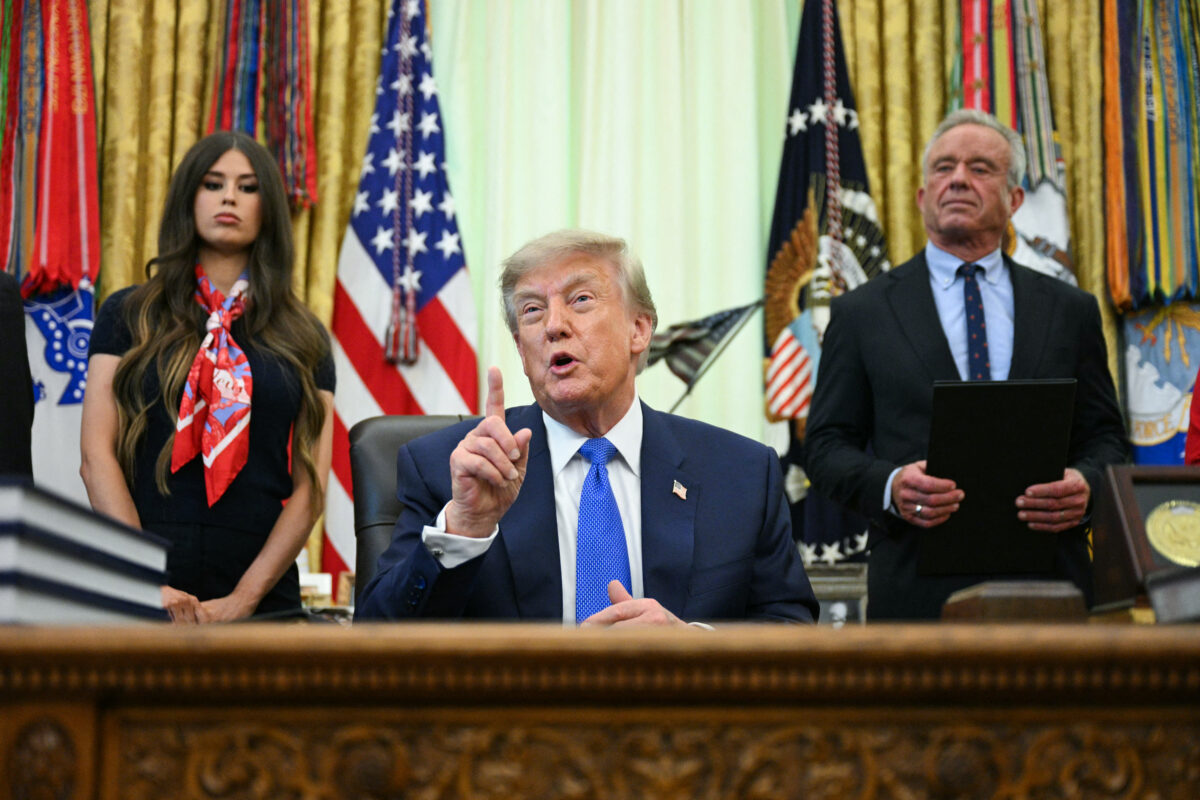
U.S. President Donald Trump has signed an executive order directing sweeping changes to the country’s childhood vaccination policy, including a reduction in the number of diseases covered by routine childhood vaccine recommendations.
Under the new directive, the number of diseases covered by the standard childhood vaccination schedule would be reduced from 18 to 11, while the administration is also recommending that the measles, mumps and rubella (MMR) vaccine be administered as three separate shots over an 18-month period.
Speaking at the White House during the signing ceremony, Trump said the new policy would establish “gold standard” recommendations covering 11 core vaccinations against what he described as the most serious and dangerous diseases. He also said the MMR vaccine would hopefully be separated into individual shots.
The order further ends the routine administration of the birth dose of the hepatitis B vaccine, in line with a recommendation previously made by a Centers for Disease Control and Prevention (CDC) advisory committee.
Vaccines removed from the routine childhood schedule will instead be subject to shared clinical decision-making between healthcare providers and parents or caregivers.
Trump argued that the current U.S. vaccination schedule recommends more childhood vaccines than those of other developed countries, saying some European nations administer significantly fewer doses.
“We’re reducing them, we’re changing it to visits over the period of a year, a year and a half,” Trump said, adding that children would receive substantially fewer doses at once.
READ ALSO; Why Trump is prioritising partnership over pressure in Nigeria’s security fight
The executive order directs the U.S. Department of Health and Human Services (HHS) Task Force on Safer Childhood Vaccines to produce a report within 90 days outlining how the new policy should be implemented.
The task force, which had been inactive for years, was reinstated in May following a lawsuit filed against HHS by attorney Ray Flores. Children’s Health Defense funded the legal action.
The order also calls on states to review and potentially harmonise their vaccination policies with an HHS study comparing the U.S. childhood vaccination schedule with those of high-income countries in Europe and Asia.
States are encouraged to consider changes to school vaccination requirements to reflect the revised federal recommendations.
Federal agencies have also been directed to advance the recommendations within their respective legal authorities and ensure that the public has access to what the administration describes as the best available scientific information.
In addition, the Justice Department has been instructed to investigate potential violations of parental rights and religious freedom, including disputes involving disability accommodations and religious and medical exemptions from childhood vaccination requirements.
Brian Hooker, chief scientific officer of Children’s Health Defense, welcomed the order, describing it as “a step in the right direction.”
However, some health experts have questioned whether the executive order alone can significantly alter the U.S. childhood vaccination schedule, which is normally developed through federal public-health agencies and expert advisory processes.
Pediatrician Dr. Joel “Gator” Walsh questioned how the directive would translate into practical changes, noting that the president does not ordinarily determine the childhood vaccination schedule directly.
Public-health experts have also expressed concern that spreading vaccinations over a longer period could leave children vulnerable to vaccine-preventable diseases before they return for subsequent doses.
The policy comes amid an ongoing debate within the Trump administration over vaccine safety, including renewed federal interest in investigating claims of a possible relationship between vaccines and autism.
Health Secretary Robert F. Kennedy Jr. has supported further research into vaccine safety and the possible causes of autism, while public-health organisations have continued to maintain that vaccines recommended by health authorities are rigorously studied and that claims linking routine childhood vaccines to autism have not been established by reliable scientific evidence.
The latest executive order is therefore expected to intensify debate over vaccination policy, parental rights and the role of federal health agencies in determining childhood immunisation recommendations.


-
 Latest7 days ago
Israel marks 3 years since October 7 Hamas attack amid Gaza strikes, election debate
-

 Energy7 days ago
Fuel Battle: Dangote, marketers and government clash over petrol imports
-

 Energy1 week ago
Petrol, diesel prices rise 86% in 2026 as costs hit fresh highs
-

 Latest2 days ago
Full List: Meet the 2026 Nobel Prize winners across six categories
-

 Football1 week ago
Nigeria’s World Cup exit under spotlight as FIFA’s DR Congo files emerge
-

 Latest1 week ago
US Court set to rule on release of FBI, DEA records on Tinubu
-

 Business1 week ago
Nigerian investors at a crossroads as fixed-income yields slide
-

 Latest1 week ago
Oyo APC crisis deepens as Oluyole reconciliation meeting ends in brawl