
Health
Apollo Hospital closes 300 holes in the hearts in 5 years

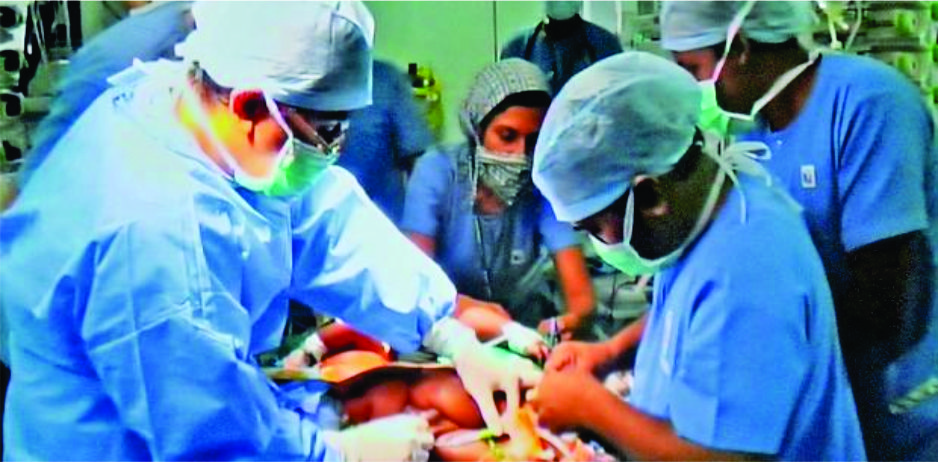
VENTRICULAR septal defect is a hole between the pumping chambers of the heart. Traditionally this has been closed by open heart surgery, which involves opening of the chest, by-pass-machine and closing the hole surgically. Apollo Hospital, has, however led the way in this high-tech surgical procedure
In the last 10 years there has been a tremendous development in treatment of this condition using the pin-hole technique [angiogram] without any scar in the chest. However, a particular type of VSD- Subarterial VSD, a hole just below the main valves of the heart, has to be closed by surgery only.
A 12- year old girl had a congenital heart problem. She was detected to have sub-arterial ventricular septal defect as early as two years of age. The doctors had advised her for surgery as the hole was very close to the valves and can damage the valves. The parents were scared of surgery as it can cause a scar and also the risk of the by-pass procedure.
They postponed the surgery till they heard about the procedure when the child was 14 years of age. By this time the hole has damaged the valve mildly. They came to Apollo Children’s Hospital for opinion in September 2014. After the initial assessment we felt that we can close the hole by pin-hole technique avoiding surgery. After explaining this to the family we took the child for the procedure.
The procedure was done under local anaesthesia. It took us half an hour for the procedure. The hole was successfully closed by VSD Device by transcatheter technique and she was discharged from the hospital on the very next day. The family was ecstatic, as their14-year mental burden had come to end.
During one year follow up, she was doing fine, there was no residual leak and there was no problem in aortic and pulmonary valve. This single day procedure helped her to avoid a cardio-pulmonary bypass surgery, lifelong scar on the chest and 5-6 days hospital stay following surgery.
This is not only the story. Transcatheter closure of VSD is being successfully done for more than two decades. Long term follow up studies have shown that transcatheter closure of Ventricular Septal Defect (VSD) is a feasible alternative of surgery. Traditionally, surgery is the treatment of choice for VSD. But, it does have some potential risks of complications, including complete heart block, significant residual VSD, the necessity for re-operationand even death. Furthermore, infections, tachyarrhythmias, and neurological complications ma


-

 Latest5 days ago
Full List: Meet the 2026 Nobel Prize winners across six categories
-

 Football5 days ago
Premier League Matchweek 7: Five Fixtures That Could Shape the Weekend
-

 Latest4 days ago
Umahi defends Lagos-Calabar highway route changes amid public outcry
-

 Business3 days ago
Dangote Refinery IPO: 70% Subscription claim meets fourfold demand assertion as investors seek clarity
-
Business4 days ago
Dangote Refinery IPO Extension: Was the 70% subscription report overhyped?
-

 Latest2 days ago
UCTH faces morgue crisis as 50 unclaimed corpses await mass burial
-

 Featured4 days ago
El-Rufai, ADC governorship candidate’s court appearance puts Kaduna opposition politics in focus
-

 Business2 days ago
BREAKING: Nigeria’s Inflation Rate Drops to 14.63% in September