
Latest
WEF admits COVID-19 pandemic tested global compliance for ‘New World Order’ vision

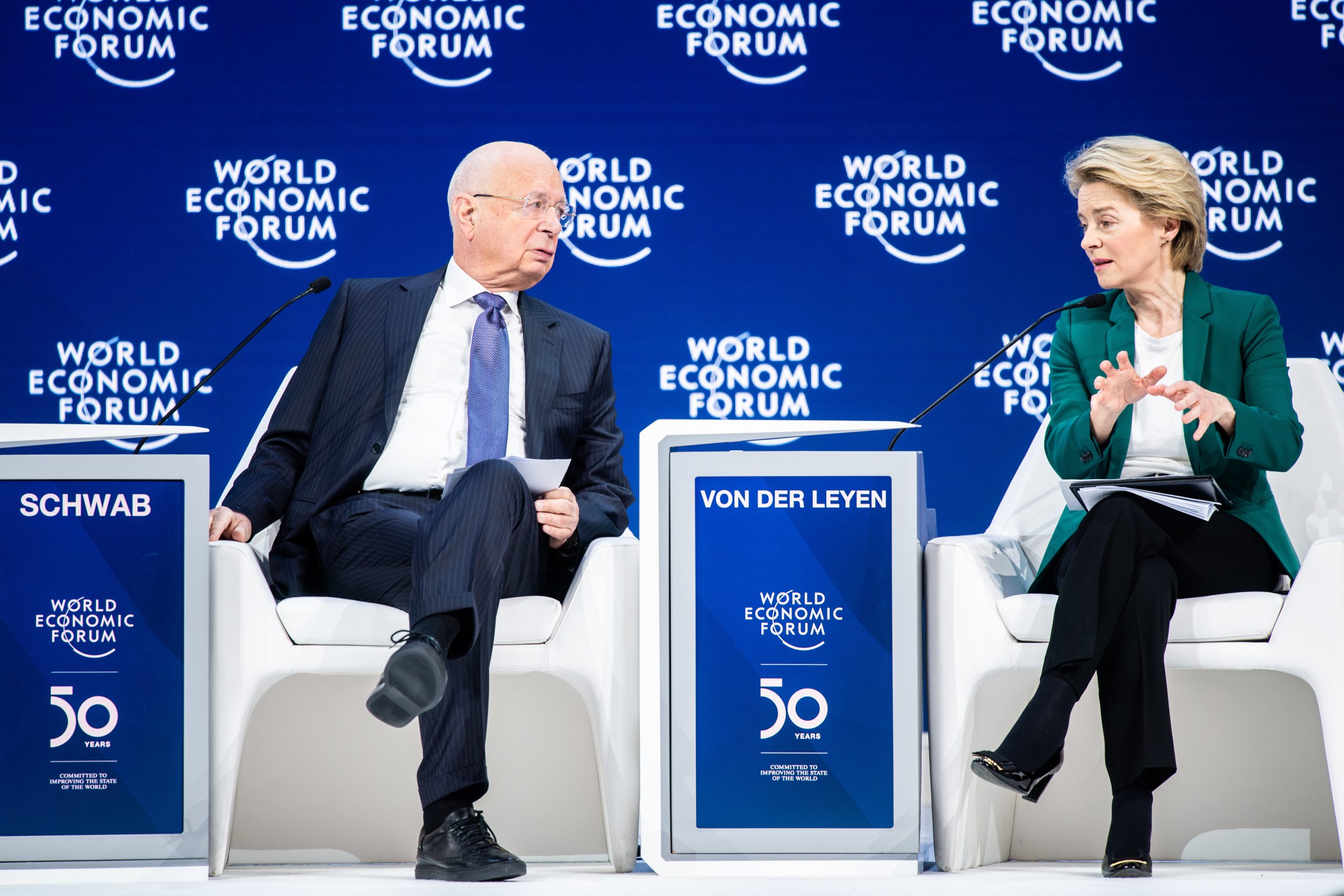
The World Economic Forum (WEF) has acknowledged that the COVID-19 pandemic served as a test of the public’s willingness to comply with unprecedented restrictions, a move it sees as essential for the transition to its vision of “smart and sustainable cities.”
This admission was posted on the WEF’s “My Carbon” webpage, where the organization promotes the concept of 15-minute smart cities.
According to the WEF, one of the key developments necessary for the evolution toward these utopian cities is the public’s acceptance of restrictions on personal freedom. The organization stated:
“COVID-19 was the test of social responsibility – A huge number of unimaginable restrictions for public health were adopted by billions of citizens across the world.
There were numerous examples globally of maintaining social distancing, wearing masks, mass vaccinations, and acceptance of contact-tracing applications for public health, which demonstrated the core of individual social responsibility.”
This statement has fueled concerns and criticism that the pandemic was used as a means to gauge the public’s obedience to a more authoritarian global order. The WEF’s remarks imply that compliance with such restrictions is necessary for the world to become more “sustainable.”
READ ALSO: Study challenges assumptions about COVID-19 vaccines, long COVID prevention
Critics argue that during the pandemic, citizens were asked to accept regulations that often seemed inconsistent or illogical. For example, it was deemed safe to shop at large retailers like Lowe’s or Home Depot, but not at small businesses or places of worship.
In Michigan, strip clubs remained open while purchasing garden seeds was prohibited. These measures have led many to question the true motives behind the restrictions.
The WEF’s statement suggests that the pandemic was a “test” to see how many people would sacrifice their individual freedoms and sovereignty for the sake of public health mandates. This perspective is seen by some as an attempt to normalize the acceptance of future restrictions under the guise of public safety.
The reference to the COVID-19 pandemic as a “test” has drawn comparisons to the infamous Milgram Experiment conducted by Yale University psychologist Stanley Milgram in the early 1960s.
The experiment demonstrated that a significant majority of people would obey authority figures even when instructed to perform acts that conflicted with their personal conscience.
Milgram’s findings revealed that 65% of participants were willing to administer what they believed were potentially lethal electric shocks to others, simply because they were ordered to do so by an authority figure.
The WEF’s admission has raised alarms among those who fear that the organization’s vision for the future involves a shift towards a more controlled and less free society. The ongoing debate over the balance between public health and individual freedoms continues, with the WEF’s comments adding fuel to the fire.


-

 Football5 days ago
Super Falcons target World Cup play-off spot against South Africa
-

 Business6 days ago
Bigi, Fearless take campus engagement to new level, reach 20 tertiary institutions
-

 Featured3 days ago
Osun 2026: What the battle could signal for 2027 general elections
-

 Business5 days ago
OPay transactions surge 115% to $358bn as Fintech eyes $4bn US IPO
-

 Business4 days ago
Who is really benefiting from Nigeria’s economic reforms?
-

 Featured3 days ago
Osun Election: How poverty turns ₦20,000 into a powerful vote-buying tool
-

 Business5 days ago
Deep offshore tax order to unlock $50bn investment, boost oil output–Ojulari
-

 Aviation1 week ago
Air Peace suspends flights as aviation unions block Lagos, Abuja terminals