
Latest
2027 elections: Lai Mohammed, Gbenga Daniel link Nigeria’s economic prosperity to security

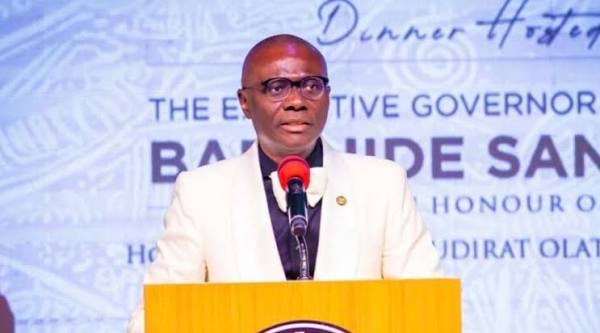
Former Minister of Information and Culture, Alhaji Lai Mohammed, and former Ogun State Governor, Senator Gbenga Daniel, have stressed the inseparable relationship between security, economic growth and Nigeria’s political stability ahead of the 2027 general elections.
The duo spoke on Thursday at the 7th Freedom Online Yearly Lecture held at the Sheraton Hotel, Ikeja, Lagos, with the theme, “2027 Elections: Economy, Security and Nigeria’s Future.”
Mohammed, who chaired the lecture, said Nigeria’s collective responsibility ahead of the 2027 elections should be to strengthen the foundations of governance and economic development rather than merely criticise ongoing efforts.
He identified security as a fundamental precondition for economic growth, arguing that businesses and investors could not thrive in an environment of uncertainty.
According to him, political stability is also closely linked to economic inclusion, particularly the ability of young Nigerians to secure employment and pursue meaningful opportunities.
“When young people are gainfully employed and see a clear path to self-actualisation, the political space becomes far less susceptible to manipulation and electoral violence,” he said.
Mohammed urged Nigerians to view the 2027 elections not simply as a contest for political power but as an opportunity to advance continuity, institution-building and national development.
He said the outcome of the election should strengthen democratic institutions, boost investor confidence and promote peace across communities.
The former minister acknowledged the economic and security challenges confronting the Federal Government, saying they could not be resolved overnight but required consistency, patience, institutional strengthening and national cooperation.
He also called on stakeholders to constructively engage with the administration’s efforts to stabilise the economy, attract investment, improve security and create sustainable conditions for economic growth.
On the role of the media, Mohammed warned journalists against allowing political reporting to fuel ethnic, religious and regional tensions during the election season.
He said the media had a responsibility to inform citizens, interrogate political claims, expose falsehoods and provide platforms for competing ideas.
He called for journalism that is “robust without being reckless; critical without being destructive; patriotic without becoming partisan.”
Daniel, who delivered the preliminary remarks, similarly emphasised the strong connection between economic development and security.
“Nigeria cannot have a strong economy without security, and it cannot have lasting security without a strong economy. The two are inseparable,” he said.
He noted that Nigeria’s economy recorded 4.43 per cent growth in the second quarter of 2026, but said the real measure of economic progress should be reflected in Nigerians’ daily experiences, including access to jobs, safe transportation, affordable finance and a conducive environment for businesses.
Daniel described security as an essential component of economic infrastructure, warning that insecurity affecting farmers, transporters and businesses ultimately raises production costs and discourages investment.
He cited the reported abduction of more than 7,800 people between July 2025 and June 2026 as not only a security concern but also an economic warning.
Daniel also highlighted the growing contribution of the non-oil sector, which he said accounted for about 95.8 per cent of real GDP in the second quarter of 2026.
He called for greater investment in agriculture, manufacturing, technology, construction, financial services, tourism, entertainment and the digital economy to create productive jobs and improve living standards.
The former governor stressed the need to equip young Nigerians with skills, employment, capital and technology, warning that denying them opportunities could fuel frustration and undermine social stability.
He cited Lagos and Ogun states as examples of how population, enterprise, infrastructure and opportunity could combine to unlock economic potential.
Daniel said Nigeria’s future would ultimately depend on the decisions taken today, urging government and citizens to secure farms, roads and communities while investing heavily in young people.
“I remain optimistic about Nigeria—not because our problems are small, but because our capacity is greater than our problems,” he said.
Continue Reading


-
 Health1 week ago
ISRT 2026: Global experts converge in Lagos to advance cancer care across Africa
-

 Football1 week ago
Ballon d’Or 2026: The key rules shaping the race for football’s biggest prize
-

 Business1 week ago
Versat Automobile to launch Chery’s EXEED premium brand in Nigeria
-
 Comments and Issues6 days ago
Yes, many kidnappers are embedded in the Nigeria Police
-

 Business5 days ago
Olufemi Olaiya to deliver keynote at Africa Business & Enterprise Conference 2026
-

 Football1 week ago
Yaya Touré makes history as Slovan Bratislava reaches Champions League league phase
-
 Featured1 week ago
What caused the deadly Nepal-Tibet flood?
-
 Business3 days ago
OPay breaks silence on viral September shutdown claim