
Featured
Bayelsa governor faces scrutiny over N2.3tn FAAC inflow, 88.5% poverty rate

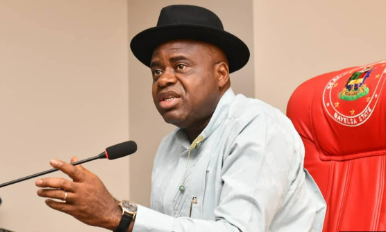
Governor Douye Diri of Bayelsa State is facing renewed scrutiny over the state’s revenue inflows and persistent poverty levels, following questions about how billions of naira received from the Federation Account have translated into improved living conditions for residents.
The concern was raised by Francis Dufugha, publisher of the Niger Delta Herald Newspapers and a kinsman of the governor, who called for an “honest conversation” about Bayelsa’s development trajectory under Diri’s administration.
According to Dufugha, available fiscal data indicate that Bayelsa received approximately ₦2.3 trillion in gross allocations from the Federation Account Allocation Committee (FAAC) between 2020 and 2025.
He contrasted the revenue inflows with Bayelsa’s multidimensional poverty rate of 88.5 per cent, one of the highest rates recorded among Nigerian states.
The poverty figure is based on the National Bureau of Statistics’ Multidimensional Poverty Index, which measures deprivation beyond income, including areas such as education, health, living standards and employment.
Dufugha also pointed to child multidimensional poverty in the state, which he said was above 95 per cent, arguing that the figures raise questions about the impact of public spending on ordinary residents.
“The question therefore is not simply how much money has come into Bayelsa, but what has the money achieved for the people?” he asked.
Dufugha questioned some of the government’s spending priorities, particularly its investment in residential accommodation for political office holders and senior government officials.
He acknowledged the completion of a housing estate inherited from a previous administration but argued that greater attention should be given to affordable housing for low-income families, young workers, teachers, health workers, civil servants and other vulnerable residents.
He also called for greater investment in rent-to-own schemes, affordable housing, serviced plots, low-interest housing finance and public-private partnerships.
The criticism comes as Bayelsa continues to receive substantial federal allocations. The state’s 2026 budget provides for more than ₦1 trillion in spending, with FAAC accounting for a significant portion of expected revenue. The state government has also earmarked funds for infrastructure, education, health, water supply, agriculture and security.
Dufugha challenged the governor to publish a comprehensive scorecard showing the administration’s performance in poverty reduction, employment and youth development, education, healthcare, housing, infrastructure, agriculture and economic development.
He said the request was aimed at promoting transparency and accountability rather than attacking the governor personally.
“I am not against Governor Douye Diri or his administration,” Dufugha said, insisting that Bayelsans deserved “facts, figures and measurable results.”
The criticism adds to an ongoing debate over Bayelsa’s development despite its status as one of Nigeria’s major oil-producing states.
Earlier this year, the state government rejected reports that it had blamed the Federal Government for Bayelsa’s poverty rate, describing such claims as false and misleading.
The Diri administration has meanwhile highlighted infrastructure and social investments as part of its development agenda. In presenting the 2026 budget, the governor said the government was prioritising roads, education, healthcare, water supply, power, security and agriculture.
The debate over the state’s finances is therefore likely to remain focused on whether the substantial resources available to Bayelsa are producing measurable improvements in the welfare and living standards of its people.


-

 Health1 week ago
ISRT 2026: Global experts converge in Lagos to advance cancer care across Africa
-

 Comments and Issues7 days ago
Yes, many kidnappers are embedded in the Nigeria Police
-

 Featured3 days ago
Ranking the seven greatest World Cup finals of all time
-

 Business6 days ago
Olufemi Olaiya to deliver keynote at Africa Business & Enterprise Conference 2026
-

 Business4 days ago
OPay breaks silence on viral September shutdown claim
-

 Business2 days ago
X3M Ideas donates 50 Walkie-Talkies to strengthen security operations in Onigbongbo
-

 Latest4 days ago
Tinubu’s FBI records: Omokri challenges claims, cites 2003 Embassy reply
-

 Business6 days ago
Oil price slide: Dangote Refinery, depot owners face calls to lower petrol prices