
Latest
National Assembly weighs 74 reserved seats for women in constitution review

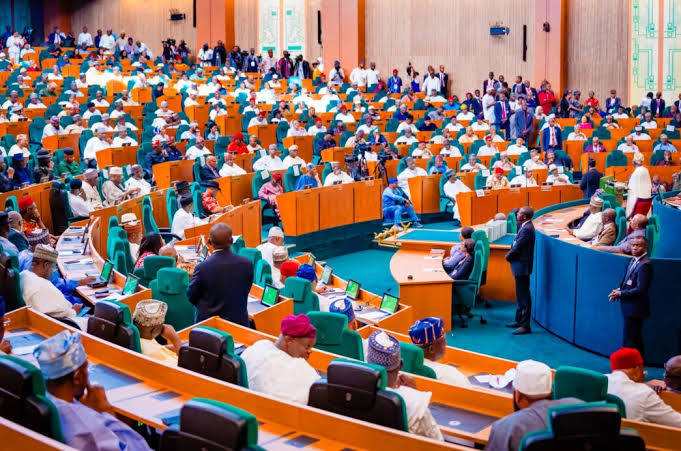
The National Assembly is considering a proposal to create 74 additional seats for women in the Senate and House of Representatives as part of efforts to improve female representation in Nigeria’s political system.
The proposal, if approved, will provide 37 additional seats in the Senate and another 37 in the House of Representatives, with each state of the federation and the Federal Capital Territory entitled to one reserved seat in each chamber.
Senate Leader, Opeyemi Bamidele, disclosed this on Monday while speaking at the 2026 Law Week organised by the Ekiti State chapter of the International Federation of Women Lawyers (FIDA).
Bamidele, who is Vice-Chairman of the Senate Committee on the Review of the 1999 Constitution, said the proposed seats would be exclusively reserved for women without displacing or reducing the existing elective positions.
He also disclosed that the constitution review committee was considering the creation of three additional seats for women in each state House of Assembly.
READ ALSO; Senate rules out Electoral Act review before 2027 elections
According to him, the proposed arrangement would operate for 16 years, covering four electoral cycles, after which a comprehensive review would be conducted to assess its impact and sustainability.
“A Bill for an Act to alter the provisions of the Constitution of the Federal Republic of Nigeria, 1999 to provide for special seats for women in the National and State Houses of Assembly and for related matters is receiving our attention at the National Assembly,” he said.
“The proposal, as it stands, is meticulous in its design. It seeks to add 37 seats in the Senate and 37 seats in the House of Representatives. This suggests that if finally approved, each state of the federation, including FCT, will have one additional seat in each of the Houses of the National Assembly.
“This arrangement is proposed to run for a period of 16 years, four electoral cycles, before a comprehensive review. This is a sunset clause designed to ensure sustainability and to allow for the organic development of a more inclusive political culture.”
The Senate leader explained that the National Assembly was engaging state legislatures to secure the required support for the proposed constitutional alteration.
Under Section 9 of the 1999 Constitution, an amendment requires the approval of at least two-thirds of all state Houses of Assembly, in addition to the prescribed majority in each chamber of the National Assembly.
Bamidele described the proposal as a national reform initiative rather than a partisan political arrangement, arguing that women’s exclusion from decision-making positions weakens the country’s democratic system.
“A democracy that systematically excludes over half of its population from the decision-making tables that determine their futures is, at best, a flawed democracy and, at worst, a veiled oligarchy,” he said.
The lawmaker said the 10th National Assembly had received encouragement from prominent government figures and advocates, including First Lady Oluremi Tinubu, in its efforts to improve women’s participation in governance.
The proposal comes amid longstanding concerns about the low representation of women in Nigeria’s elected political offices, despite their significant participation in the country’s population, economy and civic activities.
Nigeria has continued to face pressure from women’s rights organisations and civil society groups to introduce legislative and institutional measures that would address barriers to women’s political participation.
The FIDA event, chaired by Ayobami Olowoyo-Richards, was held under the theme, “Justice in a Changing World: Responding to New Challenges Affecting Women and Children”.
Bamidele also said the National Assembly was considering broader interventions to improve the welfare of women, children and persons with disabilities, including initiatives covering healthcare, educational opportunities and social protection.
He maintained that expanding women’s representation in legislative institutions would strengthen inclusive governance and ensure that policies and laws better reflect the interests of different segments of society.


-

 Sports3 days ago
Senegal opens Dakar 2026 Youth Olympic Games, Africa’s first Olympic event
-
 Latest6 days ago
Tinubu endorses Nigeria’s participation in 2026 World Travel Market London
-
 Football5 days ago
U-17 Women’s World Cup: Flamingos Beat Mexico to Reach Quarter-Finals
-

 News1 week ago
Rugby: Borthwick Faces Key Selection Questions as World Cup Looms
-

 Latest4 days ago
Netanyahu, Eisenkot face coalition deadlock as Israel struggles to form new government
-

 Business3 days ago
NNPC’s N66-per-litre petrol discount set to end October 31
-
 Featured5 days ago
How court ruling reshapes APC’s Imo West Senatorial contest
-

 Crime1 week ago
Passengers feared abducted on Kebbi-Abuja journey as viral video shows armed men threatening captives (VIDEO)