
Business
Ban on foreign currency collateral for Naira loans will enhance FX liquidity—experts

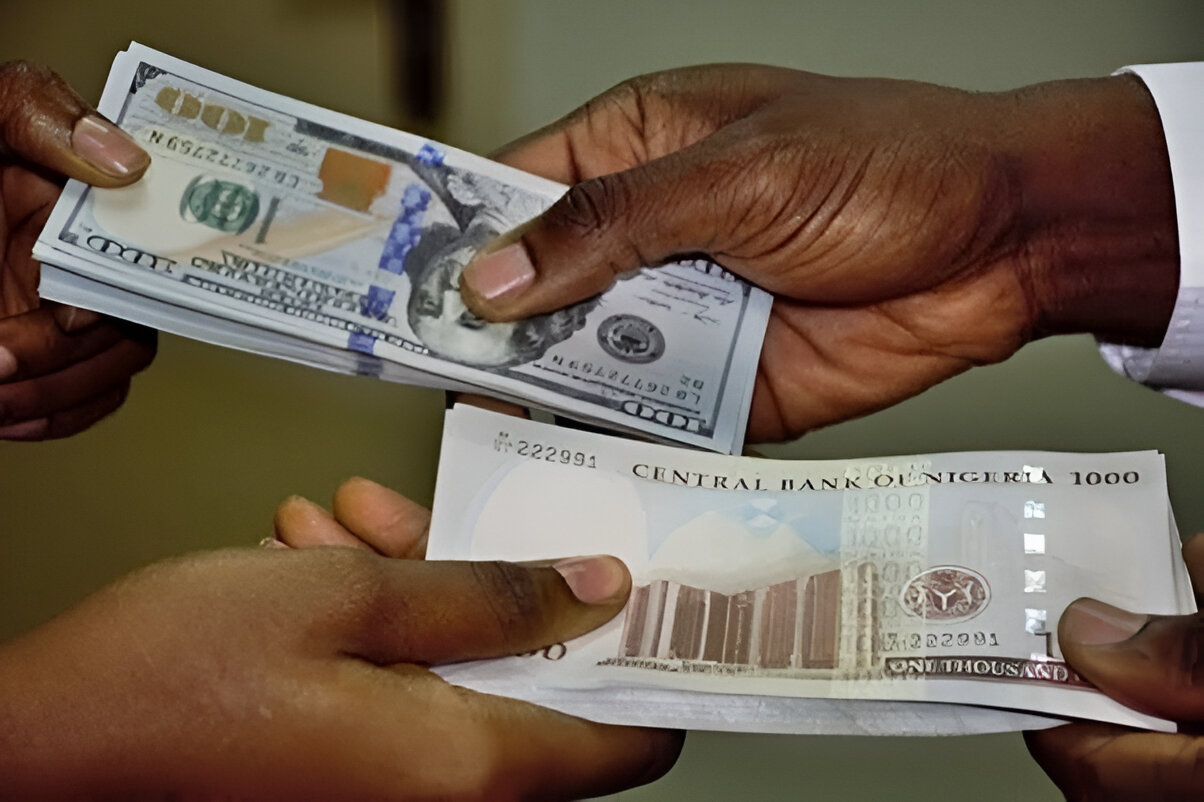
Analysts have expressed optimism that the Central Bank of Nigeria (CBN)’s move to eliminate foreign currency-denominated collateral would significantly enhance FX liquidity, providing a positive outlook for the market.
Recall that the CBN recently banned the use of foreign currency-denominated collaterals for obtaining naira loans, except under specific conditions.
According to the apex bank, the prevalent use of foreign currency (FCY) as collateral by bank customers seeking naira loans was contributing to the volatility in the FX market.
The analysts commended the policy’s focus on using more sensible collateral like Federal Government Eurobonds and foreign bank guarantees to relieve pressure on foreign exchange reserves.
Olatunde Amolegbe, Managing Director of Arthur Steven Asset Management Limited and former President of the Chartered Institute of Stockbrokers (CIS), reacting to the development, criticized the use of foreign currency-denominated collateral as an anomaly that contributed to distortions in the FX market.
He argued that it essentially amounted to betting against the Naira with US dollars, which should ideally be in circulation rather than locked up in banks’ books as collateral.
READ ALSO: The CBN’s arrow on carry-trade
Amolegbe suggested that to hedge currency risks, it would be more appropriate to purchase forwards or Eurobonds and utilize them as collateral.
“Those currencies should be in circulation and not locked up in a bank book as collateral. If you need to hedge currency risks, either buy forwards or Eurobonds or use that as collateral. That way, at least the currency finds its way into circulation. I think the measure has the potential to increase fx liquidity substantially,” he said
Victor Chiazor, Analyst and Head of Research at FSL Securities Limited, in an exclusive chat, also weighed in on the CBN’s decision to prohibit the use of foreign currency-denominated collateral for bank loans.
He observed that this trend in collateralization surged due to the prevailing belief that the Naira’s value would continue to decline, prompting individuals to opt for dollar assets as a hedge against purchasing power erosion, regardless of actual dollar needs.
He anticipates that this policy will alleviate some pressure on foreign exchange reserves, particularly by redirecting loan exposures currently collateralized with foreign currency back into Naira or Naira-denominated assets.
READ ALSO: Depleting FX reserves not due to Naira defence–Cardoso
Furthermore, Chiazor predicts that individuals still interested in holding dollar assets will be incentivized to lend to the Federal Government by investing in Federal Government Eurobonds.
However, Mr. David Adonri, Managing Director of Highcap Securities Limited, highlighted that the CBN has yet to provide a clear rationale for its directive.
According to him, he finds the directive perplexing because holding foreign currency-denominated collateral may seem less risky, given the stability of foreign currencies.
However, I think that CBN is worried about the quality of some foreign securities as collaterals hence its prescription of the kinds of foreign currency assets that are permissible,” he said.












-

 Featured3 days ago
BREAKING NEWS: Shouts of joy rock the world as Pastor Chris opens final Healing Streams edition for 2026
-

 Football3 days ago
Man United shortlist Emery, Nagelsmann as potential replacements for Carrick
-

 Business3 days ago
Hoodlums raid JED Benue office, abduct 10 staff over power dispute
-
 Business6 days ago
Naira faces exchange rate gap as Dollar hits N1,380 on parallel market
-

 Football3 days ago
Aston Villa ready to freeze out Garnacho to avoid £43m Chelsea transfer
-

 Business3 days ago
EV adoption: Roxettes seeks cheaper financing, local manufacturing incentives
-

 Latest3 days ago
Akpabio tasks Tompolo-backed movement with spreading Tinubu’s renewed hope message
-

 Business3 days ago
Naira suffers biggest daily drop in 18 months, falls to N1,365/$