
Business
Nigeria economy faces fiscal risk over CBN policies

Macroeconomic intelligence provider, FocusEconomics, has disclosed in its April 2023 Consensus Forecast report that Nigeria faces a fiscal risk due to various government policies.
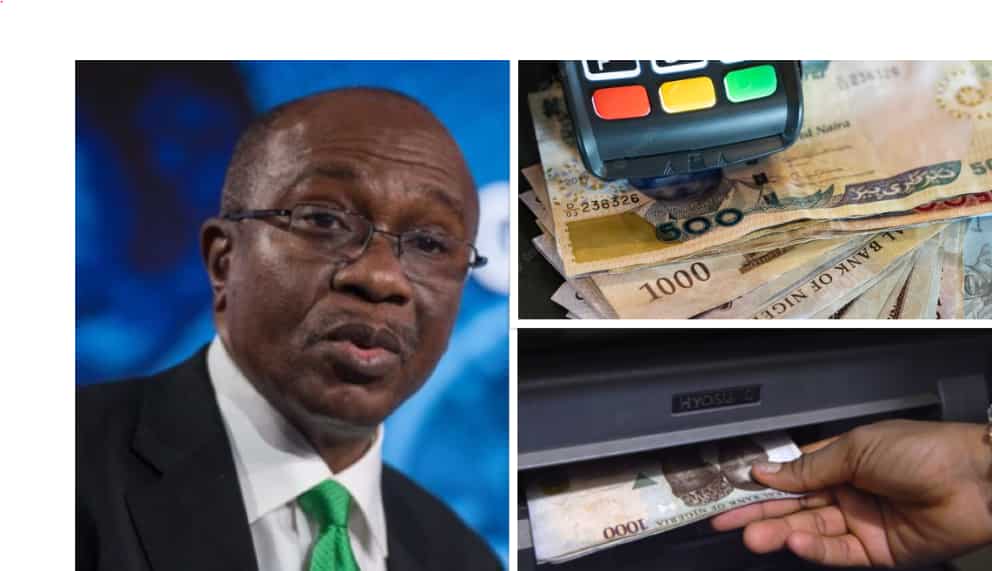
The report seen on Tuesday said the Nigerian government’s postponement of subsidy removal and the cash shortage – induced by the Naira redesign policy of the Central Bank of Nigeria (CBN) – that gripped the nation’s economy could cause fiscal risk which includes macroeconomic shocks, financial crises and commodity price shocks.
Recall that the Federal Government had planned to remove fuel subsidies in January 2022, but it postponed the decision for 18 months till the end of the second quarter (Q3) 2023.
The Spanish firm also factored widespread insecurity as a downside risk but said the commencement of the Dangote refinery will be a gain to the economy.
READ ALSO: Naira drops to record low as traders await CBN’s FX auction
“Failure to scrap the government’s fuel subsidy is a major fiscal risk, as is the evolution of the cash shortage. Widespread insecurity is a key downside risk, while the coming online of the Dangote refinery is an upside risk,” analysts at FocusEconomics wrote.
It was also said that the country’s economic growth has been burdened by its oil sector, with the latter declining by 13.4 per cent in Q4 2022 – although its fall is below the 22.7 per cent dip recorded in Q3 last year.
“Nigeria’s oil sector has continued to be a drag on overall growth, albeit less so than in previous quarters. In Q4, the sector posted a 13.4% decline, a more moderate contraction than Q3’s 22.7% plunge.
“Oil production rose to an average of 1.34 million barrels per day (mbpd) in Q4 from 1.20 million barrels per day (m/bpd) in the previous three months. The improvement in production was largely due to the government’s ongoing crackdown on oil theft and the restoration of operations at a terminal in November,” the report reads.
FocusEconomics said Nigeria’s economy has been driven largely by the non-sector despite improvement in oil production output.
“The non-oil sector of the economy was the engine of growth—as it has been since late 2020. Growth in the sector picked up to 4.4% year on year in Q4 (Q3: +4.3% year-on-year).
“The acceleration chiefly reflected the agricultural sector gaining steam and growing 2.0% in Q4 (Q3: +1.3% year-on-year).”


-
 Latest7 days ago
Israel marks 3 years since October 7 Hamas attack amid Gaza strikes, election debate
-

 Energy7 days ago
Fuel Battle: Dangote, marketers and government clash over petrol imports
-
 Energy1 week ago
Petrol, diesel prices rise 86% in 2026 as costs hit fresh highs
-

 Latest2 days ago
Full List: Meet the 2026 Nobel Prize winners across six categories
-

 Football1 week ago
Nigeria’s World Cup exit under spotlight as FIFA’s DR Congo files emerge
-

 Latest1 week ago
US Court set to rule on release of FBI, DEA records on Tinubu
-

 Business1 week ago
Nigerian investors at a crossroads as fixed-income yields slide
-

 Latest1 week ago
Oyo APC crisis deepens as Oluyole reconciliation meeting ends in brawl