
Business
Nigeria’s inflation rate drops in October

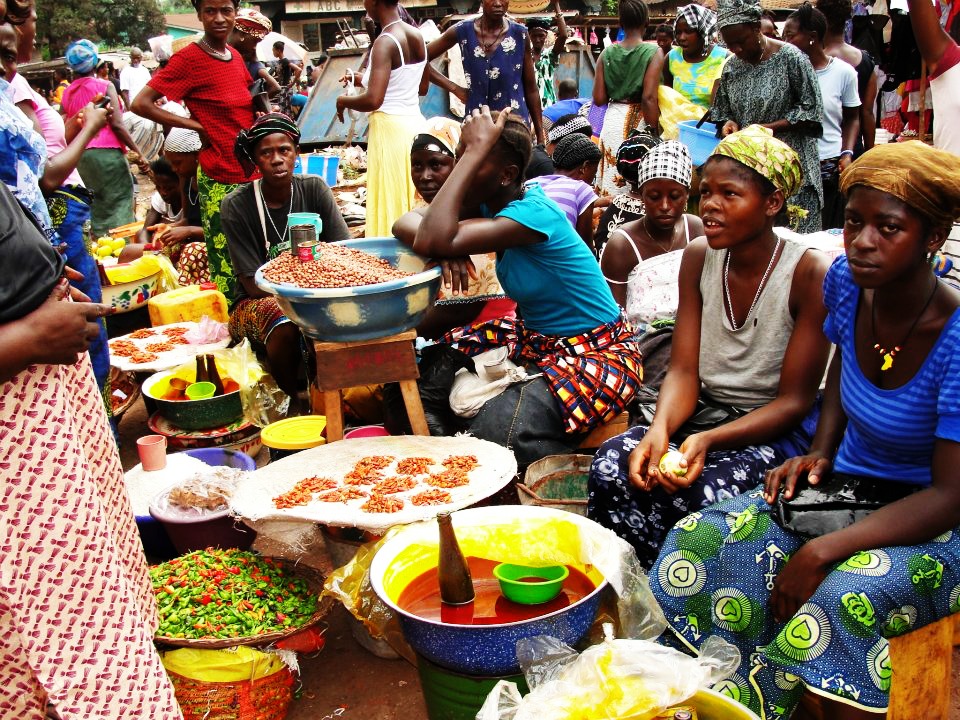
… Food prices dip in Ondo, 3 others
Data from the National Bureau of Statistics (NBS) Consumer Price Index (CPI) report on Wednesday indicated that Nigeria’s inflation rate, which climbed marginally to about 11.28 percent in September, dropped slightly to 11.26 percent in October.
In the report seen by National Daily, the CPI, which measures inflation rate for goods and services in the Nigerian economy, decreased by 11.26 percent (year-on-year) in October 2018, about 0.02 percent points lower than the rate recorded in September 2018.
On a month-on-month basis, the report said deadline inflation index increased by 0.74 percent in October 2018, down by 0.09 percent points from the rate recorded in September 2018 (0.83) percent.
The report said increases were recorded in all 12 classifications of individual consumption by purpose (COICOP) divisions that yielded the headline index.
The percentage change in the average composite CPI for the 12 months period ending October 2018 over the average of the CPI for the previous 12 months period, the report said, was 12.78 percent, from 13.16 percent recorded in September 2018.
The urban inflation rate increased by 11.64 percent (year-on-year) in October 2018 from 11.70 percent recorded in September 2018, while the rural inflation rate increased by 10.93 percent in October 2018 from 10.92 percent in September 2018.
On a month-on-month basis, the urban index rose by 0.76 percent in October 2018, from 0.86 percent recorded in September, while the rural index also rose by 0.72 percent in October 2018, down from the rate recorded in September 2018 (0.82) percent.
In the report, food prices in four states – Akwa Ibom, Benue, Kwara and Ondo, experienced negative inflation between September and October 2018.
“In October 2018, food inflation on a year on year basis was highest in Bayelsa (16.36%), Abuja (15.85%) and Taraba (15.27%), while Bauchi (12.17%), Oyo (11.76%) and Plateau (11.36%) recorded the slowest rise in food inflation.
“On month on month basis however, October 2018 food inflation was highest in Kogi (2.28%), Plateau (2.42%) and Nasarawa (2.17%), while Akwa Ibom, Benue, Kwara and Ondo all recorded food price deflation or negative inflation (general decrease in the general price level of goods and services or a negative inflation rate) in October 2018,” the report read.
In August, headline inflation rate rose from 11.14 percent in July to 11.23 percent after maintaining 18 consecutive declines from about 17.78 percent in February 2017.









-

 Business1 week ago
Dangote Refinery IPO: 70% Subscription claim meets fourfold demand assertion as investors seek clarity
-

 Featured4 days ago
Inside INEC’s race to prepare for Nigeria’s 2027 elections
-

 Latest6 days ago
UCTH faces morgue crisis as 50 unclaimed corpses await mass burial
-

 Featured4 days ago
2027: APC unveils nationwide campaign timetable, Tinubu to rally in 12 states
-

 Business6 days ago
BREAKING: Nigeria’s Inflation Rate Drops to 14.63% in September
-

 Aviation1 week ago
Germany opens online application route for student, EU Blue Card and other long-stay visas
-
 Business4 days ago
Court dismisses ₦170m Trade Fair contract claim, says Zenith Bank was not a party
-

 Business5 days ago
President Tinubu and the Low Transport Fares Fiasco