
Business
Why Nigerian banks’ll not fund Shell assets acquisition- Agbaje

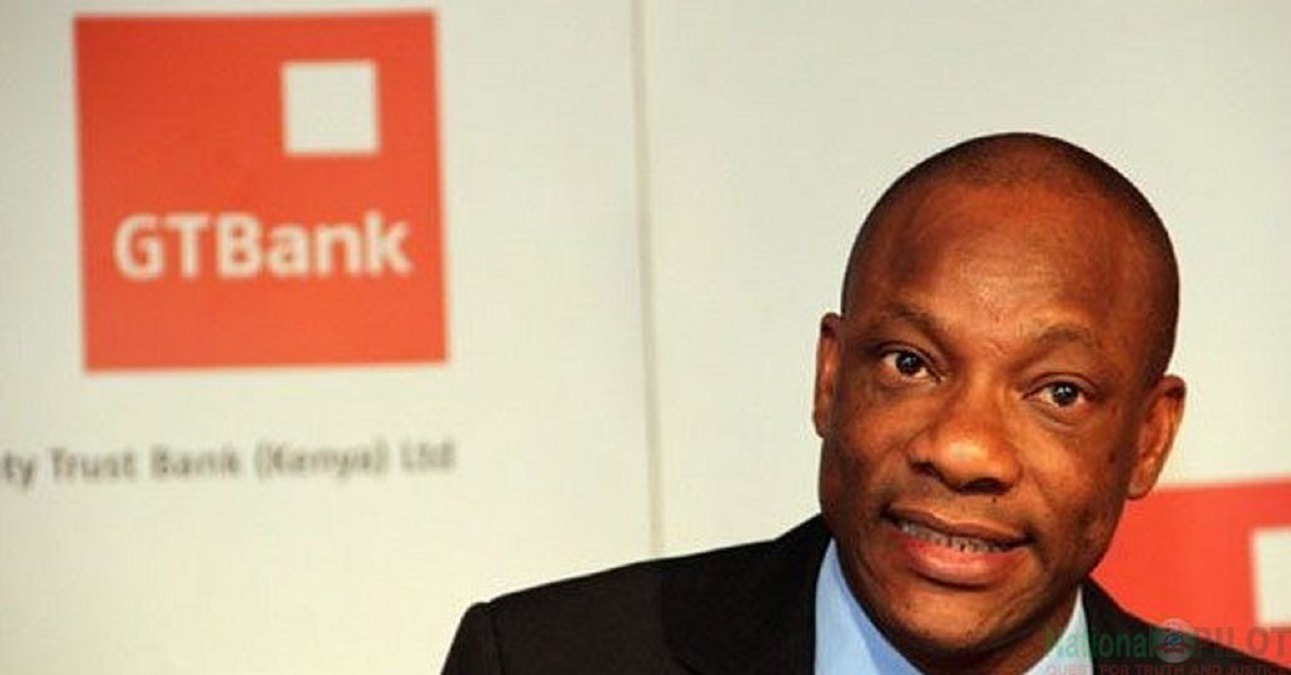
The Chief Executive Officer of Guaranty Trust Holding Company Plc, Mr Segun Agbaje, has given reasons why Nigerian Banks would not be able to finance the acquisition of Shell assets in the country following its decision to pull out of Nigeria.
Speaking at GTCO’s investor conference held virtually, Agbaje explained that Nigerian lenders likely do not have enough dollars to fund clients interested in acquiring assets of Shell Petroleum Development Company Limited.
Shell announced in May that it would abandon its onshore oil operations in Nigeria because they were no longer fit with the company’s strategic goals.
READ ALSO: GTBank threatens staff with pay-cut over COVID-19 vaccine mandate
The Anglo-Dutch firm has been gradually selling onshore assets in the West African country, attempting to put to rest long-standing issues such as pollution caused by broken pipelines and the ensuing court disputes with local populations.
Shell’s ambition to turn itself into a clean energy behemoth and progressively wind down its oil and gas sector to reach net-zero carbon emissions by 2050 has exacerbated the problem in the last year.
Reacting, Agbaje said such a deal would require a syndication of up to $1.8 billion, and that raising that kind of funding locally at the moment can be very tough.
“When I look at the books of Nigerian banks today, I don’t see a lot of dollar liquidity. It is becoming a very difficult deal for people to pull off.”
Nigerian banks have seen their capacity to embark on such transactions decrease significantly since they syndicated $3.3 billion in debt to Dangote Industries for a refinery and petrochemical complex in 2013 and recently financed Heirs Holding’s $1.1 billion acquisition of OML 17.
According to Agbaje, Dollar inflows into Nigeria were slowed by a drop in crude prices and an economic downturn brought on by the COVID-19 pandemic, putting pressure on reserves.
GTCO is seeking a license from the Central Bank of Nigeria to establish a payment firm in order to mitigate issues in its primary activities.
Agbaje said the company was waiting for regulatory permission on an acquisition that would allow it to run pension and asset management companies.
“Our desire in the medium to long term is that the three new businesses will contribute about 30 percent of group profit,” he said.
After interest earnings from loans and investment securities fell 22% to N116.9 billion in the first half, the company’s net income fell 16% to N78.1 billion (US$189.8 million).


-
 Latest6 days ago
Israel marks 3 years since October 7 Hamas attack amid Gaza strikes, election debate
-

 Energy6 days ago
Fuel Battle: Dangote, marketers and government clash over petrol imports
-

 Energy1 week ago
Petrol, diesel prices rise 86% in 2026 as costs hit fresh highs
-

 Football1 week ago
Nigeria’s World Cup exit under spotlight as FIFA’s DR Congo files emerge
-

 Energy1 week ago
Has Iran lost control of the Strait of Hormuz? Oil flows rebound as war disruptions persist
-

 Latest1 day ago
Full List: Meet the 2026 Nobel Prize winners across six categories
-

 Latest7 days ago
US Court set to rule on release of FBI, DEA records on Tinubu
-

 Business7 days ago
Nigerian investors at a crossroads as fixed-income yields slide