
Latest
4 Warning signs that shows a building is about to collapse

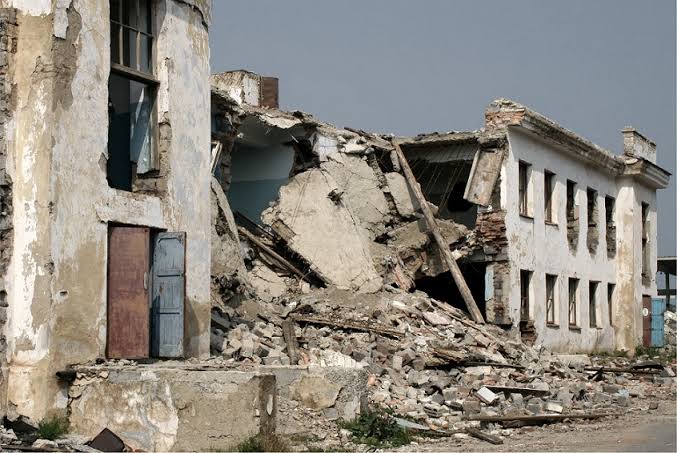
Nigeria has suffered its share of collapsed buildings in the past few years with several cases of building collapsing until recently in Lagos state when another building collapsed and a lot of people lost their lives and properties. This tragic event inspired this article and if you pay attention carefully, you’ll know the early signs of a collapsing building and you may be able to quickly run to safety.
In Nigeria, building control agencies carry out a non-destructive integrity test to ascertain the structural stability of the building and know if the buildings can be re-engineered or renovated. Before or after this test is conducted, some factors can trigger or cause a building to collapse. Examples are previous fire damage(that may sap the buildings’ strength), sagging wooden floors, interior collapse, plaster sliding off of walls, and windows, doors, and stairs that are out of level(may indicate a building that has shifted).
Just as there are quite some reasons why a building could collapse, there are also things that you can notice before a building collapses. Arguably, the fact remains that buildings do not just suddenly collapse without warning signs. But one of the biggest challenges with these signs is that if they are neglected, the collapse of the building in a short period may be inevitable and may cost the loss of lives and properties.
1. Cracks in the wall
Cracks in walls are natural signs that show that the structure is unable to accommodate the load or movement to which it is subjected. When this sign is noticed but overlooked, it may eventually lead to the collapse of the building.
2. Moving house
This refers to the movement over some time. For example, certain parts of the house can shift from their original position due to a poor foundation or foundation problems. It is one of the most dangerous signs of an impending collapse of a building.
3. Cracking and popping sound
When a house begins to make a cracking and popping sound, especially during strong wind, it may be as a result of the nails, pipes, grinds, and air dust rubbing against the wooden part of the structure, causing it to create a cracking sound. Pay attention to the sign and immediately evacuate the building and area.
4. Deteriorating support structure
This can be caused by 3 things which are, use of substandard materials(which can fail and cause a direct impact on the exterior walls which may eventually result in the collapse of buildings), deformed sliding(when the sliding that protects the building moisture and elements are left in bad conditions, it can deteriorate and weaken the foundational structure and lead to building collapse), and tears and fissures in foundation structures(which may occur during construction when primary structural element fails, resulting in failure of adjoining structural elements and may eventually lead to building collapse.
Meanwhile, in cases where buildings are detected to have these defects or signs, as part of our commitment to ensuring safety to our fellow Nigerians, we should alert everyone in the building to evacuate immediately and make it a point of duty to notify the nearest Local Council Development Area(LCDA).
If you have opinions on other signs of buildings that are about to collapse, kindly drop them in the comment section.


-

 Latest5 days ago
Full List: Meet the 2026 Nobel Prize winners across six categories
-

 Football5 days ago
Premier League Matchweek 7: Five Fixtures That Could Shape the Weekend
-

 Latest4 days ago
Umahi defends Lagos-Calabar highway route changes amid public outcry
-

 Business3 days ago
Dangote Refinery IPO: 70% Subscription claim meets fourfold demand assertion as investors seek clarity
-
Business4 days ago
Dangote Refinery IPO Extension: Was the 70% subscription report overhyped?
-

 Latest2 days ago
UCTH faces morgue crisis as 50 unclaimed corpses await mass burial
-

 Featured4 days ago
El-Rufai, ADC governorship candidate’s court appearance puts Kaduna opposition politics in focus
-

 Business2 days ago
BREAKING: Nigeria’s Inflation Rate Drops to 14.63% in September