
Business
Economists fault NBS GDP growth figures amid soaring cost of living

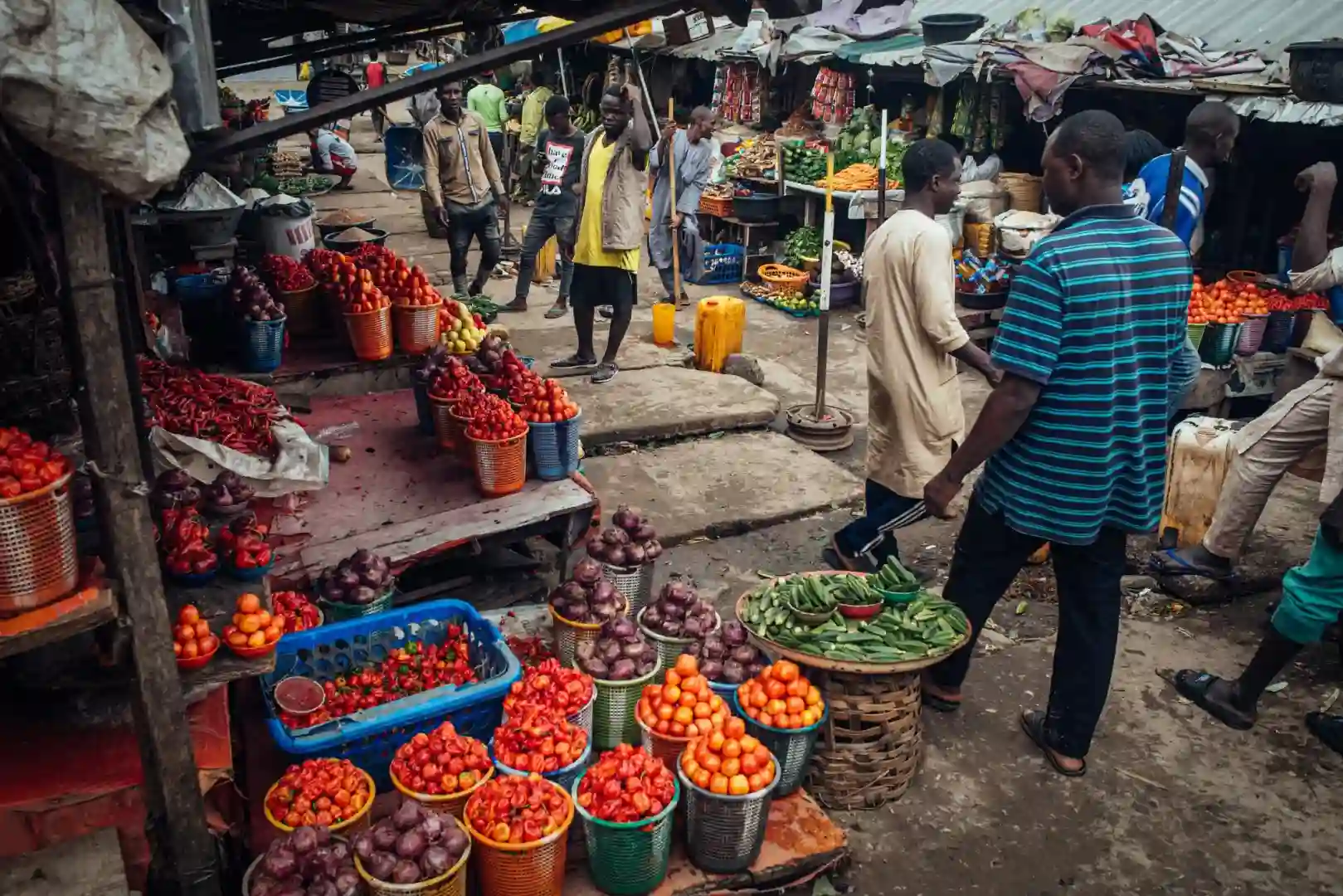
Economists and financial experts have faulted the latest Gross Domestic Product (GDP) report released by the National Bureau of Statistics (NBS), insisting that the reported economic growth has failed to improve the living conditions of ordinary Nigerians amid worsening inflation and surging energy costs.
The NBS, in its first quarter 2026 GDP report released on Monday, stated that Nigeria’s economy grew by 3.89 percent in Q1 2026, compared to the 3.13 percent growth recorded in the corresponding period of 2025. According to the report, the services sector remained the dominant contributor to aggregate GDP with 57.73 percent, while agriculture contributed 23.16 percent and industries accounted for 19.11 percent.
The bureau further disclosed that nominal GDP stood at N110.79 trillion, while real GDP was put at N51.36 trillion. It added that the non-oil sector contributed 96.08 percent to GDP, while the oil sector accounted for 3.92 percent.
However, despite the positive figures, the report has continued to attract criticism from economists, stakeholders, and Nigerians who argue that the statistics do not reflect the harsh economic realities confronting citizens across the country.
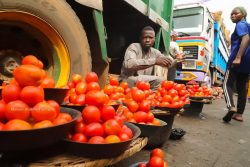
The backlash comes amid worsening inflationary pressures and escalating costs of basic commodities and energy products. Cooking gas currently sells for over N1,500 per kilogram, petrol hovers around N1,400 per litre, while diesel prices have climbed to nearly N2,000 per litre, largely driven by the prolonged Middle East crisis and domestic economic challenges.
Speaking on the development, former President and Chairman of the Council of the Chartered Institute of Bankers of Nigeria (CIBN), Mazi Okechukwu Unegbu, said the country’s GDP figures have become disconnected from the realities faced by ordinary Nigerians.
According to him, successive improvements in GDP have failed to translate into meaningful improvements in living standards, as citizens continue to struggle with rising prices and declining purchasing power.
Unegbu explained that economists are now considering ways to recalibrate GDP measurement to better reflect the conditions experienced by average Nigerians.
READ ALSO: Nigeria Needs 7–10% growth to hit $1trn GDP target – Minister warns
“Economists are now trying to recalibrate the GDP to link it to the life of the ordinary person on the street. Despite improvement in Nigeria’s GDP, the life of the ordinary person is not improving,” he said.
He argued that GDP growth during periods of severe economic hardship should not be used as the sole benchmark for measuring national progress, stressing that market realities and the purchasing power of citizens must also be factored into economic assessments.
“The GDP has no meaning; that is why economists want to recalibrate it and link it to the life of the ordinary person in this space,” Unegbu stated.
“Right now, the price of everything has increased under this administration. The cost of living has continued to rise and nothing has come down.
“The NBS report showed that the economy is growing, but if you go to the market, prices are still increasing. Nigerians are now worse off despite the improvement in GDP.”
He further cited the rising prices of cooking gas, fuel, and diesel as clear indications that economic growth has not positively impacted the lives of citizens.
According to him, GDP calculations should be structured in a way that captures the experiences of ordinary Nigerians, including traders, artisans, students, mechanics, and small business owners.
“My own suggestion is that when the GDP is published, it should not be used to measure what the common man is doing. GDP should reflect people whose lives are affected — the schoolboy, the market woman, traders, mechanics, and hairdressers,” he added.
Also reacting, President of the Bank Customers’ Association of Nigeria, Dr. Uju Ogunbunka, described the NBS figures as disconnected from economic realities on the ground.
He maintained that despite the reported growth, millions of Nigerians are still battling rising living costs, inflation, unemployment, and worsening hardship.
“Unfortunately, beautiful statistics do not match reality. The NBS report on GDP growth to 3.89 percent leaves more than expected as many battle with the rising cost of living,” Ogunbunka said.
Economic analysts have continued to warn that while GDP growth remains an important macroeconomic indicator, it may not accurately capture the welfare and living standards of citizens, especially during periods of high inflation and economic instability.
Many Nigerians have also expressed concerns that the reported growth figures are not being felt in households and businesses, as food prices, transportation costs, rents, and utility bills continue to rise across the country.


-
 Latest5 days ago
Pastor Chris Oyakhilome announces mother’s passing at 88 [VIDEO]
-

 Latest6 days ago
Arsenal eye €70-80m move for Real Madrid star
-

 Crime6 days ago
Police arrest suspect, launch manhunt for 2 others over Delta Education Director’s death
-

 Football3 days ago
How David Beckham made $51.1m from 2026 World Cup, surpassing winners’ prize
-

 Latest5 days ago
How adulterated palm oil, coloured pepper are putting consumers at risk
-

 Crime5 days ago
Deaths in NSCDC Custody: Can Nigeria guarantee the safety of detainees?
-

 Latest6 days ago
Obi left $155m in Anambra, Otti insists amid debt controversy
-

 Crime6 days ago
184.5kg Cocaine Bust: NDLEA docks KC Luxury, two accomplices, remands them in custody