
Featured
APC, Atiku clash over Tinubu’s power sector reforms ahead of 2027 elections

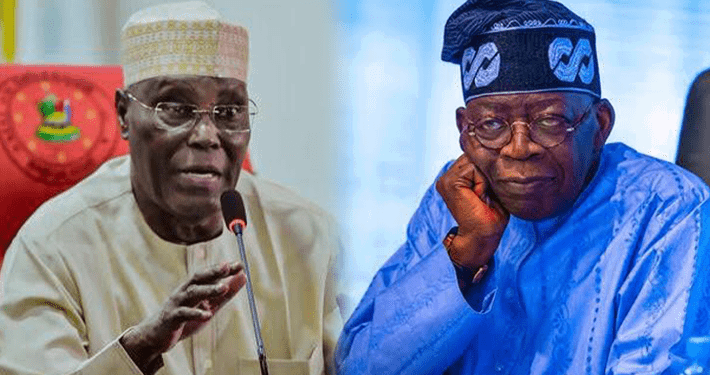
The All Progressives Congress (APC) Presidential Campaign Council and former Vice-President Atiku Abubakar have disagreed over President Bola Tinubu’s performance in the power sector, with the ruling party defending its reforms while the opposition figure insists Nigerians are yet to experience the promised improvement in electricity supply.
The disagreement comes amid persistent power outages, rising electricity costs and concerns over unreliable supply to households and businesses, more than three years after Tinubu promised to address Nigeria’s electricity challenges during his 2023 presidential campaign.
In a statement issued on Sunday, November 1, the APC Presidential Campaign Council spokesperson, Dele Alake, urged Nigerians to assess the President’s electricity pledge alongside the administration’s policies, financial interventions and infrastructure projects.
Alake argued that public criticism had overlooked the full context of Tinubu’s campaign promise, particularly his commitment to provide adequate explanations if his administration failed to deliver before seeking re-election.
Defending the government’s record, he cited the Electricity Act 2023, the Presidential Metering Initiative, efforts to settle outstanding debts in the power sector and investments in transmission infrastructure.
According to Alake, more than 1.5 million electricity customers have been metered under the Presidential Metering Initiative, which was introduced to address a metering gap estimated at over seven million customers.
He also disclosed that the Federal Government had established a N4tn bond programme to settle verified legacy debts owed to electricity generation and gas companies, adding that the first two tranches had raised more than N1.2tn.
The APC spokesman further cited ongoing transmission projects, including the planned construction of eight new substations and upgrades to four existing facilities approved by the Federal Executive Council in June 2026.
He acknowledged, however, that resolving Nigeria’s electricity crisis remained unfinished, arguing that major infrastructure projects required time because of the specialised equipment involved.
Reacting to the APC’s defence, Atiku accused the ruling party of focusing on policy announcements, financial arrangements and project approvals instead of addressing the electricity difficulties experienced by Nigerians.
In a statement issued on Sunday by Phrank Shaibu, Director of Strategic Communication of the African Democratic Congress Presidential Campaign Council, Atiku said legislation and financial interventions could not substitute for reliable electricity supply.
He argued that households and businesses continued to spend heavily on alternative sources of power while facing electricity bills that did not always reflect the quality of service received.
Atiku also criticised the existing electricity tariff-band system, questioning why consumers should pay higher rates without corresponding improvements in supply.
He specifically cited the Band A tariff, which he put at about N209.50 per kilowatt-hour before Value Added Tax, and called for a fairer and more transparent pricing framework.
The former vice-president also questioned the Federal Government’s plan to end electricity subsidies from 2027, demanding clarification on the potential impact on household and business electricity bills.
He said an administration’s performance should be measured by tangible improvements in electricity access and reliability rather than the number of policies or financial programmes announced.
Atiku further argued that settling outstanding debts owed to power companies was different from expanding electricity generation capacity and building new infrastructure.
The exchange has brought renewed attention to the electricity sector as political parties prepare for the 2027 general election, with power supply emerging as a major issue in the debate over the Tinubu administration’s performance.
Nigeria’s electricity industry continues to face challenges involving inadequate generation, ageing transmission infrastructure, distribution losses, gas supply constraints and accumulated financial obligations.
The Electricity Act 2023 introduced a framework allowing state governments to establish electricity markets and regulate generation, transmission and distribution within their jurisdictions, subject to the provisions of the law.
Although the Tinubu administration has presented the legislation, metering programme and debt-settlement arrangements as evidence of progress, persistent supply challenges and concerns over electricity affordability remain central to public debate.
The disagreement between the APC and Atiku therefore centres on a broader question: whether the administration’s policy and financial interventions are translating into measurable improvements in electricity supply for consumers.
With the 2027 elections approaching, the competing positions are likely to keep the power sector at the centre of political scrutiny, particularly as households and businesses continue to assess government performance through the availability, reliability and cost of electricity.


-

 Sports3 days ago
Senegal opens Dakar 2026 Youth Olympic Games, Africa’s first Olympic event
-
 Latest5 days ago
Tinubu endorses Nigeria’s participation in 2026 World Travel Market London
-
 Football4 days ago
U-17 Women’s World Cup: Flamingos Beat Mexico to Reach Quarter-Finals
-

 News1 week ago
Rugby: Borthwick Faces Key Selection Questions as World Cup Looms
-

 Latest3 days ago
Netanyahu, Eisenkot face coalition deadlock as Israel struggles to form new government
-
 Featured4 days ago
How court ruling reshapes APC’s Imo West Senatorial contest
-

 Crime1 week ago
Passengers feared abducted on Kebbi-Abuja journey as viral video shows armed men threatening captives (VIDEO)
-
 Business2 days ago
NNPC’s N66-per-litre petrol discount set to end October 31