
Business
Naira gains momentum as EFEMS reshapes Nigeria’s forex market

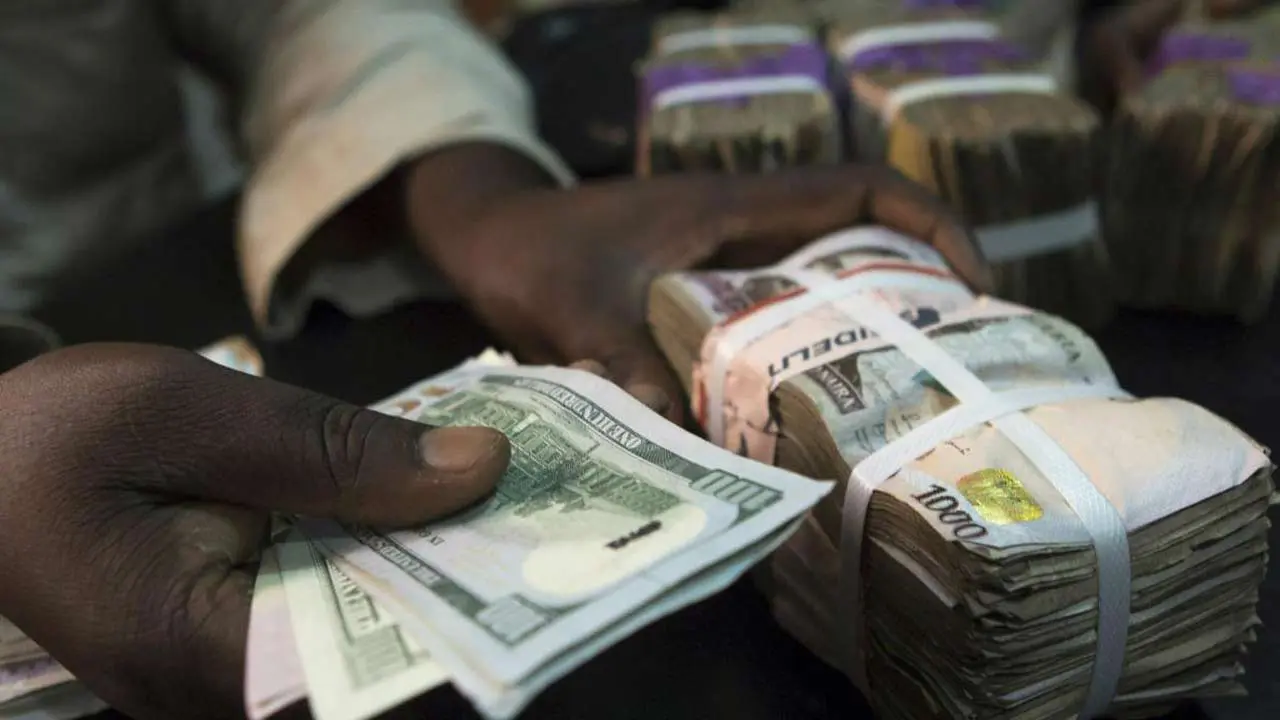
The naira continued its appreciation streak on the newly launched Enhanced Foreign Exchange Market System (EFEMS), closing at N1,567/$1 on Thursday, December 5, 2024.
This marks a three-day consecutive gain since the Central Bank of Nigeria (CBN) transitioned to EFEMS, a move aimed at consolidating Nigeria’s forex market and enhancing transparency.
Thursday’s closing rate represents a N41 gain from Wednesday’s N1,608/$1, and it is the best official exchange rate since October 8, 2024, when the naira closed at N1,561.7/$1 under the now-defunct NAFEM system.
Intra-day trading saw highs and lows of N1,610 and N1,565 per dollar, respectively, with a weighted average rate of N1,587.
In the parallel market, often used for unofficial dollar trades, rates hovered around N1,640/$1, while investment platforms like Bamboo and Trove quoted N1,653/$1 and N1,654/$1, reflecting a narrowing disparity of under N60 or roughly 4%.
Adding to the day’s financial buzz, Bitcoin briefly surged to $103,000 before stabilizing around $99,200, underscoring volatile global financial markets.
Experts credit the naira’s recent gains to the EFEMS platform, introduced to unify Nigeria’s fragmented forex market, which previously operated through multiple windows, including the Investors & Exporters (I&E) and SME windows.
EFEMS now centralizes forex transactions, offering real-time price discovery and publishing daily rates to enhance transparency.
READ ALSO: Naira appreciates marginally at official market amid economic pressures
“The naira’s appreciation signals a promising start for EFEMS,” said financial analyst Tunde Olaniyan. “It reflects the market’s confidence in the CBN’s commitment to transparency and its ability to stabilize the naira in the medium term.”
CBN’s revised forex guidelines, issued on November 29, 2024, are integral to this transition.
They mandate pricing all forex transactions through EFEMS and require stringent compliance measures. Market participants, including banks and licensed brokers, must align with the platform’s standardized protocols to ensure uniformity and accountability.
“The consolidation of multiple windows into a single system eliminates inefficiencies and opens the door for improved liquidity,” explained economist Dr. Aisha Bello.
“However, sustained gains will depend on consistent supply, regulatory clarity, and addressing external shocks, such as oil price volatility.”
The narrowing gap between official and parallel market rates—long a marker of forex market inefficiency—suggests a shift toward greater equilibrium.
READ ALSO: Naira slumps to ₦2,188 against Pound Sterling amid mixed economic signals
Airlines, manufacturers, and importers have welcomed this development, which they say reduces operational uncertainties tied to forex volatility.
While EFEMS shows promise, skeptics caution against premature optimism. “The real test will come in maintaining consistent forex supply to meet demand without triggering inflationary pressures,” warned financial strategist Nkechi Adetayo.
With its third consecutive day of gains, the naira’s rally has bolstered the credibility of EFEMS and provided a much-needed boost to market confidence.
However, long-term stability will depend on how the CBN manages liquidity and external economic pressures.


-

 Latest5 days ago
Full List: Meet the 2026 Nobel Prize winners across six categories
-

 Football5 days ago
Premier League Matchweek 7: Five Fixtures That Could Shape the Weekend
-

 Latest4 days ago
Umahi defends Lagos-Calabar highway route changes amid public outcry
-

 Business3 days ago
Dangote Refinery IPO: 70% Subscription claim meets fourfold demand assertion as investors seek clarity
-
Business4 days ago
Dangote Refinery IPO Extension: Was the 70% subscription report overhyped?
-

 Latest2 days ago
UCTH faces morgue crisis as 50 unclaimed corpses await mass burial
-

 Featured4 days ago
El-Rufai, ADC governorship candidate’s court appearance puts Kaduna opposition politics in focus
-

 Latest5 days ago
Makinde’s Chief of Staff, Segun Ogunwuyi, resigns